
Why the Wrong Air Compressor Can Silently Destroy Your PSA Oxygen Plant
When engineers and procurement managers specify compressed air equipment for a Pressure Swing Adsorption (PSA) or Vacuum Pressure Swing Adsorption (VPSA) oxygen generation plant, the question of oil-free versus oil-lubricated compression is not a preference — it is an engineering and regulatory imperative. The consequences of using the wrong compressor type in a PSA oxygen system range from degraded molecular sieve performance and elevated maintenance costs to catastrophic failure of critical infrastructure in hospitals, steel mills, and chemical processing plants.
This article provides a rigorous technical examination of exactly why Class 0 oil-free air compressors are non-negotiable for PSA oxygen plants. We will work through the molecular-level mechanisms of contamination, the relevant international certification frameworks, a direct performance comparison between oil-lubricated and oil-free units, and the specific engineering characteristics that make water-lubricated single-screw compressors the industry-preferred solution for modern oxygen generation facilities worldwide.
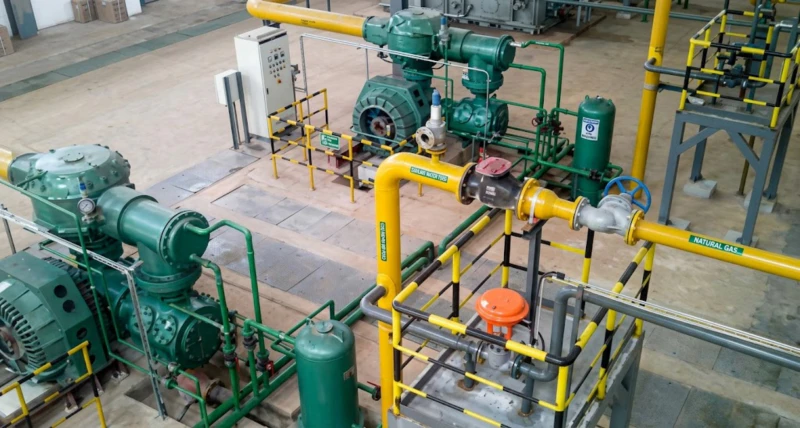
Understanding PSA Oxygen Generation: What the Compressor Is Actually Doing
Before examining contamination mechanisms, it is essential to understand the precise role the air compressor plays within a PSA oxygen generation system. Pressure Swing Adsorption is a gas separation technology that exploits the differential adsorption affinity of zeolite molecular sieves toward nitrogen and oxygen molecules under varying pressure conditions.
Atmospheric air consists of approximately 78% nitrogen, 21% oxygen, 0.9% argon, and trace quantities of other gases. In a PSA system, an air compressor pressurises this incoming atmospheric air to between 4.5 bar and 7 bar gauge. This high-pressure feed gas is then directed into a pair of adsorption columns packed with synthetic zeolite (typically lithium-substituted zeolite, or Li-X type sieve). Under elevated pressure, the zeolite preferentially adsorbs nitrogen molecules, allowing an oxygen-enriched stream — typically reaching 90% to 95% purity — to pass through the bed and collect in a downstream buffer tank.
The adsorption cycle alternates between the two columns: while Column A is adsorbing nitrogen and producing oxygen, Column B is being regenerated by depressurising to near-atmospheric conditions, which causes the adsorbed nitrogen to desorb and vent to atmosphere. This continuous swing between adsorption and regeneration is what gives the technology its name.
Key Engineering Insight: In a correctly operating PSA plant, the air compressor is not merely providing mechanical energy — it is serving as the primary quality gate for every gas molecule that will ever enter the molecular sieve bed. Any contaminant present in the compressed air feed becomes a contaminant in direct contact with the zeolite, and many of these contaminants are irreversible in their damage.
The molecular sieve material is the single most expensive consumable in a PSA oxygen plant, and its service life is the primary determinant of the plant’s long-term economics. A correctly specified and operated PSA system using appropriate compressor equipment can expect zeolite sieve life in excess of 10 years. A system operating with inadequate feed-air quality can experience catastrophic sieve degradation within 18 to 36 months — representing replacement costs that can easily exceed the original capital cost of the entire compression system.
bar — Typical PSA feed air pressure
Oxygen purity achievable with PSA technology
Zeolite sieve life with Class 0 air supply
Sieve life when oil contamination is present
The Contamination Science: How Compressor Oil Destroys Molecular Sieves
The mechanism by which lubricating oil from a conventional oil-flooded screw or reciprocating compressor damages zeolite molecular sieves is a multi-stage chemical and physical process. Understanding this mechanism at a molecular level explains why even trace oil carry-over — measured in parts per million — constitutes an unacceptable risk for PSA oxygen plants.
Oil Aerosol Formation and Carry-Over
Inside an oil-lubricated compressor, lubricating oil is intentionally circulated through the compression chamber to provide sealing, cooling, and lubrication. During this process, a portion of the oil is atomised into sub-micron aerosol droplets by the mechanical action of the compression element. These droplets, typically ranging from 0.01 to 10 micrometres in diameter, become suspended within the compressed air stream.
Even the most sophisticated downstream oil-separation equipment — including high-efficiency coalescing filters rated to 0.01 ppm by mass — cannot guarantee absolute zero oil carry-over under all operating conditions. Filter saturation, bypass during filter change, temperature excursions, and system pressure transients can all result in momentary or sustained oil breakthrough. ISO 8573-1 Class 1, the highest oil-content class in that standard for oil aerosol and vapour, permits up to 0.01 mg/m³ total oil content. Class 0, by contrast, requires the user and manufacturer to define requirements more stringent than Class 1.
Oil Adsorption by Zeolite and Pore Blockage
Zeolite molecular sieves function by virtue of their precisely structured internal pore network. Type 13X zeolite, commonly used in PSA oxygen plants, has a uniform pore diameter of approximately 10 Angstroms (1 nanometre). This pore architecture gives the material its extraordinary selectivity for nitrogen over oxygen. Hydrocarbon molecules from compressor lubricating oils, which range from C15 to C30+ chain lengths, accumulate as a film on the external surface and at pore mouths, producing two devastating consequences:
- Mass transfer resistance: The oil film dramatically increases the resistance to gas diffusion into and out of the zeolite crystal structure. Nitrogen molecules that should be rapidly adsorbed are delayed in their transport, reducing the effective capacity of the bed during each adsorption cycle and lowering oxygen purity.
- Hydrophilic site blocking: Zeolite is inherently hydrophilic. Hydrocarbon deposition at or near active adsorption sites permanently lowers the nitrogen selectivity of the affected material — an irreversible outcome that cannot be corrected by regeneration alone.
Oil Vapour: The Invisible and Underestimated Threat
Beyond oil aerosols, conventional compressors also discharge oil vapour — the gaseous-phase fraction of lubricating oil that has volatilised within the high-temperature compression environment. Oil vapour is molecularly dispersed and passes through all conventional coalescing and particulate filtration stages with essentially zero removal efficiency. Activated carbon adsorbers can capture oil vapour, but these represent an additional maintenance burden and a potential catastrophic failure point if not monitored and replaced on schedule.
Critical Risk: Oil vapour contamination of molecular sieve beds is cumulative and non-reversible. Unlike water vapour, which can be driven off by thermal regeneration, hydrocarbon deposition on zeolite cannot be reliably removed by pressure swing alone. Once a sieve bed is hydrocarbon-fouled beyond a threshold level, replacement is the only remediation option.
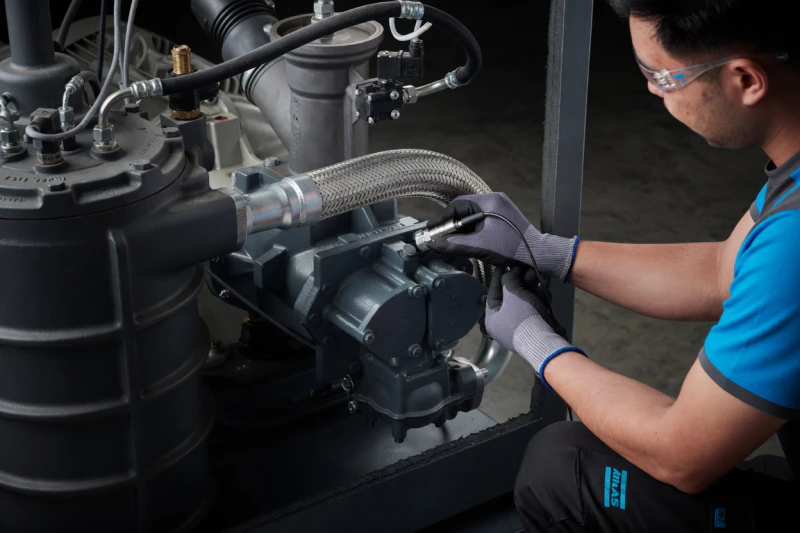
ISO 8573-1 Class 0 Certification: What It Means and Why It Is the Correct Specification
ISO 8573-1 is the international standard that defines the purity classifications for compressed air with respect to particulate matter, water content, and oil content. It provides the globally recognised framework that engineers, plant operators, and procurement professionals use to specify compressed air quality for different applications.
The Oil Content Classification Scale
For oil content (aerosol and vapour combined), ISO 8573-1:2010 defines the following classes:
| ISO Class | Max. Total Oil Content | Typical Application |
|---|---|---|
| Class 1 | ≤ 0.01 mg/m³ | High-quality industrial processes, breathing air (with treatment) |
| Class 2 | ≤ 0.1 mg/m³ | General manufacturing, pneumatic tools |
| Class 3 | ≤ 1 mg/m³ | Basic industrial pneumatics |
| Class 4 | ≤ 5 mg/m³ | Heavy-duty industrial, non-critical applications |
| Class 0 | Defined by user — more stringent than Class 1 | PSA/VPSA oxygen generation, medical gas, food processing, semiconductor fabrication |
Class 0 is not a single fixed numerical limit — it is a declaration that the application demands purity exceeding Class 1, with the specific requirement established by agreement between the user and the compressor manufacturer. In practice, for PSA oxygen plants, this typically means verified total oil content of below 0.003 mg/m³ at the compressor outlet — achievable only through genuinely oil-free compression, where no lubricating oil is present within the compression chamber at all.
Why Downstream Oil Removal Cannot Substitute for Oil-Free Compression
A common misconception is that high-quality downstream filtration can effectively convert oil-lubricated compressor output into a Class 0 equivalent supply. This belief is technically incorrect for several critical reasons:
- Vapour-phase oil cannot be removed by coalescing filtration. Coalescing filters capture aerosol droplets, but oil in the vapour phase passes straight through. Only activated carbon adsorption can capture vapour-phase hydrocarbons, adding significant maintenance complexity.
- Filter bypass events are statistically inevitable. In a plant running continuously for years, the probability of degraded downstream treatment performance approaches certainty. For a PSA sieve bed, even one significant contamination event can cause permanent damage.
- Verification is impractical. Claiming Class 0 from a treated oil-lubricated compressor requires continuous real-time monitoring of total oil content at sub-ppm levels — expensive and itself unreliable.
Engineering Principle: The only reliable path to Class 0 compressed air at the scale required for PSA oxygen plants is an oil-free compression mechanism — a system in which lubricating oil is simply not present within the compression chamber and therefore cannot appear in the compressed air discharge.
Technology Comparison: Oil-Lubricated vs. Oil-Free Compressors for PSA Applications
The following table presents a structured engineering evaluation of oil-lubricated screw compressors against Class 0 oil-free single-screw compressors, evaluated specifically for PSA oxygen generation duty.
| Parameter | Oil-Lubricated Screw | Class 0 Oil-Free Single-Screw |
|---|---|---|
| ISO 8573-1 Air Purity | Class 1–4 at outlet (before treatment) | Class 0 at outlet — no oil in compression chamber |
| Risk to Zeolite Sieves | High — oil aerosol and vapour carry-over risk | Zero — no oil present in compressed air stream |
| Downstream Treatment | Mandatory: coalescing filters, oil-water separator, activated carbon adsorber, monitoring | Simplified: refrigerant dryer and particulate filtration only |
| Maintenance Complexity | High: oil changes, filter replacement, oil separator cartridge, downstream monitoring | Low: water circuit maintenance only, no oil consumables |
| Energy Efficiency | Moderate | High — isothermal water-lubricated compression minimises heat build-up |
| PSA Sieve Life Impact | Significantly reduced (18–36 months in contamination scenarios) | Unimpaired — full 10+ year design sieve life achievable |
| Medical Regulatory Fit | Not permitted without extensive verified downstream treatment | Directly suitable; meets medical compressed air standards |
| Total Lifecycle Cost | Higher when downstream treatment and sieve replacement are included | Lower — reduced overhead and preserved sieve capital investment |
The Single-Screw Advantage: Engineering Characteristics That Matter for Oxygen Plants
Among the available oil-free compressor technologies — which include oil-free twin-screw, scroll, centrifugal, and reciprocating designs — the water-lubricated single-screw architecture represents a particularly compelling solution for PSA oxygen plant duty. The distinctions reflect measurable engineering differences with direct operational consequences.
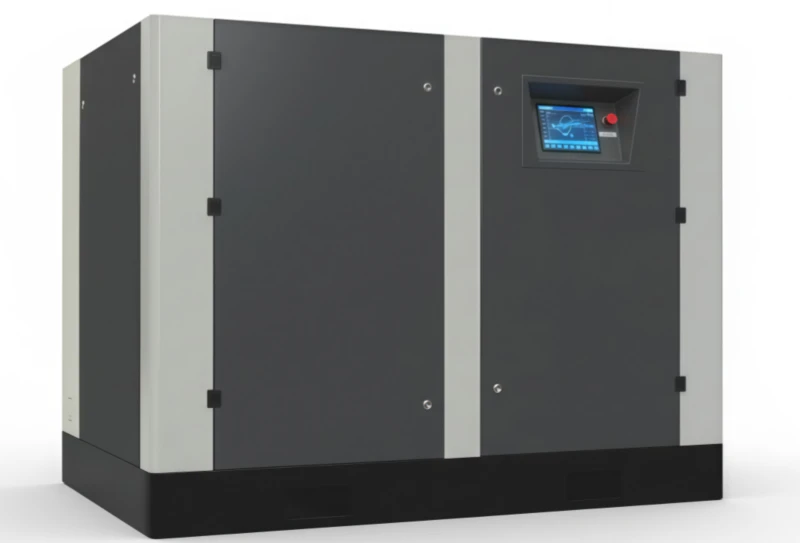
Zero Oil in the Compression Chamber
In a water-lubricated single-screw compressor, pure water — not synthetic lubricant — serves as the sealing, cooling, and load-bearing medium. Water injected into the compression space seals clearances between the screw and gate rotors, absorbs the heat of compression, and provides the hydrodynamic film that prevents metal-to-metal contact. The resulting compressed air discharge contains only water vapour — safely removed by the downstream refrigerant dryer — with absolutely zero hydrocarbon content.
Patented French Single-Screw Geometry: Force Balance and Reliability
The single-screw compressor geometry, originating from engineering development in France, consists of a central cylindrical main screw rotor meshing with two symmetrically opposed planetary gate rotors. This configuration generates compression forces that are inherently balanced in both axial and radial directions — a fundamental structural advantage over conventional twin-screw designs where significant net forces are imposed on the rotor bearings. The consequence is dramatically reduced bearing loading, which translates directly into extended bearing service intervals and lower failure rates over the compressor’s operational life.
Elimination of Air Valves
Conventional reciprocating compressors rely on reed or poppet valves to control intake and discharge of gas on each compression stroke. These valves are high-wear components subject to fatigue failure, representing one of the most common maintenance requirements in reciprocating installations. The single-screw geometry operates as a continuous rotary mechanism with no intake or discharge valves, eliminating this entire failure mode and the associated maintenance workload.
Permanent Magnet Variable Frequency Drive Integration
Modern water-lubricated single-screw units for PSA oxygen duty are equipped with permanent magnet synchronous motors driven by variable frequency inverters. PSA oxygen plants do not operate at constant air demand — the cyclic nature of the adsorption-regeneration sequence creates a pulsating demand profile. A variable frequency drive allows the compressor to modulate its output speed and capacity in precise response to this demand cycle. In large PSA installations, the energy savings from variable frequency operation can represent a reduction in specific power consumption of 15% to 30% compared with fixed-speed alternatives.
Stable Output Pressure to 40 Bar
While most PSA oxygen plants operate in the 4.5 to 7 bar feed pressure range, some applications — including oxygen cylinder filling boosters and certain high-pressure industrial processes — require significantly elevated pressures. The single-screw architecture with water lubrication can reliably deliver stable medium pressures up to 40 bar, a range that would require multistage reciprocating compression in an oil-free configuration and that is beyond the practical operating range of oil-free twin-screw designs.
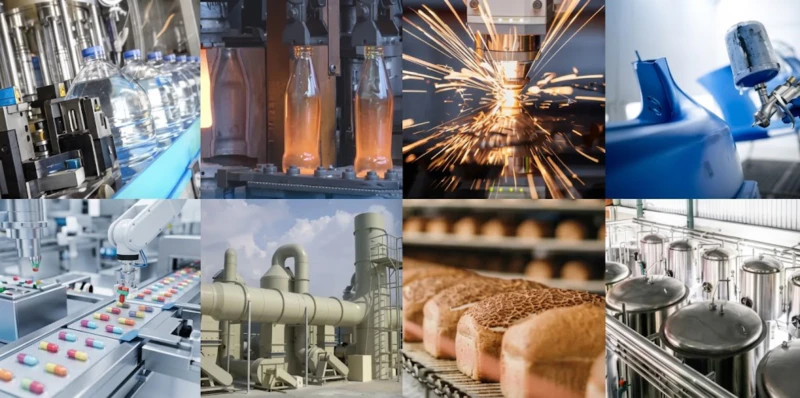
Application Contexts: Where Class 0 Oil-Free Compression Is Mandated or Critical
The requirement for Class 0 oil-free compressed air in oxygen generation and related applications spans a wide range of industrial and medical contexts. Understanding the specific drivers in each context helps clarify why this is a cross-industry requirement, not a niche specification.
Hospital and Clinical Oxygen Stations
Medical oxygen — whether produced on-site by PSA plant or distributed via pipeline from a central generation facility — must comply with medical gas standards including EN ISO 7396-1 and the relevant pharmacopoeial specifications. These standards explicitly require that the compressed air used to feed the PSA generator is produced by an oil-free compressor. Any oil contamination of medical-grade oxygen creates a direct patient safety risk: inhaled hydrocarbons can cause respiratory irritation, lipoid pneumonia, and in extreme cases, ignition in the oxygen-enriched breathing environment.
Industrial Oxygen Stations — Steel and Metallurgy
Electric arc furnaces, basic oxygen steelmaking converters, and ladle metallurgy stations use large volumes of high-purity oxygen to achieve the controlled oxidation conditions necessary for steel quality. In these settings, a PSA or VPSA oxygen plant generating in the range of 500 to 3,000 Nm³/h is a significant capital asset. Contaminated feed air that shortens sieve bed life translates directly into multi-million-dollar unplanned shutdowns and replacement programmes.
Pharmaceutical Fermentation and Bioreactor Systems
Aerobic fermentation processes — used in the production of antibiotics, enzymes, and biological therapeutics — require a continuous supply of sterile, oil-free compressed air or oxygen for sparge aeration of bioreactor vessels. Oil contamination in fermentation air causes direct contamination of the culture medium, destroys cell cultures, and can render entire production batches worthless. Regulatory frameworks for pharmaceutical manufacturing (GMP as defined in EU Annex 1 and US FDA 21 CFR) mandate the use of oil-free compressed air in all contact applications.
Water Treatment and Ozone Generation
Ozone used for drinking water disinfection and industrial wastewater treatment is generated by corona discharge within concentrated oxygen streams produced by PSA generators. The dielectric materials used in ozone generators are extremely sensitive to hydrocarbon contamination, which degrades dielectric properties and reduces ozone generation efficiency. Class 0 air supply to the upstream PSA generator is therefore a standard requirement in water treatment engineering specifications.
Glass Manufacturing and Oxygen-Enriched Combustion
Oxygen-enriched combustion in glass melting furnaces — either as total oxygen combustion or as oxygen enrichment of air-fired burners — improves flame temperature, increases melting capacity, and reduces NOx emissions. The oxygen used in these processes is increasingly derived from on-site PSA generators rather than delivered liquid oxygen, making the feed air compressor specification a direct concern for glass plant engineers.
System Integration: The Complete Oil-Free Compressed Air Treatment Train for PSA Duty
Specifying a Class 0 oil-free compressor as the primary compression element is the most important step in securing a clean air supply for a PSA oxygen plant. However, a complete engineered treatment train is still required downstream of the compressor to manage moisture and particulate content, both of which can also damage zeolite sieve beds if not properly controlled.
Class 0 Oil-Free Single-Screw Compressor
The foundation of the system. Water-lubricated compression chamber produces air with zero hydrocarbon content. Variable frequency drive matches output to PSA demand cycle. Discharge temperature and pressure are controlled within tight limits for downstream treatment optimisation.
Air Receiver / Buffer Tank
Stainless steel receiver vessel dampens pressure pulsation from the compressor and provides a buffer volume that reduces the frequency of compressor speed changes. Initial bulk moisture condensation occurs in the receiver and is removed via an automatic drain valve.
Refrigerant Dryer
Chills the compressed air stream to a pressure dew point of typically +3°C. This condenses and removes the majority of water vapour content introduced by the compression process and, in a water-lubricated compressor, by the water-sealing medium itself. Correct sizing for actual flow rate and inlet conditions is critical.
Twin-Tower Desiccant Adsorption Dryer
Achieves the ultra-low pressure dew point (typically −40°C to −70°C PDP) required by PSA oxygen generators to protect molecular sieve beds from moisture carry-over. Residual water vapour competes with nitrogen for adsorption sites and reduces oxygen production capacity if not removed to very low levels upstream.
Multi-Stage Particulate Filtration
Final graded filtration arrays (typically 1 micron and 0.01 micron stages in series) remove any desiccant dust or particulate matter entrained from upstream stages before compressed air enters the PSA generator. These are purely precautionary stages in an oil-free system — not relied upon for oil removal as they would be downstream of a lubricated compressor.
This treatment architecture is considerably simpler than the equivalent train required downstream of an oil-lubricated compressor, which would additionally require a coalescing oil mist filter, an oil-water separator, an activated carbon vapour adsorber, and an associated monitoring and change-out programme. The simplification delivered by the oil-free compressor choice reduces both capital expenditure on ancillary equipment and the long-term maintenance burden on plant operations teams.
Selecting the Right Oil-Free Compressor: Key Specification Parameters
For engineers and procurement managers approaching compressor specification for a PSA oxygen plant project, the following parameters represent the critical variables that must be established before any meaningful equipment comparison can be made. Getting these parameters right at the specification stage avoids costly changes after equipment procurement and commissioning.
Required Flow Rate and Pressure
The required feed air flow rate is determined by the oxygen production capacity and purity target of the PSA generator, with a typical air-to-oxygen volume ratio of 3:1 to 4:1 for a 90%-purity PSA system. The required pressure is dictated by the PSA cycle design — most standard PSA generators for industrial oxygen operate at a feed pressure of 5 to 7 bar gauge. Both parameters should include an appropriate margin (typically 10–15%) to account for sieve ageing effects and future expansion.
Cooling Configuration: Air-Cooled vs. Water-Cooled
Water-lubricated single-screw compressors are available in both air-cooled and water-cooled configurations. Water-cooled units are preferred for large-scale fixed PSA plants where auxiliary cooling infrastructure is already available and where cooling efficiency directly impacts compression energy consumption. Air-cooled configurations are better suited to medium-scale installations, distributed medical oxygen stations, or locations where cooling water infrastructure is not available.
Drive Configuration: Fixed-Speed vs. Variable Frequency
For PSA oxygen plants with variable production demands — which includes virtually all real-world installations — permanent magnet variable frequency drive (PMVFD) compressors provide significant energy savings over fixed-speed units. The additional capital cost of the VFD and PM motor is typically recovered within 18 to 30 months through reduced electricity consumption. For smaller PSA units with relatively stable demand profiles, fixed-speed industrial-frequency compressors represent a lower capital cost option.
Certification and Documentation Requirements
For medical oxygen plant duty, the compressor supplier should be able to provide ISO 8573-1 Class 0 certification for the complete compressor unit as supplied, along with third-party test reports confirming oil-content measurements below the specified threshold. For pharmaceutical applications, an Installation Qualification / Operational Qualification (IQ/OQ) documentation package supporting GMP validation may be required. European CE marking is required for equipment supplied into European markets.
When evaluating suppliers, it is essential to distinguish between compressors certified as oil-free by the compressor manufacturer and those that have achieved Class 0 through downstream treatment. Only the former can reliably guarantee Class 0 air under all operating conditions. Experienced procurement teams working on international PSA oxygen plant projects have consistently found that engaging directly with a specialist oil-free screw air compressor supplier — rather than sourcing general-purpose industrial compressors — results in better equipment-system integration, more reliable performance guarantees, and significantly lower total lifecycle cost across the 15 to 20-year plant design life.
Lifecycle Cost Analysis: The True Economics of Oil-Free Compression in PSA Plants
A rigorous total-cost-of-ownership analysis consistently demonstrates that the premium associated with Class 0 oil-free compressor equipment is fully recovered — and then surpassed — within the first operational period of a PSA oxygen plant. The following cost categories illustrate the economic logic.
Energy consumption represents the single largest cost element over a compressor’s operational life, accounting for approximately 60% of total lifecycle expenditure in a continuously operating industrial compression installation. The near-isothermal compression characteristic of water-lubricated single-screw compressors — where the compression process occurs at lower average temperatures due to the high specific heat capacity of water — delivers measurably lower specific energy consumption compared with conventional adiabatic compression. When combined with permanent magnet variable frequency drive operation, energy savings of 20% to 35% relative to a fixed-speed oil-lubricated alternative are achievable.
Maintenance costs represent approximately 30% of lifecycle expenditure in a conventional oil-lubricated compression installation. The elimination of lubricating oil and its associated consumables — oil itself, oil filters, oil separator cartridges, downstream coalescing filter elements, oil-water separator maintenance — combined with the lower bearing loading inherent in the single-screw geometry, reduces maintenance cost substantially. A water-lubricated oil-free single-screw compressor typically requires only water quality management, filter element changes, and periodic motor and instrument maintenance.
Zeolite sieve replacement avoidance is the most dramatic economic differentiator and is often underweighted in initial purchase decisions because it represents an avoided future cost rather than a visible current saving. Large industrial PSA oxygen plants can carry zeolite inventories worth hundreds of thousands of dollars. Extending sieve life from an oil-contamination scenario (18–36 months) to a clean air scenario (10+ years) represents a capital preservation benefit that can dwarf the compressor purchase price differential.
Project engineers who consult with a dedicated PSA oxygen plant air compressor specialist at the pre-engineering stage — rather than treating the compressor as a commodity item — consistently report that access to application-specific engineering expertise enables them to right-size the compression system, select the optimal drive configuration, and design the treatment train correctly, yielding capital and operating savings that substantially exceed the cost of the consultation.
Conclusion: The Compressor Choice Is the Sieve-Life Decision
The selection of the compressed air source for a PSA or VPSA oxygen generation plant is, in fundamental engineering terms, the single decision that most directly determines the long-term performance, reliability, and economics of the entire plant. It is not a compressor purchasing decision in isolation; it is a molecular sieve investment protection decision.
The contamination science is unambiguous: oil aerosols and vapours from conventional lubricated compressors cause progressive, irreversible degradation of zeolite molecular sieves through surface fouling and active site blockage. No downstream treatment system, however sophisticated, can guarantee the elimination of this risk under all operating conditions over a multi-year plant life. The only engineering solution that removes this risk category entirely is Class 0 oil-free compression — and within this category, water-lubricated single-screw compressors represent the technology that most effectively combines purity guarantee, energy efficiency, mechanical reliability, and simplified maintenance into a coherent engineering package for industrial PSA oxygen duty.
Whether the application is a 50 Nm³/h medical oxygen station serving a regional hospital, a 500 Nm³/h industrial PSA plant for a metallurgical operation, or a large-scale VPSA system for an integrated chemical complex, the engineering logic and regulatory direction point unambiguously toward Class 0 oil-free compressed air as the correct and responsible specification choice.
For engineering teams, plant owners, and procurement professionals currently evaluating compressor options for new PSA projects or assessing the replacement of existing equipment, early engagement with a specialist supplier experienced in PSA oxygen compressor applications is strongly recommended. The specifics of PSA plant design — pressure requirements, demand cycle characteristics, cooling infrastructure availability, ambient conditions, and regulatory compliance frameworks — all influence the optimal compressor specification in ways that generic compressor catalogues cannot address adequately.
Ready to Specify the Right Compressor for Your PSA Oxygen Plant?
Our engineering team provides application-specific compressor selection support, technical datasheets, and Class 0 certification documentation for PSA and VPSA oxygen generation projects worldwide. Local stock and rapid technical service available for Russia and CIS markets.
Request a Technical Consultation
Browse Our Air Compressor Range