
Why the Air Compressor Is the Hidden Variable in Ozone System Performance
Ozone is one of the most powerful oxidising agents used in water treatment. Applied correctly, it destroys pathogenic bacteria and viruses with greater efficacy than chlorine, oxidises taste- and odour-causing compounds that chlorination cannot address, and breaks down micropollutants — including pharmaceutical residues and endocrine-disrupting compounds — that are increasingly present in source water supplies and that conventional treatment processes fail to remove. For drinking water disinfection, industrial wastewater treatment, cooling water microbiological control, and swimming pool sanitation, ozone systems deliver treatment outcomes that no alternative technology can fully replicate.
Yet ozone generation systems are sensitive, high-value assets that degrade rapidly when operated with contaminated feed gas. The corona discharge process that generates ozone from oxygen or air is disrupted by trace hydrocarbon contamination at concentrations that would be considered negligible in any other compressed air application. A single oil mist breakthrough event from an inadequately specified feed air compressor can permanently damage the dielectric materials in the ozone generator, reducing ozone production efficiency, increasing energy consumption, and ultimately requiring costly generator replacement well ahead of its design service life.
This article examines why oil-free compressed air is the non-negotiable specification for ozone generation feed gas supply, how hydrocarbon contamination damages ozone generators and PSA oxygen concentrators, and how water-lubricated single-screw compressors provide the compressed air quality that water treatment ozone systems demand.
How Ozone Is Generated: The Corona Discharge Process and Its Feed Gas Requirements
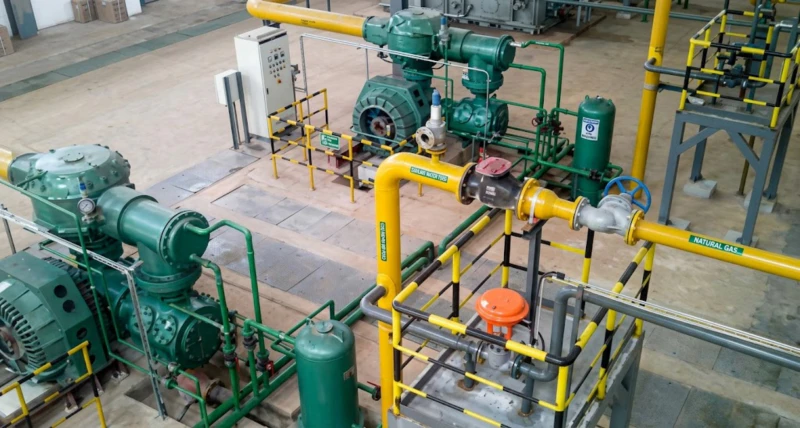
Industrial ozone generators produce ozone through corona discharge — a controlled electrical discharge passed through a gas-filled gap between two electrodes separated by a dielectric barrier. When oxygen molecules (O₂) pass through this high-energy discharge zone, a fraction are dissociated into individual oxygen atoms (O), which then combine with intact O₂ molecules to form ozone (O₃). The efficiency of this conversion — measured as grams of ozone produced per kilowatt-hour of electrical energy consumed — depends critically on the purity, dryness, and composition of the feed gas entering the discharge gap.
Ozone generators used in water treatment facilities are fed either with dried atmospheric air (producing ozone concentrations of 1% to 3% by weight) or with concentrated oxygen from a PSA oxygen concentrator (producing ozone concentrations of 6% to 14% by weight). Oxygen-fed systems are preferred for large municipal and industrial installations because higher ozone concentrations reduce the volume of off-gas to be destroyed, lower the energy consumption per gram of dissolved ozone, and allow smaller contact chamber volumes for equivalent disinfection performance.
In either configuration — air-fed or oxygen-fed — the compressed gas supply to the ozone generator must meet stringent purity requirements. The dielectric materials used to construct the corona discharge gap (typically borosilicate glass, ceramic composites, or high-purity alumina) are sensitive to contamination by hydrocarbons, moisture, and particulates. Of these three contamination categories, hydrocarbon contamination from compressor lubricating oil is the most damaging and the least reversible.
How Oil Contamination Damages Ozone Generators: Three Degradation Mechanisms
The damage caused by hydrocarbon contamination in an ozone generator proceeds through three distinct but interacting mechanisms, each of which reduces generator performance and accelerates the need for expensive maintenance or replacement.
Dielectric Surface Fouling and Reduced Discharge Gap Uniformity
The corona discharge in an ozone generator requires a precisely uniform discharge gap between the electrodes and the dielectric surface. Hydrocarbon deposits — whether from oil aerosol droplets or vapour-phase hydrocarbons that condense on cooler dielectric surfaces — accumulate unevenly on the dielectric material, creating localised regions of altered dielectric constant and surface resistivity. This non-uniformity distorts the electric field distribution across the discharge gap, producing areas of concentrated discharge intensity (hot spots) and areas of reduced discharge activity. Hot spots accelerate dielectric ageing and can cause localised dielectric breakdown, while low-activity areas reduce the ozone production contribution of that electrode section. The overall effect is reduced ozone production efficiency per unit of electrical energy consumed.
Hydrocarbon Oxidation and Nitric Acid Formation
In the high-energy corona discharge environment, hydrocarbon molecules present in the feed gas are oxidised by the nascent oxygen atoms and ozone molecules generated in the discharge zone. This oxidation produces a range of secondary compounds including organic acids, carbonyl compounds, and — when nitrogen is also present in air-fed systems — nitrogen oxides (NOₓ). The NOₓ compounds react with moisture in the gas stream to form nitric acid (HNO₃), which deposits on and etches the dielectric surface, permanently altering its surface chemistry and reducing its electrical isolation performance. The combined effect of hydrocarbon oxidation products and nitric acid on the dielectric shortens service life dramatically compared with operation on clean, dry, hydrocarbon-free feed gas.
Upstream PSA Zeolite Fouling Reduces Oxygen Concentration
In oxygen-fed ozone systems where a PSA concentrator is installed upstream of the ozone generator, oil contamination of the feed air compressor damages the zeolite molecular sieve beds before the gas even reaches the ozone generator. Hydrocarbon fouling of the zeolite reduces nitrogen adsorption capacity and progressively lowers the oxygen concentration in the PSA product stream. Since ozone production efficiency scales strongly with feed oxygen concentration, even a modest reduction in PSA output purity — from 93% to 88%, for example — measurably reduces ozone yield per kWh and may require a corresponding increase in ozone generator power consumption to maintain target water treatment dose rates.
Cascade Effect: Oil contamination introduced at the compressor stage propagates damage through every downstream component simultaneously — fouling the PSA zeolite, reducing product oxygen purity, depositing hydrocarbons on the ozone generator dielectric, and triggering oxidative secondary chemistry in the corona discharge zone. A single contamination event can initiate performance degradation across the entire treatment chain that unfolds over months and is only fully apparent when ozone dose targets can no longer be met at rated power.
Feed Gas Purity Specifications for Ozone Generators: What the Standards Require
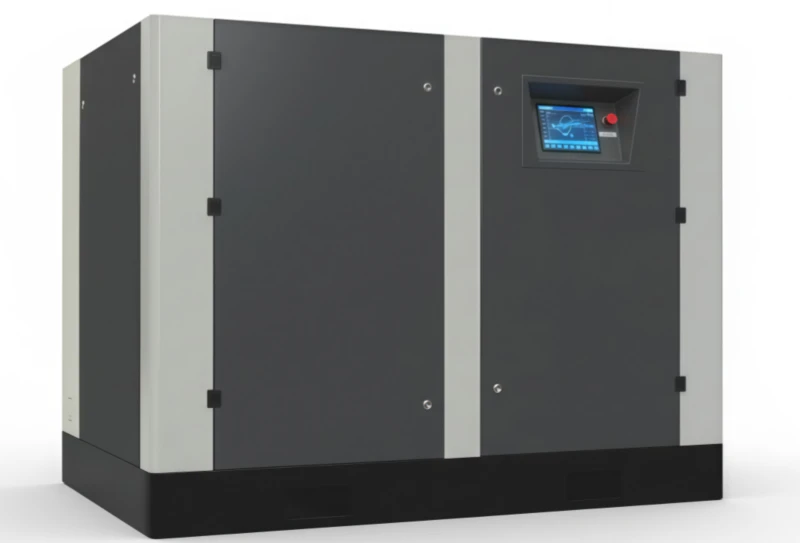
Ozone generator manufacturers publish feed gas purity specifications that define the minimum acceptable quality of the oxygen or dried air supplied to their equipment. These specifications are not conservative safety margins — they represent the boundary conditions within which the dielectric materials and electrode geometry were designed to operate. Operating outside these specifications accelerates degradation at a rate that is difficult to predict precisely but that consistently results in substantially shortened equipment life.
For oil content, ozone generator manufacturers uniformly specify feed gas with zero detectable oil content — effectively ISO 8573-1 Class 0. Typical specifications state total oil content (aerosol plus vapour) below 0.01 mg/m³, with many manufacturers requiring demonstrably oil-free feed gas from an oil-free compressor source rather than from a filtered oil-lubricated compressor. The reasoning is identical to the PSA oxygen plant case: downstream filtration cannot provide a categorical guarantee of oil-free output under all operating conditions over the ozone system’s intended 15 to 20-year service life.
For moisture content, ozone generators require feed gas with a pressure dew point of −60°C or lower in most applications — substantially drier than the −40°C typically required for PSA oxygen plant operation. This extreme dryness requirement reflects the reactivity of ozone with moisture and the sensitivity of the dielectric materials to surface hydration. Achieving this dew point requires a twin-tower desiccant adsorption dryer with properly regenerated desiccant, and specifying the compressor correctly — particularly for water-lubricated units that carry higher moisture loads in their discharge than dry alternatives — is important for achieving the target outlet dew point reliably.
ISO 8573-1 oil class required for ozone generator feed gas
Pressure dew point typically required at ozone generator inlet
Ozone concentration achievable with PSA oxygen feed vs 1–3% for air feed
Design life of ozone generator dielectric with clean feed gas
Water Treatment Applications: Where Oil-Free Compressed Air Directly Protects Public Health
Ozone-based water treatment is applied across a range of contexts in municipal and industrial water management. In each of these applications, the performance of the ozone system — and therefore the compressed air quality specification — has direct public health or environmental compliance implications.
Municipal Drinking Water Disinfection
Large municipal drinking water treatment plants use ozone as a primary disinfectant — often in combination with chlorine or chloramines as secondary disinfectants — to achieve the log inactivation credits required by drinking water regulations for Cryptosporidium, Giardia, and other protozoan pathogens that are resistant to chlorination alone. A degraded ozone generation system that cannot meet design ozone dose targets creates a direct public health risk. The compressed air feeding the PSA concentrator that serves the ozone generator is therefore a critical utility in the public health infrastructure of the communities served by that water treatment plant.
Industrial Wastewater Treatment and COD Reduction
Industrial facilities generating wastewater with high chemical oxygen demand (COD) — including pharmaceutical manufacturers, food and beverage processors, textile dye works, and pulp and paper mills — increasingly use ozone for advanced oxidation treatment before discharge to municipal sewer systems or receiving water bodies. Regulatory discharge limits for COD, colour, and specific micropollutants are enforced with financial penalties for non-compliance. An ozone system degraded by compressor oil contamination that cannot achieve design COD reduction performance creates both regulatory compliance and environmental liability risks for the facility operator.
Cooling Tower Water Treatment
Cooling towers in large commercial and industrial facilities are breeding environments for Legionella bacteria when water temperature and nutrient conditions are favourable. Ozone injection into cooling tower basins provides continuous microbiological control that is more effective than intermittent chemical biocide dosing and that reduces the chemical consumption and blowdown volume associated with conventional cooling water treatment programmes. For facilities with ozone-based cooling tower treatment, the continuous availability of the ozone system — and therefore the feed air compressor — is directly linked to Legionella control obligations.
Aquaculture Water Quality Management
Intensive recirculating aquaculture systems (RAS) use ozone to oxidise dissolved organic matter, reduce total organic carbon, and control bacterial populations in recirculating water circuits. In RAS facilities where fish stock density is high and water quality directly determines fish health and growth rate, ozone system reliability is a production-critical variable. Compressor oil contamination that degrades ozone generation performance can have direct consequences for fish health, stock mortality, and the economic viability of the aquaculture operation.
The Complete Compressed Air Treatment Train for Ozone Generation Duty
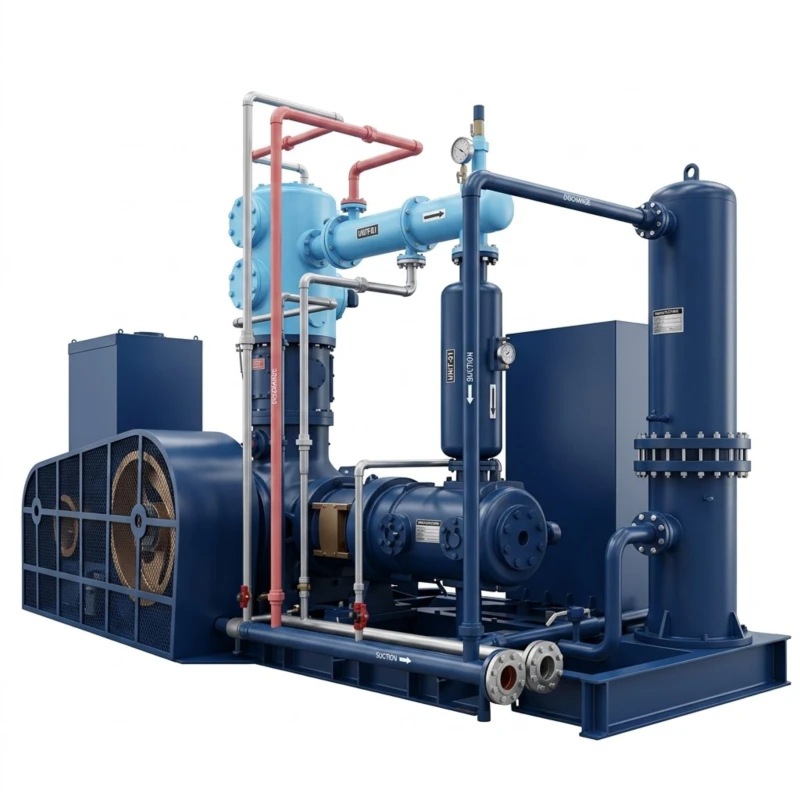
Specifying an oil-free compressor is the most critical single step in designing the compressed air supply for a water treatment ozone system. However, the extreme dryness requirement of ozone generators — pressure dew point of −60°C or lower — means that the downstream treatment train must be carefully designed and sized to achieve and maintain this dew point reliably throughout the system’s operational life.
Class 0 Oil-Free Compressor (Water-Lubricated Single-Screw)
Delivers feed air with zero hydrocarbon content. For ozone applications, the compressor must be sized to deliver the required air volume at the PSA concentrator inlet pressure (typically 5 to 7 bar gauge) under worst-case ambient conditions. Variable frequency drive strongly recommended to match output to the variable oxygen demand of the ozone system.
Air Receiver and Moisture Separator
Buffer vessel removes bulk liquid water from the water-lubricated compressor discharge and stabilises pressure pulsations. Automatic float drain removes condensate continuously. Stainless steel construction recommended for ozone-adjacent service.
Refrigerant Pre-Dryer
Chills the compressed air to +3°C PDP, removing the majority of water vapour content before the desiccant stage. Correctly sized for the higher moisture load of water-lubricated compressor discharge. Reduces desiccant loading and extends desiccant regeneration intervals.
Twin-Tower Heatless Desiccant Dryer (−60°C to −70°C PDP)
Achieves the extreme dew point required by ozone generators. Desiccant vessel sizing and purge flow calculation must target −60°C PDP at the ozone generator inlet under maximum flow conditions. A dew point monitoring instrument downstream of the dryer with alarm output is essential for ozone applications.
Particulate Filtration (1 μm and 0.01 μm)
Final filtration removes desiccant fines and any residual particulate matter before the PSA concentrator. In an oil-free system these filters carry no oil removal duty — they are purely precautionary against desiccant carryover and protect the PSA zeolite and ozone generator dielectric from particulate abrasion.
Design Note for Water-Lubricated Compressors: The refrigerant pre-dryer in an ozone generation compressed air train must be specifically sized for the higher moisture content of water-lubricated compressor discharge air — not for a standard oil-lubricated or dry oil-free compressor. Undersizing the refrigerant dryer for this moisture load is the most common commissioning problem in water treatment compressed air systems and leads to premature desiccant saturation and elevated outlet dew points.
Selecting the Right Oil-Free Compressor for Ozone System Feed Air: Key Parameters
Correctly specifying the compressed air supply for a water treatment ozone system requires defining a set of parameters that differs slightly from standard PSA oxygen plant compressor selection, principally because of the extreme dew point requirement and the importance of continuous, uninterrupted operation for treatment system compliance.
- Feed air flow rate at PSA inlet conditions, calculated from the ozone generator’s oxygen consumption rate and the PSA concentrator’s air-to-oxygen ratio (typically 3:1 to 4.5:1). Include a minimum 20% margin for sieve ageing and peak ozone demand periods.
- Discharge pressure at actual site conditions, accounting for ambient temperature and altitude corrections. For water treatment installations at altitude or in hot climates, standard-condition compressor ratings can be misleading — specify required performance at site-worst conditions explicitly.
- Duty-standby configuration. Water treatment facilities must maintain ozone treatment capability continuously for regulatory compliance. A single compressor without standby provision is not acceptable for municipal drinking water or regulated industrial discharge applications — specify duty and standby units from the outset.
- VFD drive specification. Ozone demand in water treatment varies with flow rate through the plant and with source water quality. A permanent magnet variable frequency drive compressor that continuously matches output to ozone system oxygen demand avoids both energy waste at partial load and pressure cycling that can disturb PSA adsorption cycle stability.
- Materials compatibility with ozone off-gas. In water treatment plant rooms where ozone off-gas (from the ozone destructor exhaust) may be present at trace concentrations, all compressor seals and gaskets should be specified in ozone-compatible materials (EPDM, PTFE, or Viton) rather than standard nitrile rubber, which degrades rapidly in the presence of ozone.
Water treatment facility engineers who work with a specialist oil-free air compressor for water treatment supplier with documented ozone generation application experience are significantly better positioned to avoid the specification errors — undersized refrigerant dryers, missing standby provision, incorrect material specifications — that cause the most common commissioning problems in water treatment compressed air systems.
Conclusion: Protecting Ozone System Investment Starts with the Compressor Specification
An ozone generation system is a significant capital investment for any water treatment facility — and the PSA oxygen concentrator and ozone generator that constitute the active treatment equipment are the components whose performance most directly determines treatment efficacy and regulatory compliance. Both are fatally vulnerable to hydrocarbon contamination introduced at the compressed air supply stage.
Water-lubricated single-screw compressors, certified to ISO 8573-1 Class 0, provide the categorical guarantee of hydrocarbon-free compressed air that ozone generation specifications require — not as a theoretical performance claim, but as a consequence of the physical absence of lubricating oil from the compression process. Combined with a correctly designed downstream treatment train — refrigerant pre-dryer sized for water-lubricated discharge moisture loads, twin-tower desiccant dryer achieving −60°C PDP, and graded particulate filtration — they deliver the feed gas quality that protects ozone generator dielectric life, maintains PSA zeolite integrity, and ensures uninterrupted ozone treatment performance throughout the 15 to 20-year design life of the installation.
For water treatment engineers and facility managers specifying or reviewing ozone generation compressed air systems, engaging with a specialist in compressors for ozone generator applications at the project definition stage provides the application-specific engineering guidance — dew point system design, moisture load sizing, materials compatibility, duty-standby configuration — that generic compressed air suppliers cannot offer and that generic catalogue specifications do not address.
Specifying a Compressor for a Water Treatment Ozone System?
Our engineering team provides Class 0 certified water-lubricated single-screw air compressors with ozone application expertise, including dew point system design guidance and duty-standby configuration support for municipal and industrial water treatment ozone generation projects. Local stock and rapid service for Russia and CIS markets.
Request a Technical Consultation
Browse Our Air Compressor Range