
An authoritative procurement blueprint analyzing volumetric curves, duty cycle chemistry, motor commutation physics, and certification compliance for original equipment manufacturers.
1. Strategic Foundations in the B2B Gas Generation Landscape
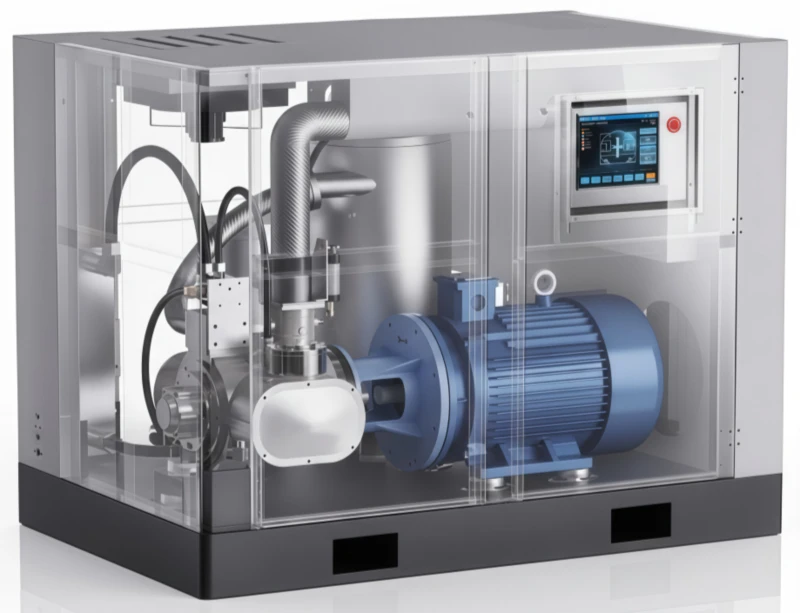
For original equipment manufacturers (OEMs), medical device developers, and industrial system engineers, sourcing component machinery is a critical exercise in balancing cost and performance. In the competitive landscape of Pressure Swing Adsorption (PSA) oxygen concentrators, this sourcing matrix is exceptionally demanding. The air compressor is not merely a component; it represents the primary cost driver, the main consumer of electrical energy, and the most frequent point of mechanical wear within any automated gas separation platform. Whether your business is developing portable respiratory assistants for home-care patients or building multi-ton oxygen loops for industrial aquaculture and ozone treatment facilities, your choice of compressor dictates the market success of your final product.
Procurement teams often face the challenge of interpreting complex technical specifications across global suppliers. Conflicting data regarding continuous flow lines, operating temperatures, acoustic signatures, and mounting dimensions can lead to integration errors if not analyzed using strict engineering principles. Sourcing a miniature air compressor requires a deep understanding of fluid dynamics and material limits. A procurement error can lead to sieve bed breakdown, regulatory compliance rejections, or high warranty claims from field failures.
This master procurement guide provides a technical blueprint for B2B buyers and design engineers looking to source miniature compressors for oxygen concentration systems. We look at the core physical variables governing micro-pump mechanics, explore motor choices and material chemistry, present a comparative data matrix, and establish rigorous qualification protocols. By standardizing your sourcing parameters around these engineering benchmarks, your organization can guarantee long-term system uptime, streamline regulatory paths, and capture a sustainable return on capital investment.
2. Quantifying Pneumatic Performance: Flow Curves vs. Operating Pressures
The initial step in qualifying a miniature compressor is analyzing its pneumatic performance curves under real-world loads. Suppliers frequently quote a “free air delivery” (FAD) metric, which indicates the volume of gas the pump displaces at zero backpressure. While useful for introductory sorting, FAD is a deceptive metric for PSA machine development. Once integrated with zeolite molecular sieves, the compressor faces continuous backpressure as gas is forced into micro-porous crystal matrices.
Sourcing engineers must evaluate the compressor’s specific volumetric flow rate (measured in liters per minute, L/min) directly at your target PSA operating pressure line—typically between 3.0 and 6.0 bar. As backpressure increases, the internal air leak rate (or blow-by) past the piston cups or flexible membranes increases, causing a natural drop in output volume. The steeper the decline on the flow-versus-pressure curve, the less stable the final oxygen output will be during the rapid pressurization and venting phases of the PSA cycle.
Furthermore, the compressor’s internal dead-space volume (or clearance volume) at the top of its stroke limits performance at higher pressures. If the clearance volume is large, highly compressed air remains trapped in the cylinder head during the exhaust stroke rather than venting into the downstream system. When the piston moves downward, this trapped gas expands, restricting the volume of fresh ambient air that can be drawn in through the intake flapper valve. Sourcing teams must demand complete performance curve charts from suppliers across full temperature bands to ensure the compressor delivers stable volumetric flow under pressure throughout long-term operations.
3. Motor Commutation Mechanics: AC Induction vs. Brushless DC Frameworks
Beyond the compressor’s pneumatic head assembly, the type of integrated electric motor is a primary factor in overall system efficiency, electrical power design, and operational life. The choice of motor depends directly on whether your oxygen machinery is intended for stationary facility placement or mobile portable configurations.
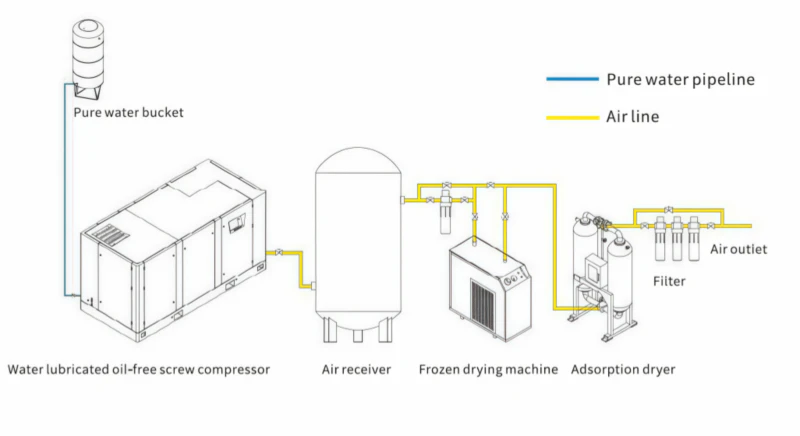
For stationary, high-volume commercial and medical facility oxygen generators, AC Induction Motors are highly reliable options. These motors plug directly into standard utility grids (110V/220V AC), removing the cost and complexity of internal power converters. AC induction motors do not use sliding carbon brushes, eliminating electrical friction wear and ensuring quiet, maintenance-free operation across years of service. However, they are heavy, bulky, and lack speed control, making them unsuited for portable or battery-powered devices.
For portable oxygen concentrators (POCs) and mobile emergency respiratory packs, Brushless DC (BLDC) Motors are the clear industry benchmark. BLDC motors replace mechanical carbon brushes with smart electronic commutation, utilizing micro-controllers and Hall-effect sensors to sequentially energize the internal stator windings. This electronic execution provides high mechanical efficiency, minimal thermal buildup, and precise, variable speed control. By adjusting motor RPM dynamically based on real-time patient inhalation demand, a BLDC-driven compressor drastically minimizes battery drain, extends mobile device runtimes, and offers a highly lightweight, compact structural profile.
4. Material Science Innovations: Specifying Polymers and Permanent Seals
Because oxygen generation devices prohibit the use of liquid hydrocarbon lubricants, miniature compressors rely on advanced material science to maintain airtight seals and minimize frictional wear. When auditing an international compressor supplier, procurement teams must look past external housing covers and closely evaluate the polymer composition of internal wear components.
The critical wear point in any rocking piston compressor is the sliding cup seal mounted on the crown of the piston head. In premium configurations, these cups are manufactured from custom blends of Polytetrafluoroethylene (PTFE) reinforced with structural binders like glass fiber, carbon, or bronze dust. These custom binders improve the polymer’s tensile strength and creep resistance, allowing the seal edges to expand against the cylinder walls without wearing thin under high thermal stress. The cylinder sleeves must be machined from high-grade aluminum alloys treated with hard-anodized coatings, creating a low-friction surface that maximizes seal operating lifespans.
For diaphragm micro-pumps, the flexible membrane is the primary engineering point of interest. Sourcing specifications should dictate the use of advanced multi-layered elastomers like EPDM or Viton bonded to structural fabrics. These synthetic rubbers resist flexing fatigue across millions of operational cycles. Crucially, internal crankshaft bearings and wrist pins must be packed with high-temperature synthetic grease and sealed behind dual-lip rubber shields. This ensures grease lubricants stay locked away from open air channels, keeping the gas stream completely pure and oil-free.
5. Sourcing Metrics Comparison Grid
To streamline the procurement evaluation workflow, the table below provides an integrated engineering comparison of miniature compressor technologies, categorizing key sourcing parameters across common application loads:
| Compressor Architecture | Optimal Flow Domain (L/min) | Continuous Pressure Cap (Bar) | Primary Motor Pairing | Target Lifecycle (MTTF Hours) |
|---|---|---|---|---|
| Miniature Rocking Piston | 30 ~ 80 L/min | Up to 5.0 Bar | AC Induction / BLDC | 5,000 ~ 10,000 Hours |
| Micro Diaphragm Pump | 5 ~ 25 L/min | Up to 3.0 Bar | 12V/24V Brushless DC | 8,000 ~ 12,000 Hours |
| Miniature Scroll Platform | 60 ~ 150 L/min | Up to 7.0 Bar | High-Torque AC / BLDC | 10,000 ~ 15,000 Hours |
6. Thermal Isolation Paradigms: Managing Heat Budgets
A major risk to gas separation purity is gas stream overheating. When air is compressed, a significant amount of heat is generated as a thermodynamic byproduct. In an oil-free system lacking an oil envelope to absorb this heat, temperatures inside the pump head can quickly climb past 100°C. If this hot gas stream is fed directly into a PSA module, the nitrogen adsorption capacity of the Zeolite Molecular Sieve drops drastically, causing a sharp reduction in downstream oxygen purity.
Therefore, procurement teams must ensure that suppliers utilize effective thermal management features. Compressor housings should be cast from high-conductivity aluminum alloys with multi-channeled cooling fins to maximize surface area. Drive shafts should feature integrated structural cooling fans to blast air across the cylinder head. For high-capacity installations or devices running in hot climates, integrating dedicated air aftercoolers between the compressor outlet and the PSA bed inlet is recommended to guarantee the incoming air temperature stays within optimal limits.
7. Acoustic Isolation and Mechanical Balancing Engineering
Because miniature oxygen concentrators are frequently deployed directly within clinical care units, home environments, or quiet scientific laboratories, noise pollution and mechanical vibration are critical engineering factors. High decibel levels cause sleep disruption for recovering patients, while structure-borne vibrations can impact nearby precision laboratory instrumentation.
To achieve noise levels below 50 decibels, professional micro-compressors utilize advanced balancing mechanics. Drive shafts should feature dual integrated counterweights to offset the unequal mass distribution caused by eccentric crank offsets. In multi-cylinder pumps, heads should be arranged in opposing configurations (such as V-twin arrays) so their kinetic forces cancel each other out during operation. Intake tracks must incorporate silencing mufflers to dampen air pulsation roars, while the entire assembly should mount to the primary chassis via high-compliance elastomer vibration isolators to prevent noise transmission through the equipment housing.
8. Quality Control Protocols & Regulatory Certification Benchmarks
Sourcing medical and industrial-grade components requires strict adherence to global regulatory standards. If a compressor supplier lacks verifiable manufacturing quality certifications, your final assembly faces high risks of rejection during institutional audits or international border transitions.
Sourcing managers should verify that potential manufacturing partners maintain strict ISO 9001 and ISO 13485 quality management certifications. ISO 13485 is particularly critical for medical device integration, requiring full component traceability, strict document controls, and comprehensive risk mitigation files for every assembly produced. Furthermore, the compressor components should bear verifiable CE and RoHS marks, certifying compliance with international electrical safety and hazardous substance restrictions. Demand full inspection reports, including electrical insulation breakdown charts and vibration spectrum analyses, prior to finalizing commercial procurement contracts.
9. Total Cost of Ownership (TCO) and Lifecycle Maintenance Costs
The purchase price of a miniature compressor represents a small percentage of its total lifecycle cost of ownership (TCO). Over a standard 5-to-10-year operating horizon, electrical energy consumption and periodic maintenance intervals represent the dominant drivers of operational expenditure.
Selecting a high-efficiency pump configuration reduces power draw, lowering electricity costs for end-users and reducing battery drain for portable devices. Furthermore, oil-free systems eliminate oil-checks, coalescing filter replacements, and oily condensate disposal from regular maintenance routines. However, because they rely on sacrificial polymer components, a disciplined rebuild schedule must be established. Replacing worn PTFE cup rings and cylinder sleeves using factory service kits every 5,000 operating hours ensures the machine maintains its specified volumetric output, preventing sudden performance drops and maximizing the lifecycle of your entire oxygen production asset.
10. Advanced Technical Diagnostics and Troubleshooting Matrix
Maintaining maximum plant uptime requires technical operators to accurately identify and resolve minor system variances before they cause unexpected system shutdowns. The diagnostics matrix below outlines common troubleshooting procedures for miniature oil-free compressors:
Symptom A: Volumetric Delivery Flow Rate (L/min) Drops Gradually Under Steady Backpressure
This drop indicates progressive wear of the sacrificial PTFE piston cup seal. As the polymer profile wears thin against the cylinder walls, compressed gas slips back into the lower crankcase housing during the compression stroke. Operators should measure discharge pressures using an inline gauge; if pressure targets underperform factory metrics, disassemble the head block and install an OEM seal rebuild kit to restore full volumetric efficiency.
Symptom B: Sharp, Metallic Clattering Sound originating from Cylinder Casting
A sudden increase in mechanical noise typically indicates that ambient particulate contaminants have bypassed a torn intake filter element and entered the internal cylinder cavity. These hard particulates score the inner polished walls of the cylinder sleeve, causing rapid seal tearing. Turn off the system immediately to prevent permanent damage to the piston rods. Inspect the cylinder wall, replace the scored sleeve if deep grooves are detected, and fit a new high-efficiency intake filter.
Symptom C: Periodic Motor Shut-downs via Thermal Overload Interrupters
This shutdown indicates the compressor head is experiencing severe heat buildup. Verify that external electrical cooling fans are running and use a brush to clear dust from the aluminum cooling fins. If the external surfaces are clear, inspect the internal reed flapper valves; carbon buildup or trace oxidation can cause these thin metallic tabs to stick, creating internal air recirculation that spikes temperatures quickly.
11. Advanced Sourcing Frequently Asked Questions (FAQ)
A: FAD measures the compressor’s volumetric air displacement at zero backpressure. In a PSA oxygen concentrator, the pump faces continuous resistance from dense zeolite sieve beds. Sourcing teams must evaluate flow rates directly at your system’s target operating pressure line (typically 3.0 to 5.0 bar) to ensure stable, real-world performance.
A: This drop is caused by the cylinder head’s internal clearance volume. High-pressure air remains trapped in this dead space at the top of the stroke. As the piston retreats, this gas expands, restricting the volume of fresh ambient air that can be drawn in through the intake valve.
A: BLDC motors are the benchmark for portable, battery-powered devices due to their compact size, lightweight design, high electrical efficiency, and precise variable speed control. AC induction motors are preferred for stationary facility generators where direct grid power is available and low component complexity is prioritized.
A: They utilize flexible cup seals manufactured from advanced PTFE blends reinforced with structural binders like glass fiber or carbon. These polymer compounds expand against hard-anodized cylinder walls, providing an airtight pneumatic seal with minimal sliding friction.
A: Diaphragm membranes are subject to cyclical bending fatigue. Failure presents as a sudden, complete loss of discharge pressure when the rubber splits or tears, causing compressed air to dump into the lower crankcase instead of venting into the downstream system.
A: ISO 13485 governs quality management for medical device manufacturing. Choosing an ISO 13485 certified supplier ensures complete component traceability, strict manufacturing documentation, and comprehensive risk mitigation files, streamlining your final product’s regulatory approval path.
A: High temperatures increase the kinetic energy of gas molecules, disrupting the electrostatic attraction that binds nitrogen to the zeolite crystals. If compressed air enters the PSA bed above 40°C, nitrogen escapes early, reducing downstream oxygen purity.
A: Sourcing specifications should require integrated dual counterweights on the main crankshaft, multi-stage silencing mufflers on the air intake, and high-compliance elastomer or spring-loaded vibration isolators to prevent noise transmission through the housing.
A: Internal crankshaft bearings and connecting rod wrist pins are packed with specialized synthetic grease and sealed permanently behind dual-lip Viton shields, ensuring lubricants stay locked away from open air pathways.
A: Servicing is exceptionally straightforward. A field technician can remove the cylinder head, swap out the worn PTFE cup seal and hard-anodized cylinder sleeve using standard hand tools in under twenty minutes, restoring full volumetric efficiency.
Partner with a Certified Sourcing Leader
Stop gambling your system reliability on unverified components. Reach out to our B2B procurement division to configure a certified oil-free miniature compressor that matches your exact pneumatic curves and regulatory benchmarks.