
When Compressed Air Purity Becomes a Patient Safety Issue
Medical oxygen is one of the most tightly regulated pharmaceutical products in the world. Whether it is administered to a patient in a post-surgical ward, delivered to a ventilator in an intensive care unit, or supplied to an anaesthesia machine in an operating theatre, the oxygen a patient inhales must meet stringent purity specifications — specifications that extend beyond the oxygen molecule itself to the quality of every component in the production and distribution chain that could introduce a contaminant into the final gas stream.
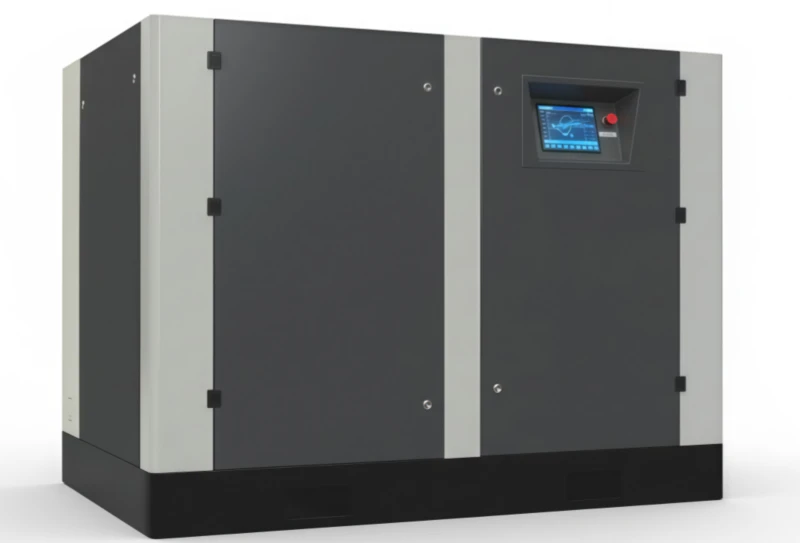
At the foundation of any on-site medical oxygen generation system based on Pressure Swing Adsorption (PSA) technology sits the air compressor. This machine draws atmospheric air, compresses it to the operating pressure of the PSA generator, and delivers it to the zeolite molecular sieve beds where nitrogen is selectively removed to yield an oxygen-enriched product gas. The air compressor is the first component in the chain — and it is the component whose specification most directly determines whether the entire system will meet the medical-grade purity standards required by international standards bodies, national health regulators, and the fundamental ethics of patient care.
This article examines in depth the regulatory requirements, contamination risks, equipment specifications, and engineering design considerations that govern the selection and installation of oil-free air compressors in medical oxygen stations. It is intended as a practical reference for hospital infrastructure engineers, facility planners, medical gas system contractors, and procurement managers who are responsible for ensuring that on-site oxygen generation systems meet and maintain their required performance and compliance standards throughout their operational life.
The Regulatory Landscape: Standards Governing Medical Compressed Air and Oxygen
Medical oxygen generation systems are subject to a multilayered regulatory framework that varies somewhat by jurisdiction but converges on a common set of core requirements for gas purity, equipment certification, system design, and ongoing quality assurance. Understanding this framework is a prerequisite for making correct equipment specifications — not because compliance is bureaucratically imposed, but because the standards encode decades of accumulated clinical experience about what levels of gas purity are necessary to protect patient safety.
ISO 8573-1: The Compressed Air Purity Classification Standard
ISO 8573-1 is the foundational international standard for compressed air quality. Published by the International Organization for Standardization, its most recent edition (ISO 8573-1:2010) defines a classification system for compressed air purity across three contamination categories: solid particulates, water (liquid, vapour, and aerosol), and oil (liquid aerosol and vapour combined). Each category is assigned a numerical class from 0 to 9 (or X for unspecified), with lower class numbers indicating higher purity.
For oil content — the parameter most directly relevant to compressor selection — the classification scale runs as follows:
| ISO 8573-1 Oil Class | Max. Total Oil Content | Medical Suitability |
|---|---|---|
| Class 0 | Defined by user — more stringent than Class 1; in practice <0.003 mg/m³ | Required for medical oxygen PSA feed air |
| Class 1 | ≤ 0.01 mg/m³ | Insufficient for medical oxygen production |
| Class 2 | ≤ 0.1 mg/m³ | Not acceptable for medical applications |
| Class 3–4 | ≤ 1–5 mg/m³ | General industrial only — prohibited in medical settings |
Class 0 is not a fixed numerical specification — it is a statement that the application requires oil content more stringently controlled than Class 1 allows, with the exact limit defined by the user in consultation with the equipment manufacturer. For medical PSA oxygen production, this means compressor equipment that contains no lubricating oil within the compression chamber at all — the only engineering solution that provides a categorical rather than probabilistic guarantee of oil-free output.
EN ISO 7396-1: Medical Gas Pipeline System Requirements
EN ISO 7396-1 governs the design, installation, function testing, and ongoing maintenance of medical gas pipeline systems in healthcare facilities. This standard specifies requirements for the entire medical gas supply chain from source (whether a bulk liquid oxygen tank, compressed gas manifold, or on-site PSA generator) through the pipeline distribution network to the point-of-care outlets at patient bedheads, anaesthesia workstations, and intensive care positions.
With respect to on-site oxygen generation by PSA, EN ISO 7396-1 requires that the feed air compressor for the PSA generator be of the oil-free type. This is not a preference or a best-practice recommendation — it is a mandatory requirement embedded in the normative (binding) clauses of the standard. A PSA oxygen generation system installed with an oil-lubricated compressor and downstream treatment filters does not comply with EN ISO 7396-1, regardless of the downstream treatment performance, because the standard requires oil-free compression at the source, not oil removal by filtration.
Pharmacopoeial Standards: European Pharmacopoeia and USP
Medical oxygen is classified as a medicinal product (a drug) in most regulatory jurisdictions, and as such it must meet the monograph specifications published in the relevant pharmacopoeia. The European Pharmacopoeia (Ph. Eur.) monograph for Oxygen (O2 — 93 per cent) specifies a minimum purity of 90% oxygen by volume, with limits for carbon dioxide (not more than 300 ppm), carbon monoxide (not more than 5 ppm), water vapour (pressure dew point not more than −50°C), and oil (not more than 0.1 mg/m³ at the point of use).
The United States Pharmacopeia (USP) monograph for Oxygen 93% similarly specifies purity limits for carbon dioxide, carbon monoxide, and other specified impurities, including requirements that apply to on-site generation systems. Both pharmacopoeial frameworks require that the production process maintains compliance with Good Manufacturing Practice (GMP) principles — a requirement that, for PSA oxygen generators, extends to the compressed air feed quality and therefore to the compressor specification.
Regulatory Summary: Three convergent regulatory frameworks — ISO 8573-1 Class 0, EN ISO 7396-1, and pharmacopoeial GMP requirements — independently specify oil-free compression as the mandatory basis for medical PSA oxygen generation. The specification is not optional, not achievable by downstream filtration, and not waivable on grounds of cost or practicality. It is the engineering standard that medical gas safety is built on.
Why Oil Contamination in Medical Oxygen Is a Direct Patient Safety Risk
The regulatory requirements described above exist because oil contamination of medical oxygen is not a theoretical or negligible risk — it is a clinically documented hazard with specific and serious consequences for patients receiving oxygen therapy. Understanding the clinical basis of these risks is important context for the engineering decisions that follow.
Lipoid Pneumonia from Inhaled Hydrocarbon Aerosols
Hydrocarbon aerosols and vapours from lubricating oil, if present in the oxygen delivered to a patient’s airway, can be deposited on the alveolar surfaces of the lungs. Here, the lipophilic nature of hydrocarbon molecules causes them to accumulate in macrophage cells — the lung’s immune defence cells — producing a condition known as lipoid pneumonia. This is an inflammatory lung condition characterised by progressive pulmonary dysfunction, and it is particularly dangerous in patients who are already receiving oxygen therapy because of underlying respiratory compromise. Lipoid pneumonia from medical gas contamination has been documented in clinical literature and has resulted in regulatory enforcement actions against healthcare facilities.
Fire and Ignition Risk in Oxygen-Enriched Environments
Hydrocarbon contamination in medical oxygen creates a fire safety hazard that is particularly acute in the oxygen-enriched environments of anaesthesia circuits and oxygen therapy delivery systems. Oxygen dramatically reduces the minimum ignition energy of hydrocarbon materials — materials that would not normally ignite in air can ignite readily in concentrated oxygen streams. An oil mist or hydrocarbon vapour present in an oxygen-enriched circuit represents a potential ignition source that can cause rapid combustion in the presence of the oxygen itself. Medical device manufacturers design their equipment with the assumption that the oxygen supply is hydrocarbon-free; oil contamination violates this assumption.
Zeolite Contamination and Purity Degradation
As discussed in detail in the context of industrial PSA systems, oil carry-over from the feed air compressor causes irreversible fouling of the zeolite molecular sieve beds within the PSA generator. In a medical oxygen system, this fouling has a dual consequence: it reduces the oxygen purity produced by the generator (creating a risk of delivering below-specification oxygen to patients) and it potentially releases degradation products from the fouled zeolite into the oxygen product stream. Medical-grade zeolite used in hospital PSA generators is formulated and certified on the assumption of oil-free feed air; the zeolite certification is invalidated by oil contamination.
Clinical Risk Statement: Oil contamination of medical oxygen is not a maintenance inconvenience — it is a patient safety incident. In many regulatory frameworks, delivery of out-of-specification medical oxygen to a patient constitutes a mandatory-reporting adverse event, with potential consequences for facility accreditation, clinical governance, and medicolegal liability. Prevention through correct equipment specification is the only responsible approach.
Why Downstream Filtration Cannot Replace Oil-Free Compression in Medical Applications
A question frequently encountered in the specification of medical gas systems is whether a high-quality oil-lubricated compressor with comprehensive downstream filtration — coalescing filters, activated carbon adsorbers, and continuous oil monitoring — can be used as an alternative to a genuinely oil-free compressor. The answer, for medical oxygen applications, is an unambiguous no — and understanding why is essential for anyone involved in medical gas system design.
The Vapour-Phase Problem
Lubricating oil in a compressor exists in two forms in the compressed air discharge stream: as aerosol droplets (particles of oil suspended in the air) and as oil vapour (molecules of oil in the gas phase). Coalescing filters are designed to capture aerosol droplets by physical impaction and interception on filter fibre matrices. They have no useful efficiency against oil in the vapour phase. Only activated carbon adsorbers can capture vapour-phase hydrocarbons, and their performance degrades progressively as the carbon becomes saturated with adsorbed hydrocarbons — a saturation event that can be difficult to detect without continuous monitoring instrumentation.
The Statistical Certainty of Filter Failure Over Time
A hospital medical oxygen system operates continuously — 24 hours a day, 365 days a year — over a design life of 15 to 25 years. During this period, the downstream filtration train serving an oil-lubricated compressor will require hundreds of filter change-out operations, dozens of activated carbon replacement procedures, and continuous monitoring system calibrations. The probability that every single one of these maintenance operations will be executed perfectly, on schedule, without any bypass or degradation event, over a 20-year period, approaches zero. Even a single brief period of degraded downstream treatment performance — caused by an incorrectly installed filter cartridge, a momentary pressure surge during maintenance, or a missed service interval — can result in hydrocarbon carry-over to the PSA zeolite and the oxygen product stream.
This is precisely why EN ISO 7396-1 and the relevant pharmacopoeial frameworks mandate oil-free compression at the source rather than oil removal by downstream treatment. The regulatory position is not that downstream filtration is ineffective in normal operation — it is that downstream filtration cannot provide the categorical, guaranteed oil-free output that patient safety requires under all operating conditions over the entire life of the system. Only a compressor that physically contains no oil in its compression chamber can provide this categorical guarantee.
Verification and Audit Obligations
Medical gas systems in accredited healthcare facilities are subject to periodic audit by regulatory bodies, accreditation agencies, and internal clinical governance teams. A PSA oxygen system fed by a genuinely Class 0 oil-free compressor can demonstrate compliance with a single, verifiable engineering fact: the compression mechanism contains no oil. A system relying on downstream filtration of an oil-lubricated compressor requires ongoing demonstration that the filtration is performing to specification — a more complex, more uncertain, and more audit-intensive compliance posture. In an era of increasing healthcare regulatory scrutiny, the simpler compliance path has significant institutional value beyond its direct engineering benefit.
Water-Lubricated Single-Screw Compressors: The Engineering Solution for Medical Oxygen Duty
Among the available oil-free compressor technologies, the water-lubricated single-screw architecture has emerged as the most widely adopted solution for medical PSA oxygen station duty, combining Class 0 purity guarantee with the mechanical reliability, energy efficiency, and maintenance simplicity that healthcare infrastructure demands. The following sections examine the specific engineering characteristics that make this technology particularly well-suited to medical applications.
Compression Chamber Architecture: Why Water Makes the Difference
In a water-lubricated single-screw compressor, the compression chamber — where atmospheric air is drawn in and mechanically compressed to the operating pressure of the PSA generator — uses pure, filtered water as the sealing, cooling, and lubrication medium. Water is injected into the compression space in precisely controlled quantities during the compression stroke, where it performs three functions simultaneously: it seals the clearance gaps between the main screw rotor and the two planetary gate rotors that form the compression geometry, it absorbs the heat of compression and maintains near-isothermal conditions in the chamber, and it provides the hydrodynamic fluid film that prevents metal-to-metal contact between the rotating elements.
Because water is the only fluid present in the compression chamber — and water is not a contaminant in compressed air destined for a downstream refrigerant dryer — the compressed air discharge from a water-lubricated single-screw compressor contains absolutely zero hydrocarbon content. This is not a performance claim subject to degradation over time or under varying operating conditions; it is a categorical engineering fact arising from the absence of hydrocarbon-containing fluids from the compression process.
Oil content in discharge — Class 0 by engineering design
Medical-grade oxygen purity achievable with correct feed air
Typical motor power for small medical PSA compressor units
Expected zeolite sieve life with Class 0 feed air maintained
Quiet Operation: A Clinical Environment Requirement
Hospitals and clinical facilities have strict noise requirements in areas adjacent to patient care zones. Mechanical plant rooms, even those separated from ward areas by structural barriers, must comply with noise limits that protect patient rest and clinical communication. The near-isothermal compression characteristic of water-lubricated single-screw compressors — where the water injection provides continuous cooling that suppresses the thermal pressure peaks associated with adiabatic compression — translates into inherently smoother, lower-vibration operation compared with conventional reciprocating alternatives. Combined with the balanced force geometry of the single-screw rotor design (which eliminates the cyclically varying forces that cause vibration in reciprocating compressors), water-lubricated single-screw units are significantly quieter than oil-free reciprocating compressors of comparable capacity.
Reduced Maintenance Burden in Healthcare Settings
Maintenance access in hospital environments is inherently more constrained than in industrial settings. Engineering staff in healthcare facilities manage a very wide range of critical systems simultaneously, and compressor maintenance cannot be given the same dedicated attention that an industrial plant maintenance team would provide. The simplified maintenance profile of water-lubricated single-screw compressors — which eliminates oil changes, oil filter replacement, oil separator cartridge changes, and the maintenance of downstream oil removal filtration — is therefore a particularly important operational advantage in the healthcare setting. The primary maintenance requirements are limited to water quality management, air filter element inspection, and periodic instrumentation checks.
The Complete Medical Oxygen Station: System Design and Component Specification
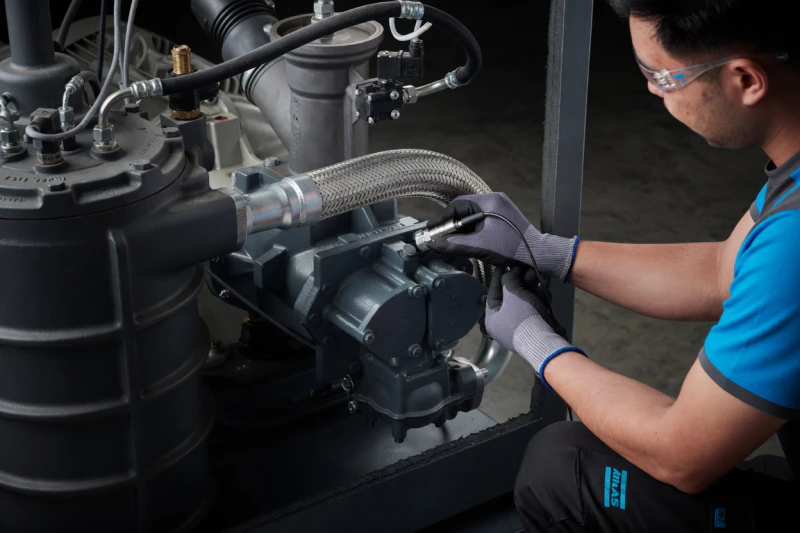
A complete on-site medical PSA oxygen station consists of several engineered subsystems that must work together to produce oxygen meeting pharmacopoeial purity specifications at the required flow rate and pressure. The compressor is the most critical single component, but correct specification of the entire system is necessary to achieve and maintain compliance.
Class 0 Oil-Free Compressor (Duty and Standby)
Medical gas systems invariably require a duty-standby compressor configuration to maintain oxygen supply availability during maintenance or compressor fault. EN ISO 7396-1 specifies minimum availability requirements for medical gas supply systems that effectively mandate redundancy. Both the duty and standby compressors must be Class 0 certified — a standby oil-lubricated compressor used as a backup for an oil-free duty unit does not comply with the standard and creates a patient safety risk during standby operation periods.
Compressed Air Receiver and Buffer Vessel
A stainless steel compressed air receiver, sized to provide 3 to 5 minutes of buffer capacity at peak demand flow, dampens pressure pulsations from the compressor cycling, provides initial bulk moisture condensation, and reduces the frequency of compressor start-stop cycles. The receiver must be constructed of materials compatible with high-purity medical gas service and fitted with an automatic condensate drain.
Refrigerant Dryer
A refrigerant dryer chills the compressed air to a pressure dew point of +3°C to +7°C, removing the bulk of the water vapour content. For a water-lubricated compressor, the dryer must be sized to handle the additional water vapour load introduced by the water-sealing medium itself, which is higher than for equivalent oil-lubricated units. Correct dryer sizing for this higher moisture load is a common specification error that leads to inadequate dew point performance.
Twin-Tower Desiccant Adsorption Dryer
A twin-tower desiccant adsorption dryer reduces the compressed air dew point from the +3°C delivered by the refrigerant dryer to −40°C or lower — the level required to protect the PSA zeolite molecular sieve from moisture loading. The desiccant towers operate in alternating adsorption and regeneration cycles, ensuring continuous deep drying. Desiccant selection, vessel sizing, and regeneration cycle design must be optimised for the actual compressed air flow rate, inlet temperature, and target outlet dew point.
Particulate Filtration Train
A graded series of particulate filters (typically 5 micron, 1 micron, and 0.01 micron in series) removes desiccant dust and any residual particulate matter from the air stream before it enters the PSA generator. In an oil-free compressed air system, these filters serve a purely precautionary role — they are not relied upon for oil removal as they would be in a filtered oil-lubricated system — and their element change requirements are correspondingly lighter.
PSA Oxygen Generator with Medical-Grade Zeolite
The PSA generator itself consists of dual adsorber columns packed with pharmaceutical-grade zeolite molecular sieve, an automatic valve sequencing system, and an oxygen product buffer vessel. The oxygen buffer vessel is typically sized for 5 to 10 minutes of peak demand storage, providing continuity of supply during compressor load cycling or brief maintenance interventions.
Oxygen Purity Monitor and Alarm System
EN ISO 7396-1 requires continuous monitoring of the oxygen concentration delivered to the distribution pipeline, with audible and visible alarms at the local plant room and at a permanently staffed alarm repeater panel. The purity monitor must be calibrated to the pharmacopoeial minimum purity specification and must initiate automatic switchover to backup oxygen supply (bulk liquid oxygen or cylinder manifold reserve) if the PSA generator output falls below the minimum specification.
Sizing the Medical PSA Compressor: Key Parameters and Common Errors
Correct sizing of the air compressor for a medical PSA oxygen station requires a careful analysis of several interacting parameters. Under-sizing the compressor results in insufficient oxygen production to meet peak clinical demand — a patient safety issue. Over-sizing wastes capital and energy. The following parameters must be correctly established before equipment is specified.
Peak Oxygen Demand Flow Rate
The peak oxygen demand of a hospital depends on the number and type of patient care beds served, the case mix of clinical activity (ICU, surgical, general medical, emergency), and the diversity factor — the statistical probability that all connected outlets will simultaneously demand maximum flow. Medical gas system design standards provide guidance on diversity factor calculation, but the peak demand figure must be verified against the actual clinical programme of the specific facility. For new hospitals, a minimum 25% capacity margin above the calculated peak demand is prudent given the uncertainty inherent in clinical demand forecasting.
Compressor Air-to-Oxygen Ratio and Required Feed Air Volume
PSA oxygen generators require a feed air volume of approximately 3 to 4.5 times the produced oxygen volume (at the same pressure and temperature reference conditions), depending on the specific PSA cycle design and zeolite loading. This ratio must be verified with the PSA generator manufacturer for the specific unit selected, and the compressor must be sized to deliver the required feed air volume at the specified pressure under worst-case ambient conditions (maximum temperature, minimum atmospheric pressure).
Discharge Pressure and Downstream Pressure Losses
The compressor discharge pressure must be sufficient to maintain the required PSA generator inlet pressure (typically 5 to 7 bar gauge) after accounting for all pressure losses in the treatment train — the refrigerant dryer, the desiccant adsorber beds, the filtration stages, and the connecting pipework. In practice, a minimum compressor discharge pressure of 7 to 8 bar gauge is typically required to ensure adequate pressure at the PSA generator inlet, even after treatment train losses are accounted for.
Ambient Temperature and Altitude Corrections
Compressor volumetric capacity and motor power ratings published in catalogues are stated at standard reference conditions (typically 20°C, 1 bar absolute, 0% relative humidity). Real installations rarely match these conditions. At higher ambient temperatures, the air density is lower, reducing the mass flow of air the compressor can deliver. At altitude, the atmospheric pressure is lower, reducing the absolute compression ratio achievable and the oxygen partial pressure in the feed air. Both effects reduce the effective oxygen production capacity of the system below the standard-condition rated values and must be accounted for in the sizing calculation.
Common Sizing Error: The most frequent sizing mistake in medical PSA oxygen station design is specifying compressor capacity at standard reference conditions and assuming it will be achieved at the actual site ambient conditions. For a facility at 1,500 metres altitude with summer ambient temperatures of 35°C, the actual compressor delivery capacity may be 15% to 25% lower than the standard-condition rating — a shortfall that can be critical during peak clinical demand periods.

Certification and Documentation Requirements for Medical Gas Compressors
For medical applications, the documentation package accompanying the compressor is not a bureaucratic formality — it is a fundamental part of the compliance evidence that the facility must maintain to demonstrate regulatory compliance and to support the GMP quality management system that governs medical oxygen production. The following documentation elements are typically required for a medical PSA oxygen station compressor installation.
ISO 8573-1 Class 0 Certification
A formal certificate from the compressor manufacturer confirming that the equipment model is certified to ISO 8573-1 Class 0 for oil content, accompanied by third-party test reports confirming oil content measurements at the compressor outlet below the specified threshold under defined operating conditions. It is important to obtain certification for the complete compressor unit as supplied — not just for the compression mechanism in isolation — since ancillary components (shaft seals, gearbox elements, cooling system connections) can introduce hydrocarbon contamination if not also confirmed as oil-free.
CE Marking and Machinery Directive Compliance
For installations within the European Union and markets accepting CE marking, the compressor must carry CE marking under the EU Machinery Directive (currently 2006/42/EC, subject to update under the revised Machinery Regulation) confirming conformity with essential health and safety requirements for mechanical equipment. The CE Declaration of Conformity and the associated technical file must be retained by the equipment owner as part of the installation documentation.
Installation Qualification and Operational Qualification (IQ/OQ)
GMP-regulated facilities — including hospitals producing medical oxygen under a manufacturer’s licence, pharmaceutical manufacturing sites, and blood products facilities — typically require IQ/OQ documentation for critical utility equipment including compressed air and oxygen generation systems. Installation Qualification documents verify that the equipment has been installed in accordance with the manufacturer’s specifications and the facility’s engineering requirements. Operational Qualification documents verify that the equipment performs within its specified parameters under defined operating conditions. Compressor suppliers serving the medical and pharmaceutical market should be able to provide IQ/OQ documentation templates and support for completing the qualification process.
Ongoing Performance Monitoring and Maintenance Records
Medical gas systems require documented maintenance programmes and performance records maintained throughout the operational life of the installation. For the compressor, this includes scheduled maintenance records, water quality analysis results, filter change records, and any corrective maintenance reports. These records form part of the facility’s quality management system documentation and must be available for inspection by regulatory authorities and accreditation bodies on request.
Air-Cooled vs Water-Cooled Configurations for Hospital Environments
Water-lubricated single-screw compressors for medical PSA oxygen duty are available in both air-cooled and water-cooled configurations. The choice between these configurations depends on the hospital infrastructure available and the site-specific constraints of the plant room where the equipment will be installed.
Air-cooled configurations use a high-volume fan and heat exchanger array to dissipate the heat of compression to the ambient air in the plant room. They are fully self-contained, requiring no external cooling water supply or cooling tower infrastructure, which makes them the preferred choice for hospital installations where the medical gas plant room is a standalone space without connection to the building’s chilled water or cooling tower circuits. Air-cooled units are also easier to commission and require less ancillary pipework, reducing installation cost and complexity. The primary limitation is that their effective capacity decreases at high ambient temperatures, as noted in the sizing discussion above.
Water-cooled configurations use an external water circuit — either a dedicated cooling tower loop or a connection to the hospital’s chilled water system — to remove the heat of compression. They offer more consistent performance across ambient temperature variations and achieve slightly higher energy efficiency through more effective isothermal compression conditions. For larger hospital installations where the medical gas plant room is integrated with the main engineering services infrastructure and cooling water is already available, water-cooled configurations may be preferred. The additional infrastructure requirements (cooling water supply, return, treatment) must be factored into the total installation cost evaluation.
Total Cost of Ownership for Medical Oxygen Station Compressors
Hospital infrastructure investment decisions are increasingly evaluated on a total cost of ownership (TCO) basis that captures capital expenditure, operating costs, and maintenance costs over a defined appraisal period — typically 15 to 20 years for major installed plant. For medical PSA oxygen station compressors, the TCO analysis consistently demonstrates that water-lubricated oil-free single-screw compressors represent the lowest lifecycle cost option, despite a higher purchase price than oil-lubricated alternatives.
Energy costs dominate the TCO analysis at approximately 60% of total lifecycle expenditure for a continuously operating medical gas compressor. The near-isothermal compression characteristics of water-lubricated single-screw compressors deliver measurably lower specific energy consumption compared with adiabatic compression alternatives, and permanent magnet variable frequency drive configurations further reduce energy consumption during partial-load operation — which characterises medical gas demand patterns where peak demand is significantly higher than average demand.
Maintenance costs represent approximately 30% of lifecycle expenditure. The elimination of oil-related consumables and the simplified maintenance profile of the single-screw architecture, combined with the reduced bearing loading that characterises the balanced force geometry of single-screw compressors, produce a maintenance cost significantly below that of oil-lubricated alternatives. For healthcare facilities where maintenance labour is a scarce resource shared across many critical systems, the reduced maintenance demand is an operational benefit beyond its direct cost saving.
Compliance and risk costs — though less easily quantified — are a real element of TCO for medical gas systems. The cost of a compliance breach involving out-of-specification medical oxygen, including incident investigation, patient safety review, potential regulatory enforcement, and reputational consequences, is very significantly larger than the cost differential between an oil-free and an oil-lubricated compressor. The oil-free specification is therefore cost-effective not only in direct engineering terms but also as a risk management investment.
Healthcare facility procurement teams that engage with a specialist medical grade air compressor supplier with documented experience in hospital oxygen generation applications — rather than sourcing general-purpose industrial equipment — consistently achieve better alignment between equipment specification and clinical compliance requirements, with fewer specification errors, shorter commissioning periods, and more reliable long-term performance outcomes.
Conclusion: Class 0 Oil-Free Compression Is the Non-Negotiable Foundation of Medical Oxygen Safety
The specification of an oil-free air compressor for a medical PSA oxygen station is not a design preference, a best-practice recommendation, or a conservative engineering choice — it is a mandatory requirement of the international standards that govern medical gas systems, a prerequisite for pharmacopoeial compliance, and a fundamental patient safety obligation. No downstream filtration system, however sophisticated or well-maintained, provides a reliable long-term substitute for compression technology that is categorically incapable of introducing hydrocarbon contamination into the compressed air stream.
Water-lubricated single-screw compressors represent the engineering technology that most completely and reliably meets the requirements of medical PSA oxygen station duty. Their Class 0 purity guarantee — achieved by the physical absence of lubricating oil from the compression chamber rather than by downstream removal — provides the categorical compliance assurance that medical gas regulations require. Their quiet operation, simplified maintenance profile, long-term reliability, and energy efficiency make them well-suited to the demanding operational environment of healthcare infrastructure. And their documentation and certification capability — ISO 8573-1 Class 0 certification, CE marking, IQ/OQ qualification support — enables the compliance evidence trail that regulated medical gas production demands.
For hospital infrastructure engineers, medical gas system contractors, and healthcare facility planners currently specifying or reviewing on-site oxygen generation systems, the most important single action is to engage with a compressor supplier who understands the medical gas regulatory framework and can provide the equipment certification, technical documentation, and application engineering support needed to specify and install a system that will maintain compliance throughout its operational life. Early engagement with a specialist in oil-free compressors for hospital oxygen supply avoids the costly errors that arise from treating medical gas compressors as a commodity procurement item.
Specifying a Compressor for a Medical Oxygen Station?
Our engineering team provides ISO 8573-1 Class 0 certified water-lubricated single-screw air compressors with full CE marking, IQ/OQ documentation support, and medical gas application engineering for hospital PSA oxygen stations. Local stock and rapid technical service available for Russia and CIS markets.
Request a Technical Consultation
Browse Our Air Compressor Range