
An exhaustive B2B engineering blueprint analyzing SWaP-C optimization, brushless DC commutation electronics, acoustic isolation patterns, and material micro-tolerances for ambulatory medical devices.
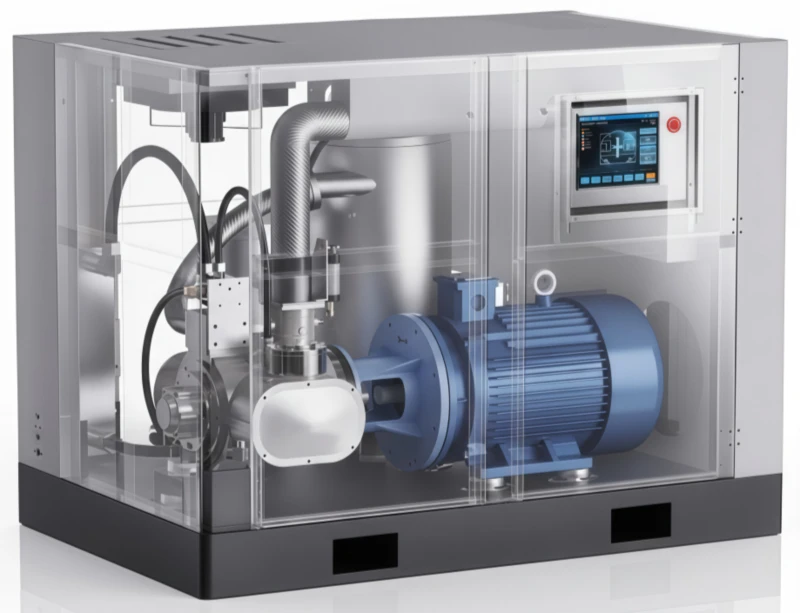
1. Introduction: The Ambulatory Revolution in Respiratory Care
The design paradigm of medical oxygen therapy has shifted dramatically over the past decade. Historically, patients requiring continuous long-term oxygen therapy (LTOT) were confined to the immediate radius of stationary home concentrators or tethered to heavy, volatile liquid oxygen tanks. This lack of mobility often resulted in social isolation and a decline in quality of life. The introduction of the Portable Oxygen Concentrator (POC) has fundamentally rewritten this clinical script, granting ambulatory freedom to patients worldwide. These lightweight, battery-powered medical devices extract, concentrate, and deliver high-purity oxygen from ambient air in real time, allowing individuals to maintain active lifestyles, travel on commercial flights, and navigate their communities without interruption.
However, compressing the complex molecular separation architecture of a full-scale Pressure Swing Adsorption (PSA) plant into a wearable, shoulder-slung enclosure introduces severe engineering challenges. A POC must operate as a highly reliable, closed-loop thermodynamic system under strict size and weight constraints. At the epicenter of this engineering challenge is the sub-miniature oil-free air compressor. As the primary consumers of battery power and the largest contributors to physical mass and decibel generation, micro-compressors dictate the market viability of any portable respiratory device.
Sourcing engineers and medical device developers must evaluate several conflicting performance metrics when selecting a micro-pump. Maximizing volumetric gas output often increases energy consumption, while reducing physical mass can impact mechanical structural stability and lifecycle durability. This exhaustive B2B guide analyzes the technical requirements of portable oxygen compressors, detailing size, weight, power, acoustic isolation, material science, and regulatory compliance standards to help your team navigate complex components with absolute engineering clarity.
2. Deciphering the SWaP-C Framework for Ambulatory Implements
To achieve commercial viability in the medical device marketplace, a portable oxygen concentrator must adhere to the rigid parameters of the SWaP-C framework: Size, Weight, Power, and Cost. Every millimeter of spatial volume saved and every gram of mass trimmed directly elevates the user experience, making the device easier to carry and reducing physical fatigue.
In terms of physical envelope optimization, a premium POC compressor must possess an ultra-compact footprint. This requires advanced configuration integration, such as blending the crankcase housing directly into the motor end-shield or using integrated multi-stage cylinders on a single balanced shaft. The overall weight of the pump module should ideally stay well below 800 grams for a standard 1-to-5 liter pulse-flow device. Achieving this low mass requires using lightweight structural alloys, such as aircraft-grade magnesium-aluminum complexes or high-rigidity carbon-fiber reinforced polyamides for structural supports, replacing heavy iron components without sacrificing mechanical rigidity under load.
The power dimension of SWaP-C is perhaps the most restrictive constraint in mobile device development. Because POCs run on lithium-ion battery arrays, every watt of electrical energy consumed by the compressor motor represents a direct reduction in the patient’s ambulatory range. Sourcing teams must analyze the compressor’s specific power consumption metric—defined as the electrical power required to deliver a single liter of compressed ambient air per minute under standard PSA operating pressures (Watts per L/min at 3.0 bar). Optimizing this parameter requires close coordination with motor commutation electronics and the implementation of advanced variable speed control mechanisms.
3. Motor Commutation & Smart Sensor Interfaces: Maximizing Electrical Efficiency
The mechanical efficiency of a micro-compressor is bounded by the electrical performance of its prime mover. For portable oxygen applications, traditional brushed motors or standard AC induction motors are completely obsolete due to their high friction losses, heavy weight, and lack of speed flexibility. Modern portable design mandates the utilization of high-performance Brushless DC (BLDC) Motors or coreless slotless DC frameworks operating on 12V or 24V DC bus lines.
BLDC motors achieve commutation electronically rather than through physical carbon brushes, utilizing an external motor controller to sequentially energize the internal copper stator windings based on the position of internal neodymium permanent magnets. This design eliminates brush friction and electrical arcing, allowing the motor to run cool and maximize its service life. To optimize this configuration further, premium portable compressors utilize Field-Oriented Control (FOC) or vector drive electronics. FOC monitors the phase currents continuously, managing the magnetic stator vectors to cross the rotor fields at a precise 90-degree angle, maximizing motor torque while reducing energy losses.
Crucially, this advanced motor interface enables the execution of pulse-dose oxygen delivery. Unlike stationary concentrators that output a continuous gas stream, modern POCs use sensitive nasal cannula pressure transducers to track the patient’s inspiration cycle. The internal computer commands the BLDC compressor to accelerate rapidly at the start of inhalation, delivering a precise bolus of oxygen, and then decelerates the pump during the exhalation phase. This demand-response speed control reduces power consumption by up to 50% compared to continuous-flow devices, extending battery life and allowing for smaller, lighter portable enclosures.
4. Technical Parameters Sourcing Matrix for Portable Units
Sourcing engineers require precise technical benchmarks to evaluate miniature oil-free compressors across potential suppliers. The table below represents the critical technical parameters and metric targets for compressors deployed inside high-performance portable oxygen devices:
| Sourcing Metric | Engineering Parameter Description | Standard Unit | Target OEM Value Range |
|---|---|---|---|
| 1 | Volumetric Output under Load | L/min | 15 ~ 35 L/min at 3.0 Bar |
| 2 | Total Component Mass | grams | 350 ~ 750 grams |
| 3 | Operating Voltage Configuration | V DC | 12V DC or 24V DC |
| 4 | Specific Power Draw Threshold | Watts/LPM | ≤ 1.8 Watts per Liter per Minute |
| 5 | Acoustic Emissions Profile | dBA | ≤ 40 dBA at 1 meter distance |
| 6 | Mean Time to Failure (MTTF) | hours | ≥ 15,000 Hours continuous operation |
| 7 | Permissible Envelope Volume | mm³ | ≤ 90 × 60 × 80 mm |
5. Acoustic & Vibration Isolation Engineering for Wearable Electronics
Because a portable oxygen concentrator is designed to operate immediately adjacent to the patient—frequently slung over the shoulder during public transit, positioned on an airplane tray table, or resting on a nightstand during sleep—minimizing sound output and vibration is critical. A loud, vibrating device causes public distraction and user discomfort, which can impact product adoption and patient compliance. Sourcing engineers must ensure that suppliers employ comprehensive acoustic mitigation features.
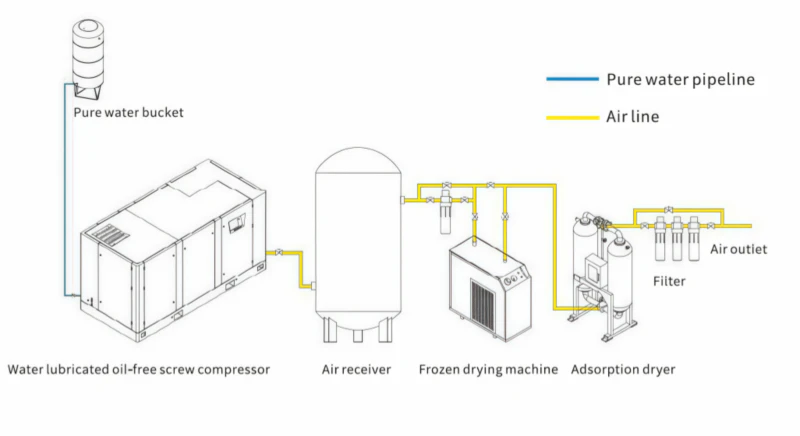
To reduce noise levels down to the targeted ≤ 40 dBA threshold, modern micro-compressors utilize advanced multi-axial balancing. The primary drive shaft features precision eccentrically offset counterweights to counteract the asymmetrical mass of the piston rod. In twin-cylinder models, a 180-degree phase offset between the pistons allows their inertial forces to cancel each out dynamically. Furthermore, the air intake path is fitted with internal porous labyrinth silencers that scatter sound waves, dampening the sharp clicking noises from the intake flapper valves.
Structure-borne vibration is isolated by mounting the entire compressor module inside a floating suspension frame using multi-point, high-compliance elastomer or silicone gel dampening boots. This floating suspension prevents mechanical vibrations from transferring directly into the rigid outer shell of the POC, which would otherwise amplify the sound like a drum. Flexible silicone or braided polymer lines connect the compressor exhaust to the filtration array, ensuring that thermal expansions and minor micro-movements do not crack plumbing joints over years of operation.
6. Advanced Materials & Tribology in Micro-Compression Chambers
Operating a compressor without an oil film to absorb heat creates significant material challenges. Compacting air crowded with molecules generates high heat of compression, and the sliding friction between self-lubricating polymer seals and aluminum sleeve walls adds to this thermal load. Because medical oxygen concentrators must operate continuously for weeks or months at a time, managing this heat buildup is essential for component survival.
The primary wear interface in an oil-free rocking piston micro-pump is the cup seal fixed to the piston crown. In modern portable designs, these cups are manufactured from customized blends of Polytetrafluoroethylene (PTFE) filled with structural compounds like carbon fiber, PEEK, or glass beads. These structural fillers lower the polymer’s thermal creep rate and increase its tensile strength, allowing the seal edges to flex against the cylinder wall without deforming or thinning over thousands of hours. The cylinder sleeve itself is machined from high-strength aluminum alloys treated with specialized hard-anodized or nickel-PTFE coatings, creating an exceptionally smooth, low-friction surface that maximizes seal life.
The design of the valving system inside the compressor head requires similar material precision. Modern micro-compressors replace traditional heavy spring valves with micro-thin reed flapper valves manufactured from polyetheretherketone (PEEK) polymers or premium fatigue-resistant sandvik stainless steel. PEEK flappers are lightweight, responsive, and provide excellent acoustic dampening when striking the valve seat. Internal bearings are packed with high-temperature synthetic grease and shielded behind dual-lip Viton seals, keeping grease lubricants securely isolated from open air channels and ensuring the gas stream remains pure and oil-free.
7. Transit Vibration Security & FAA Compliance Standards
Unlike stationary facility generators that operate in stable environments, portable oxygen concentrators are exposed to constant external forces. They are carried down stairs, subject to vehicular bumps, and exposed to turbulence during commercial flights. The micro-compressor must be structurally engineered to withstand these multi-axial shock loads without experiencing drive shaft deflection or housing misalignment.

To achieve commercial certification from bodies like the Federal Aviation Administration (FAA) for inflight use, the POC must pass rigorous environmental strain tests outlined in the RTCA DO-160G standard. Section 7 and 8 of DO-160G dictate strict shock and vibration profiles, requiring the device to survive continuous multi-frequency vibrations and impact shocks up to 6G without failure. Meeting these criteria requires reinforcing the compressor housing with cross-braced ribs and anchoring the motor assembly with heavy-gauge high-tensile fasteners to prevent structural warping during transit shocks.
8. B2B Sourcing Protocol: Auditing Global Supply Partners
Sourcing medical-grade components requires a structured, multi-tier supplier evaluation framework. Sourcing managers cannot select a supplier based on pricing or initial prototype tests alone; instead, they must thoroughly audit the manufacturing partner’s quality management systems, engineering repeatability, and regulatory certifications.
The primary criterion is strict compliance with the ISO 13485 standard, which governs quality management for medical device production. ISO 13485 requires full component traceability, comprehensive risk management documentation, and rigorous configuration controls for every pump assembly produced. Sourcing teams must verify that the supplier executes Automated Optical Inspection (AOI) and detailed dynamic testing for every single gearbox, motor, and seal unit prior to freight packing. Request comprehensive failure mode and effects analysis (FMEA) files and certified lifecycle testing logs to verify the component’s continuous fields metrics before signing long-term B2B procurement contracts.
9. Technical Rebuild & Operational Diagnostics Manual
Maintaining maximum reliability across extended device lifespans requires service technicians to accurately diagnose and resolve subtle system anomalies. The diagnostics framework below outlines common troubleshooting procedures for portable oil-free micro-compressors:
Symptom A: Accelerated Battery Drain with Low-Oxygen Alarm Activation
This symptom typically indicates internal air leakage or high friction wear inside the compressor cylinder head. As the PTFE piston cup seal thins over time, compressed air leaks back into the lower crankcase on the compression stroke. Sourcing engineers can run the device through a digital test bench to check current draw; if current consumption spikes while output flow falls, disassemble the head casting and replace the worn cup seal and aluminum sleeve using an OEM service kit to instantly restore factory power metrics.
Symptom B: Sharp Buzzing Noise accompanied by Rapid Casing Overheating
A sudden increase in operating noise usually means that ambient dust has bypassed a worn intake filter and scored the internal cylinder walls. These hard particulates damage the polished aluminum sleeve, leading to air bypass and localized overheating. Turn off the device immediately to prevent damage to the BLDC motor. Remove the cylinder sleeve, replace it if deep scratches are visible, and install a fresh intake filter element.
Symptom C: Periodic Solenoid Stalling during Pulse-Dose Inhalation Sequences
This issue points to a response delay in the compressor’s motor speed transitions. If the BLDC motor controller is un-optimized, it can experience current spikes when accelerating to match the patient’s breath intake, triggering an electronic current trip. Sourcing engineers should re-calibrate the Field-Oriented Control (FOC) parameters to ensure smooth current transitions, or check for trace condensation buildup inside the flapper valves that might be hindering quick valve movement.
10. Frequently Asked Questions (FAQ)
A: SWaP-C stands for Size, Weight, Power, and Cost. In portable design, it requires maximizing flow rates within a minimal spatial volume, keeping total mass under 750 grams, minimizing power consumption to extend battery runtimes, and managing production costs to ensure market competitiveness.
A: BLDC motors utilize electronic commutation instead of physical carbon brushes. This eliminates brush friction and electrical arcing, lowering heat generation, maximizing efficiency, and significantly extending the service life of battery-operated equipment.
A: FOC vector drive electronics continuously track motor phase currents, ensuring the stator magnetic fields intersect the rotor magnets at a precise 90-degree angle. This optimization maximizes torque generation while eliminating electrical waste, helping extend battery runtime.
A: Sacrificial cup seals are typically manufactured from custom PTFE polymer matrices reinforced with fillers like glass fiber, carbon, or bronze dust. These compounds slide smoothly against hard-anodized aluminum cylinder sleeves without requiring fluid lubrication.
A: Pulse-dose software matches the compressor’s speed to the patient’s breath cycles, accelerating during inhalation and decelerating during exhalation. This variable-duty cycle lowers the average workload, reducing heat generation and extending component lifespan compared to continuous-flow devices.
A: RTCA DO-160G defines strict environmental and structural test profiles required by the FAA for electronics used on commercial flights. It verifies that the compressor can survive continuous flight vibrations and intense impact shocks without structural failure.
A: Polyetheretherketone (PEEK) is used for thin flapper valves due to its high fatigue resistance and low mass. It responds quickly to pressure shifts and dampens acoustic noise when striking the valve seat compared to steel reeds.
A: This low sound level is achieved by using counterweights to balance the drive shaft, multi-stage intake silencers to scatter acoustics, and mounting the pump inside soft elastomer suspension boots to prevent vibration transfer into the housing.
A: Sourcing teams should require verifiable ISO 13485 quality management certifications, failure mode and effects analysis (FMEA) logs, CE and RoHS certificates, and comprehensive lifecycle durability reports.
A: Dual-lip Viton shields keep bearing grease securely contained within the mechanical pivots, preventing lubricants from escaping into the open air channels and ensuring the output gas stream remains pure and oil-free.
Partner with a Certified Portable Engineering Leader
Stop gambling your mobile system reliability on unverified micro-pumps. Reach out to our B2B procurement division to configure a certified oil-free miniature compressor that matches your exact SWaP-C curves and regulatory benchmarks.