Product Description
Product Parameters
| Model | Motor Power | Maximum Working Pressure | Free Air Delivery | Air Outlet Pipe Diameter | Weight | Dimensions(L*W*H) | |||
| kW | hp | bar(g) | psig | m³/min | cfm | kg | mm | ||
| BG10A | 7.5 | 10 | 7 | 102 | 1.2 | 42 | G1/2″ | 190 | 900*650*850 |
| 8 | 116 | 1.1 | 39 | ||||||
| 10 | 145 | 0.9 | 32 | ||||||
| 13 | 189 | 0.7 | 25 | ||||||
| BG15A | 11 | 15 | 7 | 102 | 1.7 | 60 | G3/4″ | 320 | 1060*750*1000 |
| 8 | 116 | 1.6 | 57 | ||||||
| 10 | 145 | 1.3 | 46 | ||||||
| 13 | 189 | 1.0 | 35 | ||||||
| BG20A | 15 | 20 | 7 | 102 | 2.4 | 85 | G3/4″ | 340 | 1060*750*1000 |
| 8 | 116 | 2.2 | 78 | ||||||
| 10 | 145 | 2.0 | 71 | ||||||
| 13 | 189 | 1.6 | 57 | ||||||
| BG25A | 18.5 | 25 | 7 | 102 | 3.1 | 109 | G1″ | 400 | 1150*850*1140 |
| 8 | 116 | 2.9 | 102 | ||||||
| 10 | 145 | 2.7 | 95 | ||||||
| 13 | 189 | 2.2 | 78 | ||||||
| BG30A | 22 | 30 | 7 | 102 | 3.6 | 127 | G1″ | 430 | 1150*850*1140 |
| 8 | 116 | 3.4 | 120 | ||||||
| 10 | 145 | 3.2 | 113 | ||||||
| 13 | 189 | 2.7 | 95 | ||||||
| BG40A | 30 | 40 | 7 | 102 | 5.2 | 184 | G1″ | 460 | 1150*850*1140 |
| 8 | 116 | 5.0 | 177 | ||||||
| 10 | 145 | 4.0 | 141 | ||||||
| 13 | 189 | 3.1 | 109 | ||||||
| BG50A | 37 | 50 | 7 | 102 | 6.4 | 226 | G1-1/2″ | 650 | 1350*1000*1340 |
| 8 | 116 | 6.3 | 222 | ||||||
| 10 | 145 | 5.4 | 191 | ||||||
| 13 | 189 | 4.7 | 166 | ||||||
| BG60A | 45 | 60 | 7 | 102 | 7.3 | 258 | G1-1/2″ | 700 | 1350*1000*1340 |
| 8 | 116 | 7.2 | 254 | ||||||
| 10 | 145 | 6.2 | 219 | ||||||
| 13 | 189 | 5.7 | 201 | ||||||
| BG75A | 55 | 75 | 7 | 102 | 9.5 | 335 | G2″ | 1050 | 1700*1200*1550 |
| 8 | 116 | 9.4 | 332 | ||||||
| 10 | 145 | 8.2 | 290 | ||||||
| 13 | 189 | 6.7 | 237 | ||||||
| BG100A | 75 | 100 | 7 | 102 | 12.4 | 438 | G2″ | 1100 | 1700*1200*1550 |
| 8 | 116 | 12.2 | 431 | ||||||
| 10 | 145 | 10.8 | 381 | ||||||
| 13 | 189 | 9.1 | 321 | ||||||
| BG125A | 90 | 125 | 7 | 102 | 15.4 | 544 | G2″ | 1500 | 2100*1300*1650 |
| 8 | 116 | 15.0 | 530 | ||||||
| 10 | 145 | 13.3 | 470 | ||||||
| 13 | 189 | 11.4 | 403 | ||||||
| BG150A | 110 | 150 | 7 | 102 | 20.1 | 710 | DN80 | 2650 | 2500*1650*1900 |
| 8 | 116 | 19.9 | 703 | ||||||
| 10 | 145 | 16.3 | 576 | ||||||
| 13 | 189 | 14.5 | 512 | ||||||
| BG180A | 132 | 180 | 7 | 102 | 23.4 | 826 | DN80 | 2800 | 2500*1650*1900 |
| 8 | 116 | 23.0 | 812 | ||||||
| 10 | 145 | 19.7 | 696 | ||||||
| 13 | 189 | 16.0 | 565 | ||||||
| BG220A | 160 | 220 | 7 | 102 | 27.5 | 971 | DN80 | 3950 | 3000*1900*1950 |
| 8 | 116 | 27.0 | 954 | ||||||
| 10 | 145 | 22.5 | 795 | ||||||
| 13 | 189 | 21.0 | 742 | ||||||
| BG250A | 185 | 250 | 7 | 102 | 30.5 | 1077 | DN80 | 4100 | 3000*1900*1950 |
| 8 | 116 | 29.5 | 1042 | ||||||
| 10 | 145 | 27.0 | 954 | ||||||
| 13 | 189 | 22.5 | 795 | ||||||
| BG300A | 220 | 300 | 7 | 102 | 38.0 | 1342 | DN100 | 5000 | 3600*2200*2200 |
| 8 | 116 | 37.0 | 1307 | ||||||
| 10 | 145 | 33.0 | 1165 | ||||||
| 13 | 189 | 28.5 | 1006 | ||||||
| BG340A | 250 | 340 | 7 | 102 | 44.0 | 1554 | DN100 | 5900 | 3600*2200*2200 |
| 8 | 116 | 42.5 | 1501 | ||||||
| 10 | 145 | 37.5 | 1324 | ||||||
| 13 | 189 | 31.5 | 1112 | ||||||
| BG420A | 315 | 420 | 7 | 102 | 56.0 | 1978 | DN125 | 6500 | 4000*2300*2300 |
| 8 | 116 | 54.0 | 1907 | ||||||
| 10 | 145 | 49.0 | 1730 | ||||||
| 13 | 189 | 43.0 | 1519 | ||||||
Company Profile
Wallboge is a high-tech enterprise and is considered 1 of the leading manufacturers of air compressor products in China. Our goal is to provide exceptional customer service coupled with quality products and energy saving solutions.
Wallboge’ s primary businesses focus in following key areas:
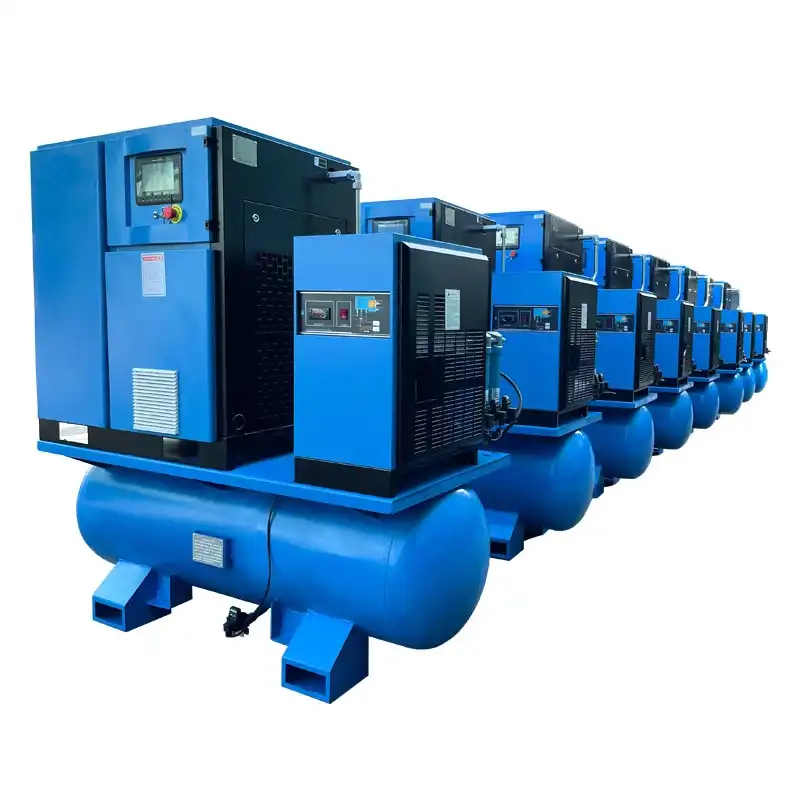
Integrated screw air compressor for laser cutting
Permanent magnet variable frequency screw air compressor
Two-stage compression permanent magnet variable frequency screw air compressor
Low pressure two-stage compression permanent magnet variable frequency screw air compressor
Low pressure permanent magnet variable frequency screw air compressor
Water-lubricated oil-free screw air compressor
Fixed speed screw air compressor
Oil-free screw blower
Screw vacuum pump
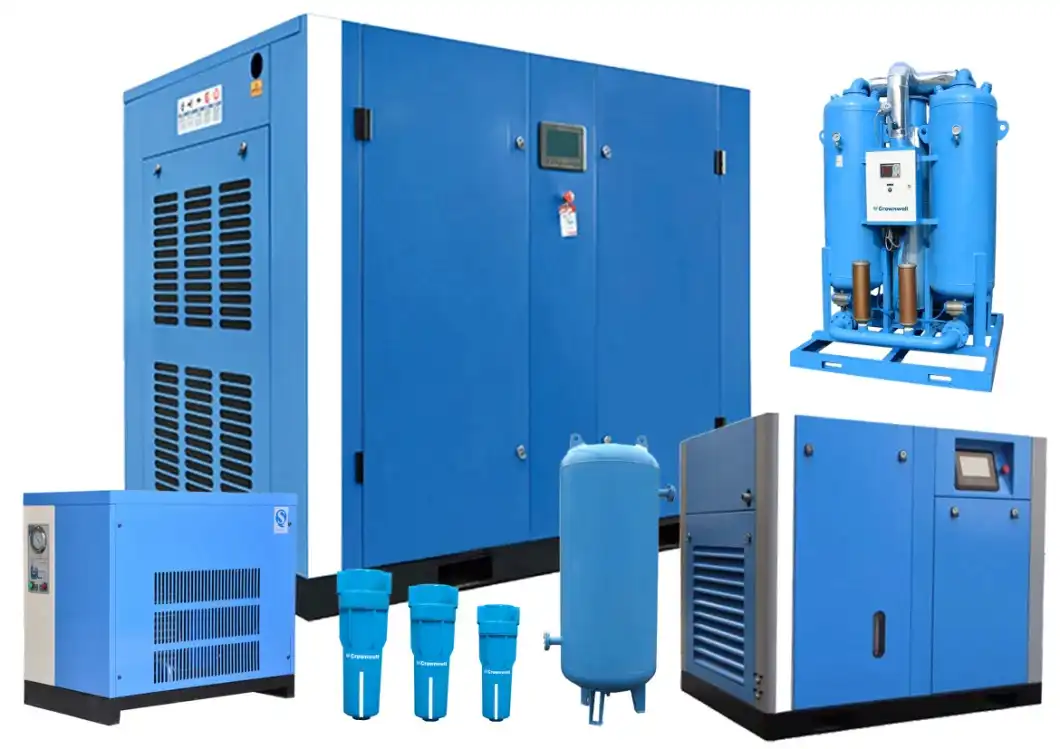
At Wallboge, we earn our customers’ trust and satisfaction by manufacturing the superior quality compressed air products for all industries. All of our products are designed for reliable performance, easy maintenance, and maximum energy efficiency. CHINAMFG has been exporting to more than 150 countries across the globe.
Wallboge continuously innovates product development and management to meet customers’ demand. The powerful enterprise culture and continuous innovation make CHINAMFG improved rapidly. Wallboge’ s vision is to be a world-renowned high-end energy-saving machinery brand, with sustainable development, constantly improving its own value and sharing it with our customers and staff, committed to continuously satisfying the needs of global companies by providing a full range of industrial air compression solutions.
Certifications
Exhibitions
After Sales Service
1. 24/7 after sales service in different languages.
2. Online instruction for installation and commissioning.
3. On-site instruction for installation and commissioning provided by well-trained engineers or local authorized service center.
4. CHINAMFG agents and after sales service available.
Our Advantages
1. Proven product quality.
2. Factory direct prices.
3. On-time delivery.
4. Prompt technical support in different languages before sales, in sales and after sales.
5. Small orders accepted to check quality first.
6. OEM & ODM service available.
FAQ
Q1: Are you a factory or a trading company?
A1: We are a factory. Please check our Company Profile.
Q2: What is the exact address of your factory?
A2: No. 588, East Tonggang Road, Shaxi Town, HangZhou City, ZheJiang Province, China
Q3: What is your delivery time?
A3: For standard voltage, the delivery time is 15 working days after you confirm the order. For non-standard voltage, please contact our sales to confirm the delivery time.
Q4: What kind of payment terms do you accept?
A4: We accept T/T, L/C at sight.
Q5: How long is the warranty of your air compressor?
A5: 2 years for the whole air compressor except consumable spare parts.
Q6: How long could your air compressor be used?
A6: Generally, more than 10 years.
Q7: What is your MOQ requirement?
A7: 1 unit.
Q8: Can you offer OEM & ODM service?
A8: Yes, with a professional design team, we can offer OEM & ODM service.
| After-sales Service: | Engineers Available to Overseas Service. |
|---|---|
| Warranty: | 2 Years |
| Lubrication Style: | Oil-free |
| Cooling System: | Air Cooling |
| Power Source: | AC Power |
| Structure Type: | Closed Type |
| Customization: |
Available
|
|
|---|
.webp)
What are the energy-saving technologies available for air compressors?
There are several energy-saving technologies available for air compressors that help improve their efficiency and reduce energy consumption. These technologies aim to optimize the operation of air compressors and minimize energy losses. Here are some common energy-saving technologies used:
1. Variable Speed Drive (VSD) Compressors:
VSD compressors are designed to adjust the motor speed according to the compressed air demand. By varying the motor speed, these compressors can match the output to the actual air requirement, resulting in energy savings. VSD compressors are particularly effective in applications with varying air demands, as they can operate at lower speeds during periods of lower demand, reducing energy consumption.
2. Energy-Efficient Motors:
The use of energy-efficient motors in air compressors can contribute to energy savings. High-efficiency motors, such as those with premium efficiency ratings, are designed to minimize energy losses and operate more efficiently than standard motors. By using energy-efficient motors, air compressors can reduce energy consumption and achieve higher overall system efficiency.
3. Heat Recovery Systems:
Air compressors generate a significant amount of heat during operation. Heat recovery systems capture and utilize this wasted heat for other purposes, such as space heating, water heating, or preheating process air or water. By recovering and utilizing the heat, air compressors can provide additional energy savings and improve overall system efficiency.
4. Air Receiver Tanks:
Air receiver tanks are used to store compressed air and provide a buffer during periods of fluctuating demand. By using appropriately sized air receiver tanks, the compressed air system can operate more efficiently. The tanks help reduce the number of starts and stops of the air compressor, allowing it to run at full load for longer periods, which is more energy-efficient than frequent cycling.
5. System Control and Automation:
Implementing advanced control and automation systems can optimize the operation of air compressors. These systems monitor and adjust the compressed air system based on demand, ensuring that only the required amount of air is produced. By maintaining optimal system pressure, minimizing leaks, and reducing unnecessary air production, control and automation systems help achieve energy savings.
6. Leak Detection and Repair:
Air leaks in compressed air systems can lead to significant energy losses. Regular leak detection and repair programs help identify and fix air leaks promptly. By minimizing air leakage, the demand on the air compressor is reduced, resulting in energy savings. Utilizing ultrasonic leak detection devices can help locate and repair leaks more efficiently.
7. System Optimization and Maintenance:
Proper system optimization and routine maintenance are essential for energy savings in air compressors. This includes regular cleaning and replacement of air filters, optimizing air pressure settings, ensuring proper lubrication, and conducting preventive maintenance to keep the system running at peak efficiency.
By implementing these energy-saving technologies and practices, air compressor systems can achieve significant energy efficiency improvements, reduce operational costs, and minimize environmental impact.
.webp)
How are air compressors used in refrigeration and HVAC systems?
Air compressors play a vital role in refrigeration and HVAC (Heating, Ventilation, and Air Conditioning) systems, providing the necessary compression of refrigerant gases and facilitating the heat transfer process. Here are the key ways in which air compressors are used in refrigeration and HVAC systems:
1. Refrigerant Compression:
In refrigeration systems, air compressors are used to compress the refrigerant gas, raising its pressure and temperature. This compressed gas then moves through the system, where it undergoes phase changes and heat exchange to enable cooling or heating. The compressor is the heart of the refrigeration cycle, as it pressurizes and circulates the refrigerant.
2. Refrigeration Cycle:
The compression of refrigerant gas by the air compressor is an essential step in the refrigeration cycle. After compression, the high-pressure, high-temperature gas flows to the condenser, where it releases heat and condenses into a liquid. The liquid refrigerant then passes through an expansion valve or device, which reduces its pressure and temperature. This low-pressure, low-temperature refrigerant then enters the evaporator, absorbing heat from the surrounding environment and evaporating back into a gas. The cycle continues as the gas returns to the compressor for re-compression.
3. HVAC Cooling and Heating:
In HVAC systems, air compressors are used to facilitate cooling and heating processes. The compressor compresses the refrigerant gas, which allows it to absorb heat from the indoor environment in the cooling mode. The compressed gas releases heat in the outdoor condenser unit and then circulates back to the compressor to repeat the cycle. In the heating mode, the compressor reverses the refrigeration cycle, absorbing heat from the outdoor air or ground source and transferring it indoors.
4. Air Conditioning:
Air compressors are an integral part of air conditioning systems, which are a subset of HVAC systems. Compressed refrigerant gases are used to cool and dehumidify the air in residential, commercial, and industrial buildings. The compressor pressurizes the refrigerant, initiating the cooling cycle that removes heat from the indoor air and releases it outside.
5. Compressor Types:
Refrigeration and HVAC systems utilize different types of air compressors. Reciprocating compressors, rotary screw compressors, and scroll compressors are commonly used in these applications. The selection of the compressor type depends on factors such as system size, capacity requirements, efficiency, and application-specific considerations.
6. Energy Efficiency:
Efficient operation of air compressors is crucial for refrigeration and HVAC systems. Energy-efficient compressors help minimize power consumption and reduce operating costs. Additionally, proper compressor sizing and system design contribute to the overall energy efficiency of refrigeration and HVAC systems.
By effectively compressing refrigerant gases and facilitating the heat transfer process, air compressors enable the cooling and heating functions in refrigeration and HVAC systems, ensuring comfortable indoor environments and efficient temperature control.
.webp)
What are the key components of an air compressor system?
An air compressor system consists of several key components that work together to generate and deliver compressed air. Here are the essential components:
1. Compressor Pump: The compressor pump is the heart of the air compressor system. It draws in ambient air and compresses it to a higher pressure. The pump can be reciprocating (piston-driven) or rotary (screw, vane, or scroll-driven) based on the compressor type.
2. Electric Motor or Engine: The electric motor or engine is responsible for driving the compressor pump. It provides the power necessary to operate the pump and compress the air. The motor or engine’s size and power rating depend on the compressor’s capacity and intended application.
3. Air Intake: The air intake is the opening or inlet through which ambient air enters the compressor system. It is equipped with filters to remove dust, debris, and contaminants from the incoming air, ensuring clean air supply and protecting the compressor components.
4. Compression Chamber: The compression chamber is where the actual compression of air takes place. In reciprocating compressors, it consists of cylinders, pistons, valves, and connecting rods. In rotary compressors, it comprises intermeshing screws, vanes, or scrolls that compress the air as they rotate.
5. Receiver Tank: The receiver tank, also known as an air tank, is a storage vessel that holds the compressed air. It acts as a buffer, allowing for a steady supply of compressed air during peak demand periods and reducing pressure fluctuations. The tank also helps separate moisture from the compressed air, allowing it to condense and be drained out.
6. Pressure Relief Valve: The pressure relief valve is a safety device that protects the compressor system from over-pressurization. It automatically releases excess pressure if it exceeds a predetermined limit, preventing damage to the system and ensuring safe operation.
7. Pressure Switch: The pressure switch is an electrical component that controls the operation of the compressor motor. It monitors the pressure in the system and automatically starts or stops the motor based on pre-set pressure levels. This helps maintain the desired pressure range in the receiver tank.
8. Regulator: The regulator is a device used to control and adjust the output pressure of the compressed air. It allows users to set the desired pressure level for specific applications, ensuring a consistent and safe supply of compressed air.
9. Air Outlet and Distribution System: The air outlet is the point where the compressed air is delivered from the compressor system. It is connected to a distribution system comprising pipes, hoses, fittings, and valves that carry the compressed air to the desired application points or tools.
10. Filters, Dryers, and Lubricators: Depending on the application and air quality requirements, additional components such as filters, dryers, and lubricators may be included in the system. Filters remove contaminants, dryers remove moisture from the compressed air, and lubricators provide lubrication to pneumatic tools and equipment.
These are the key components of an air compressor system. Each component plays a crucial role in the generation, storage, and delivery of compressed air for various industrial, commercial, and personal applications.


editor by CX 2023-10-08
China best Best-Selling Silent Air Compressor with Air Dryer (DA7001D) with Hot selling
Product Description
Best-selling Silent Air Compressor with Air Dryer(DA7001D)
Description:
Model: DA7001D
Voltage: 100-240V/50-60Hz
Power: 750W [1HP]
Max Air Flow: 137L/min [4.8CFM]
Air Flow@7bar: 45L/min[1.59CFM]
Noise Level: ≤ 70 dB (A)
Max. Pressure: 8bar [116PSI]
Max Current: 3.4A
Dew-point Temperature: -20
Air Tank: 30L [6.6Gallon]
Gross Weight: 47.8kg [105.4lbs]
Net Weight: 36kg [79.4lbs]
Dimension: 560*450*650mm [22*17.7*25.6 inch]
Specifications
1> Piston type;
2> Silent, Oil Free;
3> Used for DENTAL, MEDICAL
4> 1HP, 30L tank;
5> Work for 1PCS dental units
Options
Metal Silent Cabinet ( all operation key located outside of the cabinet, easy to use; Temperature sensor and cooling system, keep longer service life for the motor; With casters, you may move the compressor freely )
Dry air: Why?
A quality dryer is essential equipment for the users.
The ambient air contains humidity and impurities which must be dully treated in order to guarantee clean, dry and pure air to the patients and to avoid the risk of corrosion and oxidation of the expensive dental instruments, which are connected the the compressor.
The advantage of the “air dryer” system are the following:
No additional installation ( the system is integrated with the compressor)
No oxidation and corrosion;
Optimum air for patients, instruments and equipments;
Compactness;
Fully automatic operation;
Easy maintenance;
Low operative costs;
No power loss during the regeneration process;
Characteristics:
1. Oil free: Do not need any lubricated oil, and harmless to the human body.
2. Super silent: Noise level lower than 56dB(a) to reduce noise pollution.
3. Multi-phase filteration: Advanced multi-phase filtration to ensure extremely clean air, and lengthen service life.
4. Safety using: Air compressor motors equipped with thermal prevention device to avoid overheating and protect motors.
5. Clean tank: All air receiver tanks have internal epoxy coating applied to avoid corrosion.
6. Automatic adjustment: High quality pressure switch used to control the power of air compressor automatically by adjustment of pressure level.
7. Pressure adjustment: Working pressure could be adjusted to meet the demand of different supporting equipments.
8. High durability: Serviceable time exceeds 15, 000 hours.
9. Simple operation: Using directly when connecting with power.
10. Easy maintanance: No need any lubricated oil.
11. Warranty: 2 years.
Applications:
Medical; Laboratory; Pharmacy; Food Fermentation; Life Science; Biotechnology;
Analytical Instrument; Measuring Apparatus; Water Processing Environmental Monitoring;
Automation; Coating Surface Processing; Makeup; Garments Manufacture; Shoemaking;
Petro Chemistry; Arts, crafts and hobby; Beauty And Body; Printing; Optical And Photo;
Research And Laboratory; Jewelry And Accessories; Electronic And Computers; Safety
System;
Contact Us For Quote Now!
Add: NO108 Xingpu Road, Lujia Town, HangZhou City, ZheJiang Province, China
.
| Model | DA7001 | DA7002 | DA7003 | A7004 | DA7005 | |
| Voltage/Hz | V | 100-240 | 100-240 | 100-240 | 100-240 | 100-240 |
| Hz | 50/60 | 50/60 | 50/60 | 50/60 | 50/60 | |
| Power | HP | 1 | 2 | 3 | 4 | 5 |
| KW | 0.75 | 1.5 | 2.25 | 3 | 3.75 | |
| Max Air Flow | L/min | 152 | 304 | 456 | 608 | 760 |
| CFM | 5.37 | 10.74 | 16.10 | 21.47 | 26.84 | |
| Air Flow @7bar | L/min | 50 | 100 | 150 | 200 | 250 |
| CFM | 1.77 | 3.53 | 5.3 | 7.06 | 8.83 | |
| Max. Pressure | Bar | 8 | 8 | 8 | 8 | 8 |
| psi | 116 | 116 | 116 | 116 | 116 | |
| Tank | L | 30 | 50 | 70 | 100 | 140 |
| Gallon | 6.6 | 11.0 | 15.4 | 22.0 | 30.8 | |
| Net Weight | Kg | 29.5 | 50 | 78 | 95 | 110 |
| Lbs | 65.0 | 110.2 | 172 | 209.4 | 242.5 | |
| Gross Weight | Kg | 33 | 62.5 | 90 | 114.5 | 148 |
| Lbs | 72.8 | 137.8 | 198.4 | 252.4 | 326.3 | |
| Noise Level | dB(A) | ≤70 | ≤70 | ≤70 | ≤70 | ≤70 |
| Max current | A | 3.4 | 6.8 | 10.2 | 13.6 | 17 |
| Dimensions | mm | 410×410×650 | 710×425×730 | 920×425×725 | 1070×460×750 | 1430×460×730 |
| inch | 16.1×16.1×25.6 | 28×16.7×28.7 | 36.2×16.7×28.5 | 42.1×18.1×29.5 | 56.3×18.1×28.7 | |
| Warranty: | 2 Years. |
|---|---|
| Lubrication Style: | Oil-free |
| Cooling System: | Air Cooling |
| Cylinder Arrangement: | Parallel Arrangement |
| Cylinder Position: | Horizontal |
| Structure Type: | Closed Type |
| Customization: |
Available
|
|
|---|
How are air compressors employed in the petrochemical industry?
Air compressors play a vital role in the petrochemical industry, where they are employed for various applications that require compressed air. The petrochemical industry encompasses the production of chemicals and products derived from petroleum and natural gas. Here’s an overview of how air compressors are utilized in the petrochemical industry:
1. Instrumentation and Control Systems:
Air compressors are used to power pneumatic instrumentation and control systems in petrochemical plants. These systems rely on compressed air to operate control valves, actuators, and other pneumatic devices that regulate processes such as flow control, pressure control, and temperature control. Compressed air provides a reliable and clean source of energy for these critical control mechanisms.
2. Pneumatic Tools and Equipment:
Petrochemical plants often utilize pneumatic tools and equipment for various tasks such as maintenance, repair, and construction activities. Air compressors supply the necessary compressed air to power these tools, including pneumatic drills, impact wrenches, grinders, sanders, and painting equipment. The versatility and convenience of compressed air make it an ideal energy source for a wide range of pneumatic tools used in the industry.
3. Process Air and Gas Supply:
Petrochemical processes often require a supply of compressed air and gases for specific applications. Air compressors are employed to generate compressed air for processes such as oxidation, combustion, and aeration. They may also be used to compress gases like nitrogen, hydrogen, and oxygen, which are utilized in various petrochemical reactions and treatment processes.
4. Cooling and Ventilation:
Petrochemical plants require adequate cooling and ventilation systems to maintain optimal operating conditions and ensure the safety of personnel. Air compressors are used to power cooling fans, blowers, and air circulation systems that help maintain the desired temperature, remove heat generated by equipment, and provide ventilation in critical areas.
5. Nitrogen Generation:
Nitrogen is widely used in the petrochemical industry for applications such as blanketing, purging, and inerting. Air compressors are utilized in nitrogen generation systems, where they compress atmospheric air, which is then passed through a nitrogen separation process to produce high-purity nitrogen gas. This nitrogen is used for various purposes, including preventing the formation of explosive mixtures, protecting sensitive equipment, and maintaining the integrity of stored products.
6. Instrument Air:
Instrument air is essential for operating pneumatic instruments, analyzers, and control devices throughout the petrochemical plant. Air compressors supply compressed air that is treated and conditioned to meet the stringent requirements of instrument air quality standards. Instrument air is used for tasks such as pneumatic conveying, pneumatic actuators, and calibration of instruments.
By employing air compressors in the petrochemical industry, operators can ensure reliable and efficient operation of pneumatic systems, power various tools and equipment, support critical processes, and maintain safe and controlled environments.
.webp)
How do you troubleshoot common air compressor problems?
Troubleshooting common air compressor problems can help identify and resolve issues that may affect the performance and functionality of the compressor. Here are some steps to troubleshoot common air compressor problems:
1. No Power:
- Check the power source and ensure the compressor is properly plugged in.
- Inspect the circuit breaker or fuse box to ensure it hasn’t tripped or blown.
- Verify that the compressor’s power switch or control panel is turned on.
2. Low Air Pressure:
- Check the air pressure gauge on the compressor. If the pressure is below the desired level, the compressor might not be building up enough pressure.
- Inspect for air leaks in the system. Leaks can cause a drop in pressure. Listen for hissing sounds or use a soapy water solution to identify the location of leaks.
- Ensure the compressor’s intake filter is clean and not clogged, as this can restrict airflow and reduce pressure.
3. Excessive Noise or Vibration:
- Inspect the compressor’s mounting and foundation to ensure it is secure and stable. Loose mounts can cause excessive noise and vibration.
- Check for loose or damaged components, such as belts, pulleys, or motor mounts. Tighten or replace as necessary.
- Verify that the compressor’s cooling system, such as the fan or fins, is clean and free from obstructions. Overheating can lead to increased noise and vibration.
4. Air Leaks:
- Inspect all connections, valves, fittings, and hoses for leaks. Tighten or replace any loose or damaged components.
- Apply a soapy water solution to suspected areas and look for bubbles. Bubbles indicate air leaks.
- Consider using thread sealant or Teflon tape on threaded connections to ensure a proper seal.
5. Excessive Moisture in Compressed Air:
- Check the compressor’s drain valve and ensure it is functioning properly. Open the valve to release any accumulated moisture.
- Inspect and clean the compressor’s moisture separator or air dryer, if equipped.
- Consider installing additional filtration or drying equipment to remove moisture from the compressed air system.
6. Motor Overheating:
- Ensure the compressor’s cooling system is clean and unobstructed.
- Check the motor’s air intake vents and clean any dust or debris that may be blocking airflow.
- Verify that the compressor is not being operated in an excessively hot environment.
- Check the motor’s lubrication levels and ensure they are within the manufacturer’s recommended range.
- Consider using a thermal overload protector to prevent the motor from overheating.
If troubleshooting these common problems does not resolve the issue, it may be necessary to consult the manufacturer’s manual or seek assistance from a qualified technician. Regular maintenance, such as cleaning, lubrication, and inspection, can also help prevent common problems and ensure the optimal performance of the air compressor.
What are the safety considerations when operating an air compressor?
Operating an air compressor requires careful attention to safety to prevent accidents, injuries, and equipment damage. Here are some important safety considerations to keep in mind:
1. Read the Manual: Before operating an air compressor, thoroughly read and understand the manufacturer’s instruction manual. Familiarize yourself with the specific safety guidelines, recommended operating procedures, and any specific precautions or warnings provided by the manufacturer.
2. Proper Ventilation: Ensure that the area where the air compressor is operated has adequate ventilation. Compressed air can produce high levels of heat and exhaust gases. Good ventilation helps dissipate heat, prevent the buildup of fumes, and maintain a safe working environment.
3. Personal Protective Equipment (PPE): Always wear appropriate personal protective equipment, including safety glasses or goggles, hearing protection, and non-slip footwear. Depending on the task, additional PPE such as gloves, a dust mask, or a face shield may be necessary to protect against specific hazards.
4. Pressure Relief: Air compressors should be equipped with pressure relief valves or devices to prevent overpressurization. Ensure that these safety features are in place and functioning correctly. Regularly inspect and test the pressure relief mechanism to ensure its effectiveness.
5. Secure Connections: Use proper fittings, hoses, and couplings to ensure secure connections between the air compressor, air tools, and accessories. Inspect all connections before operation to avoid leaks or sudden hose disconnections, which can cause injuries or damage.
6. Inspect and Maintain: Regularly inspect the air compressor for any signs of damage, wear, or leaks. Ensure that all components, including hoses, fittings, and safety devices, are in good working condition. Follow the manufacturer’s recommended maintenance schedule to keep the compressor in optimal shape.
7. Electrical Safety: If the air compressor is electric-powered, take appropriate electrical safety precautions. Use grounded outlets and avoid using extension cords unless approved for the compressor’s power requirements. Protect electrical connections from moisture and avoid operating the compressor in wet or damp environments.
8. Safe Start-Up and Shut-Down: Properly start and shut down the air compressor following the manufacturer’s instructions. Ensure that all air valves are closed before starting the compressor and release all pressure before performing maintenance or repairs.
9. Training and Competence: Ensure that operators are adequately trained and competent in using the air compressor and associated tools. Provide training on safe operating procedures, hazard identification, and emergency response protocols.
10. Emergency Preparedness: Have a clear understanding of emergency procedures and how to respond to potential accidents or malfunctions. Know the location of emergency shut-off valves, fire extinguishers, and first aid kits.
By adhering to these safety considerations and implementing proper safety practices, the risk of accidents and injuries associated with operating an air compressor can be significantly reduced. Prioritizing safety promotes a secure and productive working environment.
editor by CX 2023-10-06
China Hot selling CHINAMFG High Level of Automation All Oil Free Booster Air Compressor with Faster Delivery small air compressor
Product Description
NUZHUO High Level of Automation All Oil Free Booster Air Compressor with Faster Delivery
|
Product Name |
Oil Free Gas Compressor |
|||
|
Power Range |
<55KW |
|||
|
Model No. |
GWX- 5/10/20/40/60/80/CUSTOMIZED |
|||
|
Cooling Method |
Air-cooled or Water-cooled |
|||
|
Speed Range |
300-600r/min |
|||
|
Compression Stages |
Level 3-4 |
|||
|
Exhaust Pressure Range |
≤25.0Mpa |
|||
|
Inspiratory Pressure Range |
0-0.6Mpa |
|||
Technical features
The equipment does not need to add lubricating oil, and the exhaust gas does not contain oil and oil vapor, so it can
be protected from pollution, eliminating the need for complex filtration and purification systems, saving equipment
costs and maintenance costs, and has significant features such as safety, reliability, and easy operation.
Technical features
Details Images
FAQ
Q1: Are you a trading company or manufacturer?
A:We are a manufacturer.
Q2: What is your term of payment?
A: 30%T/T in advance and balance before shipment.
Q3: How long is your delivery time?
A: Depending on what type of machine you are purchased, normally 5 to 10 working days.
Q4: What is your product quality assurance policy? A:We offer a warranty period of 1 year, free lifetime technology support.
Q5: Do you offer OEM/ODM service?
A: Yes.
Q6: Does your product used or new? RTS product or customized product?
A:Our machine is new unit, and following your specific require to design and make it.
|
Shipping Cost:
Estimated freight per unit. |
To be negotiated |
|---|
| After-sales Service: | Support |
|---|---|
| Warranty: | 1year |
| Lubrication Style: | Oil-less |
| Customization: |
Available
|
|
|---|
Can air compressors be used for shipbuilding and maritime applications?
Air compressors are widely used in shipbuilding and maritime applications for a variety of tasks and operations. The maritime industry relies on compressed air for numerous essential functions. Here’s an overview of how air compressors are employed in shipbuilding and maritime applications:
1. Pneumatic Tools and Equipment:
Air compressors are extensively used to power pneumatic tools and equipment in shipbuilding and maritime operations. Pneumatic tools such as impact wrenches, drills, grinders, sanders, and chipping hammers require compressed air to function. The versatility and power provided by compressed air make it an ideal energy source for heavy-duty tasks, maintenance, and construction activities in shipyards and onboard vessels.
2. Painting and Surface Preparation:
Air compressors play a crucial role in painting and surface preparation during shipbuilding and maintenance. Compressed air is used to power air spray guns, sandblasting equipment, and other surface preparation tools. Compressed air provides the force necessary for efficient and uniform application of paints, coatings, and protective finishes, ensuring the durability and aesthetics of ship surfaces.
3. Pneumatic Actuation and Controls:
Air compressors are employed in pneumatic actuation and control systems onboard ships. Compressed air is used to operate pneumatic valves, actuators, and control devices that regulate the flow of fluids, control propulsion systems, and manage various shipboard processes. Pneumatic control systems offer reliability and safety advantages in maritime applications.
4. Air Start Systems:
In large marine engines, air compressors are used in air start systems. Compressed air is utilized to initiate the combustion process in the engine cylinders. The compressed air is injected into the cylinders to turn the engine’s crankshaft, enabling the ignition of fuel and starting the engine. Air start systems are commonly found in ship propulsion systems and power generation plants onboard vessels.
5. Pneumatic Conveying and Material Handling:
In shipbuilding and maritime operations, compressed air is used for pneumatic conveying and material handling. Compressed air is utilized to transport bulk materials, such as cement, sand, and grain, through pipelines or hoses. Pneumatic conveying systems enable efficient and controlled transfer of materials, facilitating construction, cargo loading, and unloading processes.
6. Air Conditioning and Ventilation:
Air compressors are involved in air conditioning and ventilation systems onboard ships. Compressed air powers air conditioning units, ventilation fans, and blowers, ensuring proper air circulation, cooling, and temperature control in various ship compartments, cabins, and machinery spaces. Compressed air-driven systems contribute to the comfort, safety, and operational efficiency of maritime environments.
These are just a few examples of how air compressors are utilized in shipbuilding and maritime applications. Compressed air’s versatility, reliability, and convenience make it an indispensable energy source for various tasks and systems in the maritime industry.
.webp)
Can air compressors be used for medical and dental applications?
Yes, air compressors can be used for various medical and dental applications. Compressed air is a reliable and versatile utility in healthcare settings, providing power for numerous devices and procedures. Here are some common applications of air compressors in medical and dental fields:
1. Dental Tools:
Air compressors power a wide range of dental tools and equipment, such as dental handpieces, air syringes, air scalers, and air abrasion devices. These tools rely on compressed air to generate the necessary force and airflow for effective dental procedures.
2. Medical Devices:
Compressed air is used in various medical devices and equipment. For example, ventilators and anesthesia machines utilize compressed air to deliver oxygen and other gases to patients. Nebulizers, used for respiratory treatments, also rely on compressed air to convert liquid medications into a fine mist for inhalation.
3. Laboratory Applications:
Air compressors are used in medical and dental laboratories for various purposes. They power laboratory instruments, such as air-driven centrifuges and sample preparation equipment. Compressed air is also used for pneumatic controls and automation systems in lab equipment.
4. Surgical Tools:
In surgical settings, compressed air is employed to power specialized surgical tools. High-speed air-driven surgical drills, saws, and bone-cutting instruments are commonly used in orthopedic and maxillofacial procedures. Compressed air ensures precise control and efficiency during surgical interventions.
5. Sterilization and Autoclaves:
Compressed air is essential for operating sterilization equipment and autoclaves. Autoclaves use steam generated by compressed air to sterilize medical instruments, equipment, and supplies. The pressurized steam provides effective disinfection and ensures compliance with rigorous hygiene standards.
6. Dental Air Compressors:
Specialized dental air compressors are designed specifically for dental applications. These compressors have features such as moisture separators, filters, and noise reduction mechanisms to meet the specific requirements of dental practices.
7. Air Quality Standards:
In medical and dental applications, maintaining air quality is crucial. Compressed air used in healthcare settings must meet specific purity standards. This often requires the use of air treatment systems, such as filters, dryers, and condensate management, to ensure the removal of contaminants and moisture.
8. Compliance and Regulations:
Medical and dental facilities must comply with applicable regulations and guidelines regarding the use of compressed air. These regulations may include requirements for air quality, maintenance and testing procedures, and documentation of system performance.
It is important to note that medical and dental applications have specific requirements and standards. Therefore, it is essential to choose air compressors and associated equipment that meet the necessary specifications and comply with industry regulations.
.webp)
How is air pressure measured in air compressors?
Air pressure in air compressors is typically measured using one of two common units: pounds per square inch (PSI) or bar. Here’s a brief explanation of how air pressure is measured in air compressors:
1. Pounds per Square Inch (PSI): PSI is the most widely used unit of pressure measurement in air compressors, especially in North America. It represents the force exerted by one pound of force over an area of one square inch. Air pressure gauges on air compressors often display pressure readings in PSI, allowing users to monitor and adjust the pressure accordingly.
2. Bar: Bar is another unit of pressure commonly used in air compressors, particularly in Europe and many other parts of the world. It is a metric unit of pressure equal to 100,000 pascals (Pa). Air compressors may have pressure gauges that display readings in bar, providing an alternative measurement option for users in those regions.
To measure air pressure in an air compressor, a pressure gauge is typically installed on the compressor’s outlet or receiver tank. The gauge is designed to measure the force exerted by the compressed air and display the reading in the specified unit, such as PSI or bar.
It’s important to note that the air pressure indicated on the gauge represents the pressure at a specific point in the air compressor system, typically at the outlet or tank. The actual pressure experienced at the point of use may vary due to factors such as pressure drop in the air lines or restrictions caused by fittings and tools.
When using an air compressor, it is essential to set the pressure to the appropriate level required for the specific application. Different tools and equipment have different pressure requirements, and exceeding the recommended pressure can lead to damage or unsafe operation. Most air compressors allow users to adjust the pressure output using a pressure regulator or similar control mechanism.
Regular monitoring of the air pressure in an air compressor is crucial to ensure optimal performance, efficiency, and safe operation. By understanding the units of measurement and using pressure gauges appropriately, users can maintain the desired air pressure levels in their air compressor systems.
editor by CX 2023-10-01
China factory 2HP Popular Factory Directly 15L 1500W Brushless Oil Free Air Compressor Gdy-990K with Hot selling
Product Description
2HP Brushless Air Compressor 15L Tank, 1500W Oil Free Silent Portable Oil-Less Low Noise 4 Gallon Tank Air Compressor GDY-990K
Brushless Compressor Advantage
| The complete product line for wood finishing, Decorative, Furniture finishing, Painting industry, Industrial Application, construction industry, Architectural Coating, Scenic Painting, Cosmetic industries, Painting and Sculpture primer Painting jar etc.
A: Mini portable tools, it works anytime anywhere after connecting power without air charging |
Main Features:
Use it under the circumstance of without power supply.home decoration,nail gun(instead of gas nail gun),air screwdriver,tyre inflation,dust extraction,ect.
| Applicable Industries: | Building Material Shops, Home Use, Retail, Construction works , advisor |
| Model: | Brushless air compressor, portable and oil free air compressor |
| Power: | 1500W (2HP) |
| Power Source: | AC POWER |
| AIR TANK | 15L Alumumum air tank |
| AIR FLOW: | 250L/MIN |
| Mute: | Yes |
| Voltage: | 220V/110V |
| Certification: | CE |
| Warranty: | 1 Year |
| After-sales Service Provided: | Field installation, commissioning and training |
| N.W: | 23KG |
| Lubrication Style: | OIL-LESS |
| After-sales Service: | Online Serice |
|---|---|
| Warranty: | One Year |
| Lubrication Style: | Oil-free |
| Cooling System: | Air Cooling |
| Cylinder Arrangement: | Series Arrangement |
| Cylinder Position: | Horizontal |
| Samples: |
US$ 259/Piece
1 Piece(Min.Order) | |
|---|
| Customization: |
Available
|
|
|---|
Choose an Air Compressor for Your Business
There are several factors to consider when choosing an air compressor for your business. One factor to consider is the type of compressor you are looking for, which may include single-stage, low noise, and positive displacement. Hope this article helps you make the right decision. After all, your business success will depend on this device! Let’s take a closer look at these factors. Also, consider what compressor manufacturers say about their products.
Positive displacement
Positive displacement air compressors compress air by drawing in a volume from an inlet and extruding it out of a chamber. This increases the pressure at which the gas can be pumped at rates that cannot be pumped through the outlet at lower pressures at higher mass flow rates. These types of compressors are available in single-acting and double-acting configurations. They are classified by the number of cylinders.
There are two different types of air compressors: reciprocating air compressors and screw compressors. Both are roll machines. Positive displacement air compressors use pistons and cylinders to compress air. The resulting air pressure builds up within the compressor housing, increasing the potential energy of the compressed air. Screw air compressors are the most popular positive displacement air compressors, which can be either single-stage screw-blade air compressors or multi-stage screw-blade oil-immersed screw air compressors.
Positive displacement flowmeters use a rotating measuring chamber to divide the fluid into discrete quantities. The number of times the chamber was refilled and emptied was used to estimate the total flow. However, positive displacement flow meters are prone to leaks, reducing the accuracy of the estimates. If a leak occurs, it can cause false readings and damage the compressor. However, leaks in positive displacement air compressors can reduce pressure.
The most common types of positive displacement air compressors are screw, reciprocating, and vane. Rotary positive displacement air compressors are also available as well as many other air compressors. Positive displacement air compressors are most commonly used in large manufacturing facilities. If you are considering an air compressor for commercial or industrial applications, it is imperative to understand how the components of the unit work. Please read the information below to learn more before deciding which application is best for you.
Positive displacement air compressors use a piston to force air into a chamber, compressing the air in the process. The piston moves in the opposite direction, thereby reducing the volume of the chamber. When the amount of air in the chamber reaches its maximum value, the valve opens, allowing it to escape at higher pressure. Positive displacement air compressors are generally less efficient than centrifugal compressors. However, they are still an excellent choice for a variety of applications.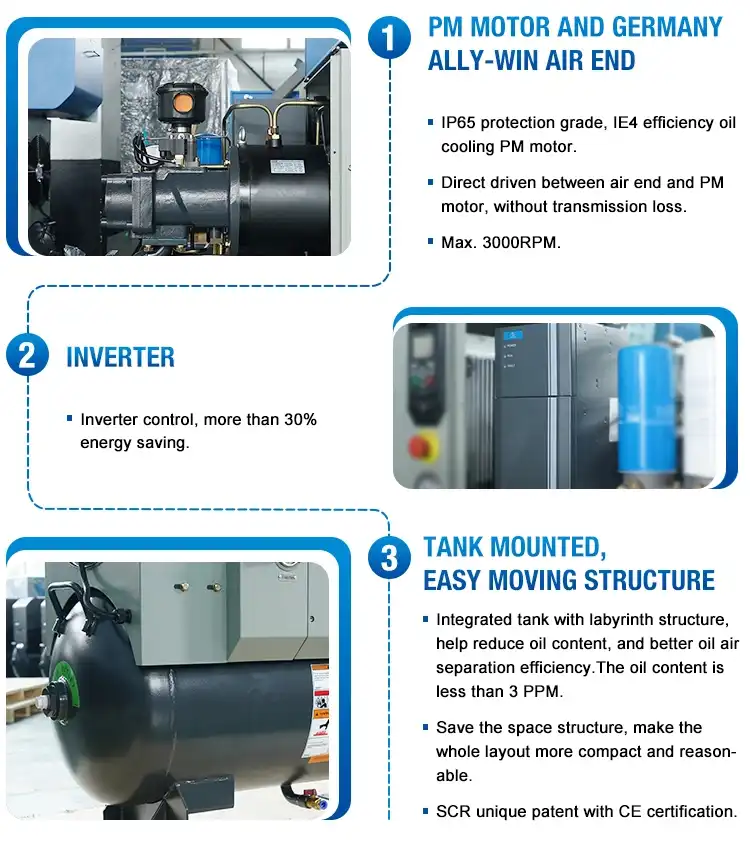
Single-stage
The discharge pressure of the single-stage air compressor is used to control the operation of the compressor. Properly designed load/unload controls allow the air compressor to operate at its most efficient point while minimizing stress on the main engine bearings. Single-stage air compressors can approach variable speed efficiency with appropriate storage capacity. However, improper storage can cause premature bearing wear on the main unit. If this is the case, a single-stage air compressor may not be ideal.
A single-stage air compressor has only one cylinder, which means one stroke is required to move air from one cylinder to another. Pressure is measured in cubic feet per minute or CFM. Tank size is also important as a large single-stage air compressor may be required to operate multiple air tools. Single-stage air compressors can be used in a variety of applications and can last for years.
For the most common uses, single-stage air compressors are the most practical option. These devices work with most hand tools, from hammers to grinders. Single-stage air compressors are lightweight and easy to move. However, two-stage air compressors provide more CFM, making them a better choice for industrial or commercial use. However, two-stage compressors are not suitable for private use. Therefore, if your main purpose is DIY and craft projects, it is better to choose a single-stage air compressor.
Compared with two-stage air compressors, single-stage screw air compressors are cheaper. They come from a variety of manufacturers and range in power from 3 to 600 horsepower. Single-stage air compressors are a cost-effective solution for a variety of air compressor needs. They offer flexibility and multiple control methods, making them an excellent choice for many different applications. Therefore, when choosing an air compressor for your business, choose the one with the most suitable functions.
Single-stage air compressors are the most affordable and easy-to-use air compressors for small to medium jobs. They also have higher compression ratios. The compression ratio is the ratio of absolute discharge pressure to absolute inlet pressure. When calculating the ratio, it takes into account atmospheric pressure and gauge pressure. The compression ratio pushes the surface area of the rotor, which increases the thrust load.
Single-stage air compressors are smaller and easier to transport than two-stage units. Single-stage air compressors have one air intake, and two-stage air compressors have two air intakes. The difference between single-stage and two-stage air compressors largely depends on the number of times the air is compressed. A single-stage air compressor compresses the air once, while a dual-stage air compressor compresses the same amount of air twice.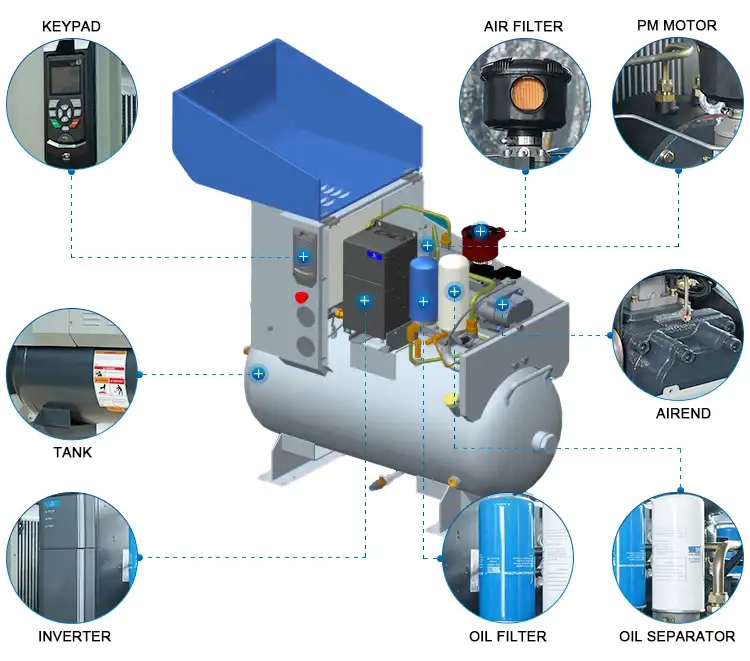
low noise
Low noise air compressors are ideal for a variety of applications. While no air compressor is completely silent, some models are much quieter than others. For the Hitachi EC28M portable compressor, the noise level is 59 decibels. The compressor features steel rollers that protect the internal components and give it a sleek, modern look. It also has a one-gallon fuel tank and a half-horsepower drive.
Noise from air compressors can be distracting and reduce productivity. It is important to choose low-noise air compressors to keep employees healthy and happy at work. While noise is an unfortunate aspect of working on the shop floor, reducing it can improve productivity. By reducing distracting noise, employees can focus on their work and communicate more effectively. That means higher quality work and happier clients. If you’re looking for a low-noise air compressor, be sure to read the tips below.
Low noise air compressors are an excellent choice for businesses of all sizes. These powerful tools can run multiple tools simultaneously. The two water tanks are made of rust-resistant aluminum and are stackable. This air compressor is heavier and can handle large jobs with ease. It costs more than other air compressors, but it can handle a lot of work efficiently. CZPT Air Tools air compressors come with a one-year warranty and are highly recommended by contractors.
Noiseless air compressors are generally more expensive than comparable products, but they are worth the extra cost. Noiseless compressors are a good option for businesses that need to avoid disturbing nearby people. For example, you might want to consider a low-noise air compressor for a dental office, which cannot tolerate noise. Fortunately, this problem can be solved by relocating the compressor to a location that is more isolated from your workspace.
One brand of low-noise air compressors offers two models. The CZPT Air Tools 2010A features a large cast aluminum can, regulating pressure gauge, and two universal quick-connects. It produces 68 decibels of noise when it works. It has a large 8-gallon fuel tank capacity and has wheels and handles for easy transport. Its powerful engine produces a low noise level of 68 decibels.
Another popular low noise air compressor is the Makita MAC210Q Quiet Series. This model is capable of producing up to 71.5 decibels of sound, which is the amount of air it produces at 90PSI. The MAC210Q features a durable oil-free pump and weighs just 36 pounds with a handle and wheels. These compressors are easy to move and ideal for indoor work.
editor by CX 2023-06-05
China Hot selling VW-1.3/16-38 Piston Air Compressor Natural Gas Compressor Maintenance air compressor price
Product Description
HangZhou United Compressor Manufacturing Co., Ltd. was established in 2002 and is a high-tech enterprise in ZheJiang Province. The company has complete production equipment testing methods, and relies on its technological advantages to introduce, absorb, and digest new technologies and processes from abroad. The products have covered all domestic demand industries and regions, and are exported to multiple countries such as Russia, Tajikistan, India, Pakistan, North Korea, etc. It is a qualified supplier and partner for many domestic and foreign enterprises.
The company has a sales and service team that continuously provides customers with various energy-saving and modern compressor system products. In the past 10 years, the company has maintained rapid and stable development, providing products and services for industries such as natural gas, steel, petroleum, chemical, coal, mining, and metallurgy. We not only have mature products, but also have a capable after-sales service team, such as conducting pre-sales inspections of compressors, timely tracking during sales, and 24-hour after-sales repair and maintenance services.
Product Application
Mainly used for pressurized transmission of natural gas into the pipeline network (Natural pipeline gas extraction and combustible gas recovery tank filling)
It can also be used for stirring in the pharmaceutical and brewing industries, pressurized gas transportation in the chemical industry, blow molding bottle making in the food industry, and dust removal of parts in the machine manufacturing industry.
Product Features
1. This series of compressors is an advanced piston compressor unit produced and manufactured using the product technology of Mannes Mandermarg Company in Germany.
2. The product has the characteristics of low noise, low vibration, compact structure, smooth operation, safety and reliability, and high automation level. It can also be configured with a data-driven remote display and control system according to customer requirements.
3. Equipped with alarm and shutdown functions for low oil pressure, low water pressure, high temperature, low inlet pressure, and high exhaust pressure of the compressor, making the operation of the compressor more reliable.
Structure Introduction
The unit consists of a compressor host, electric motor, coupling, flywheel, pipeline system, cooling system, electrical equipment, and auxiliary equipment.
Reference Technical parameters and specifications
| NO. | MODEL | Compressed medium | Flow rate Nm³/h |
Inlet pressure MPa |
Outlet pressure MPa |
Rotating speed r/min |
Motor power KW |
Cooling mode | Overall dimension mm |
Weight Kg |
| 1 | DW-14/(0-0.2)-25 | Raw gas | 800 | 0-0.02 | 2.5 | 740 | 160 | Water cooled | 4800*3200*1915 | ~10000 |
| 2 | VW-8/18 | Vinylidene fluoride gas | 418 | Atmospheric pressure | 1.8 | 980 | 75 | Water cooled | 3700*2000*1700 | ~4500 |
| 3 | VWD-3.2/(0-0.2)-40 | Biogas | 230 | 0-0.2 | 4.0 | 740 | 45 | Water cooled | 6000*2500*2650 | ~8000 |
| 4 | VW-9/6 | Ethyl chloride gas | 470 | Atmospheric pressure | 0.6 | 980 | 55 | Water cooled | 2800*1720*1700 | ~3500 |
| 5 | DWF-12.4/(9-12)-14 | Carbon dioxide | 6400 | 0.9-1.2 | 1.4 | 740 | 185 | Air cooled | 6000*2700*2200 | ~10000 |
| 6 | VWF-2.86/5-16 | Nitrogen gas | 895 | 0.5 | 1.6 | 740 | 55 | Air cooled | 3200*2200*1750 | ~3500 |
| 7 | DW-2.4/(18-25)-50 | Raw gas | 2900 | 1.8-2.5 | 5.0 | 980 | 160 | Water cooled | 4300*3000*1540 | ~4500 |
| 8 | VW-5.6/(0-6)-6 | Isobutylene gas | 1650 | 0-0.6 | 0.6 | 740 | 45 | Water cooled | 2900X1900X1600 | ~3500 |
| 9 | VW-3.8/3.5 | Mixed gas | 200 | Atmospheric pressure | 0.35 | 980 | 18.5 | Water cooled | 2200*1945*1600 | ~2000 |
| 10 | ZW-1.7/3.5 | Vinyl chloride gas | 100 | Atmospheric pressure | 0.35 | 740 | 15 | Water cooled | 2700X1600X2068 | ~2000 |
| 11 | ZWF-0.96/5 | Hydrogen chloride gas | 55 | Atmospheric pressure | 0.5 | 740 | 11 | Air cooled | 2000*1500*2000 | ~1000 |
| 12 | VW-0.85/(0-14)-40 | Refrigerant gas | 300 | 0-1.4 | 4.0 | 740 | 55 | Water cooled | 4500*2300*1780 | ~5500 |
| 13 | DW-3.78/(8-13)-(16-24) | Ammonia gas | 2700 | 0.8-1.3 | 1.6-2.4 | 740 | 75 | Water cooled | 3200*2000*1700 | ~3500 |
Related products
| Warranty: | 12 Months |
|---|---|
| Lubrication Style: | Customized |
| Cooling System: | Air/Water /Mixed Cooling |
| Cylinder Arrangement: | Balanced Opposed Arrangement |
| Cylinder Position: | Customized |
| Structure Type: | Open Type |
| Customization: |
Available
|
|
|---|
Choosing an Air Compressor
Considering a new Air Compressor? Here are some tips to make the decision easier. Learn the pros and cons of each type, including the differences between oil-injected and oil-free models, single stage and positive displacement. In addition, learn more about the different technologies that are available for your air compressor. It is important to choose an appropriate unit for the type of work you do. Here are some of the best compressors available today.
Positive displacement
There are several different types of air compressors, but most are positive displacement air compressors. They use a rotary or reciprocating component to compress air. The reciprocating component compresses air by reducing the volume of the chamber. Positive displacement compressors are used in bicycle pumps, chemical plants, and refrigerators. Positive displacement air compressors use multiple inlet ports. Despite the various types, the principle of operation remains the same.
Another type of positive displacement air compressor is a reciprocating piston. The piston inside a cylinder moves up and down, causing the compressed air to fill the upper part of the cylinder. These air compressors are used in a variety of different applications, including blowing bottles and gas pipelines. These air compressors can be water-cooled, lubricated, or non-lubricated. Different types have different capacities and air pressures.
A positive displacement flowmeter uses a rotating chamber that divides continuous fluid into discrete portions. The number of times the chamber is filled and discharged can be used to estimate the flow rate. The rotation speed of the measuring chamber is directly proportional to the flow rate. The drawbacks of this type of positive displacement flowmeter are that it is prone to jamming. If the fluid contains particles, it may be too thick for the meter to determine flow rate.
A negative displacement air compressor was invented in 1860 and is the oldest type of compressor. It uses two lobes positioned in a circular cavity. One rotor is connected to an engine, while the other pushes the other one to spin in the opposite direction. Negative displacement compressors are low-maintenance, but they do require more precision. They are often used in nuclear power plants because they use the kinetic energy of the rotating elements to produce pressure.
Oil-injected
Oil-flooded or oil-injected air compressors use liquid to seal and lubricate moving parts and reduce noise. Oil-flooded air compressors are effective for a variety of pneumatic tools and accessories. Some models have a thermostat that controls the amount of oil used during operation. Other types of oil-flooded air compressors are piston-type models. Here is an overview of the basic differences between these two air compressors.
An oil-injected air compressor is more expensive than a comparable oil-free air compressor, but its advantages far outweigh its disadvantages. An oil-free compressor is quieter, requires less maintenance, and has a lower price tag. It also offers a greater degree of air purity. A number of other advantages may also make this type of air compressor the better choice for many industrial settings. If you need a high-pressure compressor in a tight space, consider the benefits of an oil-free system.
Oil-injected air compressors require more maintenance than oil-free models. Both types of air compressors offer similar capacity and ISO 8573-1 Class 0 and 1-2 purity, but the oil-injected systems require more air-treatment components. They require an activated carbon filter and coalescing filter. Oil-injected air compressors will likely remain the standard for industrial air compressors for many years. And since their performance and efficiency are comparable, it may be worthwhile to invest in some point-of-use air treatment.
Both types of air compressors have their benefits. However, choosing between oil-free and oil-injected air compressors is not as straightforward as you might think. Whichever type you choose, make sure it will meet your needs. The benefits of an oil-injected air compressor outweigh their disadvantages. In general, oil-injected air compressors are more durable and can last longer than oil-free models. The only downside is their higher price.
Oil-free
When choosing an air compressor for your company, you’ll need to determine what it is going to be used for. For example, if you’re planning on using it to power multiple workers, you should consider getting an oil-free compressor. An oil-free compressor, on the other hand, is quieter and can power several workers at a time. If you’re a contractor, the most important consideration will be the type of jobs you’ll be doing. Higher air pressure means greater demand for air flow, and more pressure can damage the equipment.
Oil-free compressed air is certified 100% free of contaminants. Technically, oil-free air is not completely free of foreign matter, but it is extremely low within the limits of practical air quality. A technically oil-free air compressor might have a total oil level of 0.003 mg/m3. If you’re in need of a technically oil-free air compressor, you must install an air treatment equipment after your current compressor.
If you’re in the manufacturing industry, a good oil-free air compressor will save you money and reduce your environmental impact. Many of these tools require air compressors to work, and this equipment will ensure that they don’t get contaminated. To buy the best oil-free compressor, you should learn a bit about the different terms used by compressor repair companies. ACFM, for example, is the amount of air that can be compressed in one minute at rated conditions.
When you’re using an oil-free air compressor, you should know that the overall life of the device will be much shorter. Compared to an oil-flooded rotary screw air compressor, an oil-free compressor typically has a lifespan of 50 thousand hours. But it’s important to understand that this type of compressor can still cause damage to piping and processes. Therefore, you should choose an oil-free compressor when you need to clean air for your business.
Single-stage
A single-stage air compressor, also known as a piston air compressor, compresses air only once before storing it in a cylinder. This stored air has enough energy to power a variety of pneumatic tools, such as screwdrivers, chisels, and wrenches. These units are also ideally suited for low-flow applications and are widely used in gas stations, auto shops, and various manufacturing plants.
A single-stage air compressor uses two valves – one for inlet and one for outlet – to transfer compressed air. Both valves are actuated by springs. The inlet valve has a slight curvature to provide protection from damage. The compressor’s outlet valve opens when the pressure in the cylinder is higher than the pressure in the storage tank. The piston moves very quickly inside the cylinder, exerting a high amount of force throughout the compression process. This high piston speed is a common cause of compressor wear and tear.
A single-stage air compressor is ideal for smaller tradesmen and small construction crews. Its lightweight and compact design make it easier to transport and store. While it may be tempting to buy the first cheap air compressor you see, it’s important to balance the price against performance to choose the right air compressor for your needs. The best single-stage air compressor is one that provides excellent performance and durability. Its two-stage counterpart is designed for larger construction teams and large applications.
The main difference between a single-stage and a two-stage air compressor lies in their capacity. A single-stage air compressor compresses air only once and delivers it into the storage tank, while a two-stage compressor compresses it twice, creating double the pressure. Because of this, single-stage air compressors are cheaper and versatile than their counterparts, which means that they can be used for multiple purposes.
Low-noise
A low-noise air compressor is a type of industrial compressor that is less noisy than regular air compressors. These are generally smaller machines designed for smaller factories and workshops with a few to several employees. They are designed to handle mid-weight volumes of compressed air per day. This type of compressor is especially useful for smaller manufacturing businesses that need to produce compressed air for medical applications. Small breweries can also benefit from the low-noise capabilities of these compressors.
Low-noise air compressors come in various sizes and features. For smaller jobs, you can purchase a one-gallon model that is lightweight and portable. For larger jobs, you can purchase one with a larger tank that can provide more pressure for longer jobs. However, a larger tank will make the compressor heavier and harder to transport. To avoid this, make sure to check the size of the tank and how much power it can handle.
Considering a low-noise air compressor for your business? If so, you’ve come to the right place. There are a variety of affordable and dependable low-noise options to choose from. A CAT 10020C, for example, is designed to provide high-volume air to many outlets at once. A CAT 10020C comes with a 10-gallon tank, wheels, and a carrying handle.
Noise levels can also affect the productivity of employees. When employees work with air compressors in close proximity to each other, they may develop tinnitus. If employees are free from tinnitus because of the loud noise, they are likely to work more efficiently. Moreover, it will be easier for them to focus and communicate efficiently. If you need a compressor, a low-noise one is an excellent choice.
editor by CX 2023-06-02
China supplier 4110345010 Air-Compressors Good Om355 Truck Engine Air Compressor Spare Parts Factory Supplier for Benz with Hot selling
Product Description
| Item Name | Air Compressor |
| Part Number | 4110345571 |
| Engine Type | Diesel Engine |
| Engine Model | OM355 |
| Packing | Natural packaging |
| Weight | 13 kg |
| Volume | 40*35*21cm |
Our company′s factory is located in ZheJiang , China, mainly producing engine, cylinder block, cylinder head, crankshaft, camshaft, connecting rod, piston assembly, fuel injector and other parts. Because the production cost in this part of China is lower than other cities, we have more than 60 workers to process and quality test the products, and put them in beautiful packaging.
Our trade warehouse is in HangZhou, China, we deal in full vehicle parts, engine parts, chassis parts, transmission parts, cab parts. It is close to HangZhou, ZheJiang port and HangZhou port, the transportation is very convenient, and the export products are also very convenient. Here we have 18 workers, who pack products, put them into large wooden boxes or pallets, load containers, label, make packing lists, declare customs, and connect with customers.
Whether it is for auto parts or export, whether it is to communicate with customers or help customers develop, we are very professional, and we are committed to helping customers develop on the premise of making ourselves stronger.
| After-sales Service: | 24 Hours Customer Service |
|---|---|
| Warranty: | 3 Months |
| Classification: | Variable Capacity |
| Job Classification: | Reciprocating |
| Transmission Power: | Turbine |
| Cooling Method: | Air-cooled |
| Samples: |
US$ 110/Piece
1 Piece(Min.Order) | |
|---|
| Customization: |
Available
|
|
|---|
what to see in an air compressor
If you need to buy an air compressor, you should know what to look for. The types of air compressors on the market are classified according to their CFM rating, safety devices, and pumps. There are several differences between lubricated and oil-free air compressors that you should know before buying. To better understand the difference between these types of air compressors, read on. This article will guide you through these differences.
Pump
If you are looking for a quality air compressor, you have come to the right place. A good air compressor pump will provide high pressure for anything from tires to boats and more. There are hundreds of different models to choose from, and the great thing about buying one from a Chinese manufacturer is that they have so many options. More importantly, Chinese manufacturers can customize air equipment such as air compressors at low prices.
A good quality air pump won’t break easily, but you’ll be able to use it for years. Choosing a high-quality pump will help you avoid many hassles on the road, such as unplanned downtime and installation costs. Plus, a pump from the same manufacturer as your air compressor is your best bet to ensure optimum performance. Listed below are some tips for finding a quality pump for your air compressor.
The air compressor is an important but unremarkable invention. Without them, our lives would be completely different. Without a pump, we can’t get hot water from central heating, nor can we get heat from the refrigerator. We can’t inflate bicycle tires, and we can’t refuel cars. Pumps are vital to all kinds of machines. So why is it important to choose the right product? The answer may surprise you.
Different types of pumps are used for different applications. Positive displacement pumps move a fixed volume of fluid and direct it to a drain. This design ensures constant flow at a constant speed regardless of discharge pressure. Centrifugal pumps work differently. The impeller accelerates the fluid, converting the input energy into kinetic energy. This type of pump is most commonly used in mines, air conditioning, industrial plants, and flood control.
safety equipment
There are several safety features you should check when using an air compressor. First, check the connection of the air filter to the air. If they come loose, parts may separate and cause injury. Another important safety feature is the shut-off valve. When working near compressed air, the shut-off valve should be within easy reach and visibility. Moving parts and other equipment must be protected with protective covers. Check safety valve and replace damaged parts.
Rupture discs are copper discs located on the air cooler. When the air pressure exceeds a certain limit, it bursts. Fusible plugs contain materials that melt at high temperatures. The compressor should have a lubricating oil pressure alarm and cut off the trip signal. If these two safety devices fail, the compressor should be stopped immediately. The rupture disc should be inspected at least weekly to ensure it does not rupture under pressure.
If the pressure level is too high, and overcurrent protection device cuts power to the motor. It also automatically shuts off the compressor when the hose ruptures or the air volume exceeds a preset level. The device should be installed on the air compressor to prevent accidents. Its job is to protect the operator from harm. If employees do not follow these safety measures, they may cause equipment damage.
To ensure safety when operating the air compressor, safety glasses and gloves should be worn. Pressurized air can cause eye injury, and crash goggles can provide a barrier to prevent this. Additionally, the self-retracting cord prevents trip hazards and reinforces excess cord. You should also keep your hands and body away from the air nozzle. This will prevent you from being sprayed with compressed air.
CFM Rating
An air compressor’s PSI and CFM ratings indicate the pressure and volume it can deliver. PSI stands for pounds per square inch and measures the force and pressure contained in one square inch of air. These two indicators are equally important when choosing an air compressor. If you need a lot of compressed air for a specific application, you will need a higher psi compressor. Likewise, if you are using compressed air in a smaller application, a low cfm compressor will not provide enough power to meet your needs.
When comparing different air compressors, be sure to pay close attention to horsepower and CFM ratings. While compressor power is essential for some tasks, it is not the most important aspect. The CFM rating of an air compressor will determine how big a project it can handle and how long it takes to charge. Make sure you understand the CFM and PSI ratings of your future compressors, as not knowing these important statistics can frustrate you and drive up costs.
In general, it is best to choose an air compressor with a CFM rating higher than the size of the air tool. This will ensure that the air compressor has enough pressure to work multiple tools efficiently at the same time. While smaller CFM ratings may be sufficient for smaller projects, larger tools such as drills require a lot of air. Therefore, the higher the CFM, the larger and more powerful the tool.
Once you understand the CFM of an air compressor, you can start looking for the right tool. You can check the CFM rating of your air compressor online by commenting below. If you’re not sure about the size of your air tool, you can always buy a second air compressor. This is a great way to double the CFM of your air compressor! You’ll have more air to do more work, and your compressor will last longer.
Lack of oil and lubrication
Oil-free air compressors have a smaller footprint and require less maintenance than oil-lubricated air compressors. Although oil-lubricated air compressors are more expensive and heavier than oil-free air compressors, they are also ideal for stationary use. The benefits of oil-free air compressors include greater durability and lower maintenance costs. The advantages and disadvantages of each type are discussed below.
Oil-free air compressors are generally quieter than oil-lubricated air compressors. However, you may still experience some noise while using it. To avoid this, you should choose a quiet intake compressor. However, if you work next to a noisy compressor, you should buy a muffler, an aftermarket filter that reduces compressor noise.
If you want to use the air compressor for a long time, the oil-free model is not the right choice. Its Teflon coating wears off over time, especially at extreme temperatures. Additionally, oil-free air compressors have a large number of moving parts that require regular maintenance, while oil-filled air compressors are great for those who don’t want to invest in extra parts.
Another major difference between oil-free and oil-lubricated air compressors is lubrication. Oil-lubricated air compressors require regular lubrication whereas oil-free air compressors are pre-lubricated. They have fewer parts and are cheaper. Oil-free air compressors are lighter than oil-lubricated air compressors. In addition to being more affordable, oil-free air compressors are more powerful and durable.
While oil-filled air compressors are more efficient and durable, they generate a lot of heat. However, they are also more expensive and require regular oil changes. Furthermore, they are difficult to transport. They also need to be permanently installed. These air compressors are also not portable and require a fixed location. So, consider your needs before deciding which type is best for you. When you’re choosing an air compressor for your business, be sure to shop around.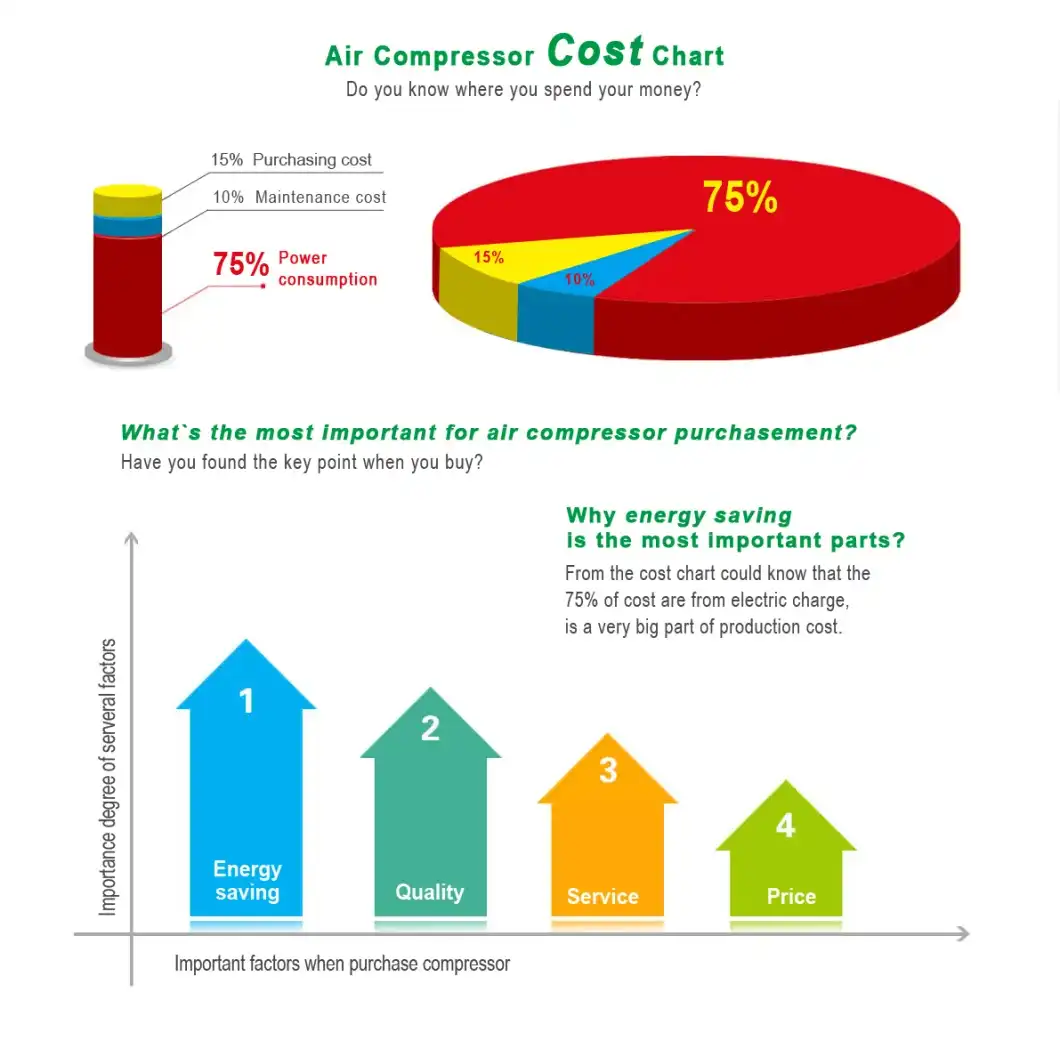
noise level
If you are wondering what the noise level of an air compressor is, the answer depends on your specific equipment and working environment conditions. Typically, air compressors produce 40 to 90 decibels of noise. Although the lower the decibel level, the quieter the compressor will be. Larger, more powerful air compressors produce higher noise levels than their little brothers. But no matter how big the air compressors are, it’s a good idea to wear hearing protection while working around them.
When purchasing a new air compressor, the noise level of the air compressor should be considered. While this may seem like a small problem, there are actually a lot of variations on these noisy machines. The most common type of air compressor is the reciprocating piston pump. This model uses pistons similar to an engine to rotate inside a chamber. The piston moves quickly and traps air proportional to its size. Single-piston air compressors are generally noisier than twin-piston models, also known as twin cylinders.
But even if you have the proper equipment to protect your hearing, it’s still important to know the noise level of an air compressor. Even if the noise is not immediately dangerous, it can still cause temporary or permanent hearing loss. This condition is called noise-induced hearing loss, and an air compressor with a sound level of 80 or higher can cause permanent hearing damage. You can avoid potential damage to your hearing and prevent accidents by simply paying attention to the noise level of your air compressor.
Air compressors are inherently noisy, but if you take steps to reduce their noise levels, you can minimize disruption to neighbors and co-workers. For example, installing a sound enclosure in your work area can prevent your air compressor from making as much noise as before. Depending on your workspace, you can also try installing a long air hose, which will reduce sound levels by up to 25%.
editor by CX 2023-05-24
China Hot selling Oilless Silent Dental Equipment Air Compressor supplier
Product Description
About Us
HangZhou CZPT is the Group company that professionally engaged in selling of dental products in HangZhou, And we’re specialized in the production and sales of “Dental Material,Consumable and dental unit”, We are committed to give service to the global dental traders, dealers and dentists, provide one-stop dental shopping platform.
Oilless Dental Air Compressor KJ-1000
Product Description
KJ-1000 OILLESS Dental AIR COMPRESSOR-3EW 60L
Features:
1.Silent
Fluctuations in output pressure smoothly without noise significantly reduced, to bring a quiet working environment by reducing noise pollution
2.Oil free
The first plant material itself does not contain oily substances, the work also without adding any lubricant, thereby improving the quality of the exclusion of air
3. Use and operation
Simple, safe, easy maintenance, reducing the time required for maintenance, money
4.High quality
Long life,low price, We use are the best parts, to ensure product quality, cheap price, our customers have been highly visited
5.Green,energy saving
Social development is a necessity, it is not only high but also energy efficiency
TECHNICAL DATAS
| Voltage/Frequency | 110V/220V AC 60Hz/50Hz | Current | 5A |
| Power | 1100W | Speed | |
| Volume Flow | 114L/min | Start working pressure | 0.8Mpa |
| Rated exhaust pressure | 0.8Mpa | Air tank | 60L |
| Noise | 65-75dB | Net Weight | 67Kg |
| Gross Weight | 67-75kg | Package size | 88*48*77cm(Carton) |
If you’re interested in our product,please contact me.
| Type: | Dental Air Compressor |
|---|---|
| Color: | White,Blue |
| Supply Voltage: | AC220V 50Hz |
| Working Pressure: | 0.8MPa |
| Input Power: | 1100W |
| Volume Flow: | 114(L/Min) |
| Customization: |
Available
|
|
|---|
What to Look For When Buying an Air Compressor
An air compressor is a very useful tool that can help you complete many different types of construction jobs. This handy machine makes many tasks much easier, but not all of them are created equally. Understanding what to look for when buying an air compressor will help you make an informed decision. Here are some of the things you should look for. These include price, size, and energy efficiency. Also, make sure to consider the air compressor’s type.
Single-stage air compressors are quieter
When it comes to noise level, single-stage air compressors are the way to go. These machines have fewer moving parts and are quieter than two-stage models. Single-stage air compressors use an axial flow design and can be quieter than their dual-stage counterparts. Single-stage air compressors can run longer and at lower pressures. Single-stage air compressors can be used for light industrial applications. They have a long life expectancy, with some models lasting for over three thousand hours.
While some single-stage air compressors are quieter than two-stage air compressors, both models have noise-reduction features. One type features rubber parts, which are designed to dampen noise. Another feature makes a compressor quieter: its location near the job site. Some models feature rubber base plugs and rubber mats to reduce floor vibrations. In addition to using these features, single-stage compressors are easier to transport.
Noise levels are important when choosing an air compressor. Some machines are too noisy for comfortable work, and some businesses don’t want to expose customers to noise-generating air compressors. Other noise levels can even endanger workers’ health. Single-stage air compressors are more affordable than dual-stage compressors. They are also quieter and more powerful. But be prepared for the noise. Some single-stage air compressors are still noisy.
Compared to their two-stage counterparts, single-stage compressors are quieter when running at full capacity. However, double-stage compressors are quieter on low capacities than single-stage units. Those with variable speed are quietest at lower capacities. The difference is about 10db. If you’re concerned about the noise level, you should consider a two-stage air compressor. But if you have a small workshop, it may not be suitable for you.
One-stage air compressors are generally more efficient than two-stage air compressors. The noise from a two-stage air compressor is lower because there’s no intermediate stage. Single-stage air compressors also use a piston that rotates in a single stage, while dual-stage air compressors, also known as duplex models, are more efficient. A single-stage air compressor is quieter, but double-stage compressors are louder.
Two-stage air compressors are more energy efficient
Two-stage air compressors are more energy-efficient than single-stage machines. The efficiency of two-stage air compressors is increased through a combination of improved efficiency and increased longevity. These machines can store more air and have higher compression ratios. One model of a two-stage compressor can hold approximately 83 cubic feet of air at 100 PSI and 120 cubic feet at 150 PSI. A two-stage compressor is also quieter.
Two-stage air compressors are more energy-efficient because they have two pistons instead of one. These air compressors achieve a higher pressure rating and recover more quickly. This type of compressor is perfect for jobs that require high air pressure for a prolonged period of time. In addition, they can operate multiple tools simultaneously. This makes them better for commercial and industrial use. Listed below are some benefits of two-stage air compressors.
Single-stage air compressors can power tools in the garage or kitchen, but they are not as reliable for industrial applications. Single-stage compressors have larger parts that tend to experience condensation. Furthermore, single-stage compressors do not last long in continuous use and are less energy-efficient than two-stage ones. Whether you’re using the compressor for a single tradesperson, a small crew, or a large construction crew, two-stage compressors are the best choice.
Single-stage air compressors are often used in small-scale food preparation and production. Single-stage air compressors are easy to transport between locations, and can be plugged into several electrical outlets. Single-stage compressors are also ideal for high-volume food processing. A dual-stage air compressor is ideal for industrial use. In some cases, you can even move the single-stage air compressor between two-stage air compressors.
Single-stage compressors often cycle too quickly, drawing more electricity than two-stage units. A variable speed unit stays on a low speed for hours at a time. Single-stage air conditioners force you to lower your thermostat settings while single-stage air conditioners run too often. Both units are energy-efficient but they are not as energy-efficient as variable-speed compressors. The main difference is that single-stage air conditioners tend to drain the power source quicker.
Piston-driven air compressors are quieter
A piston-driven air compressor is one of the quietest types of air compressors. It is less noisy than reciprocating air compressors. A piston-driven air compressor can reach 62 decibels, while a scroll compressor is around half that volume. The two main components of a scroll air compressor are the piston and the helical screw. These air compressors are both very efficient and quiet.
Older compressors are incredibly noisy. They produce a “wumpa” noise similar to a large engine. They are also capable of producing a high-pitched whine. These noises can be deafening, especially in a small workshop. That’s why it’s essential to look for a quiet compressor. But what makes a compressor quiet? Read on to learn more about this essential tool.
Another difference between piston-driven air compressors and electric-driven air compressors is the power source. Electric air compressors produce less noise than gas-powered compressors, which use an engine. Piston-driven air compressors are also more efficient. They also generate less heat, making them an ideal choice for offices and other settings where noise is a problem. The best way to decide between the two types of air compressors is to check the manufacturer’s warranty and read the ‘Description’.
Noise reduction is the first priority of a compressor’s owner, so make sure that you have the right model. If you’re working on something sensitive, don’t place the compressor too close to a building where people might be nearby. Noise can be very disruptive to the workspace and can cause health problems. To help combat noise, you’ll need to buy a quiet air compressor. And don’t forget to consider its location: Piston-driven air compressors are quieter than their reciprocating counterparts.
Piston-driven air compressors are quiet because the piston is made of thin metal and more rubber, which absorbs the sound. Unlike reciprocating air compressors, piston-driven air compressors are more efficient than their dual-piston cousins, which are quieter and more powerful. So which type is right for you? Take a look at some of the main differences between the two. If you want a quiet compressor, make sure it meets the specifications required by the job you’re working on.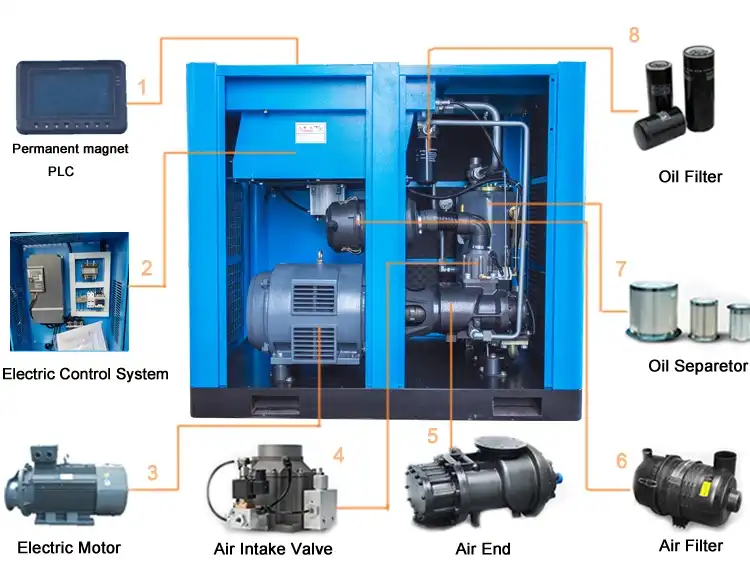
Oil-lubricated air compressors are more cost-effective
There are several reasons why oil-lubricated air compressors are more expensive than dry-type air compressors. First of all, oil-lubricated air compressors tend to be more reliable and quiet. Additionally, oil-lubricated air compressors require fewer parts and can last longer than dry-type air compressors. These are just a few of the many benefits of using oil-lubricated air compressors.
Oil-free air compressors have some disadvantages. They are less durable and may not be as efficient as oil-lubricated models. Additionally, because oil-lubricated air compressors use oil, they can get very noisy. While they are less expensive, they are not the best option for heavy-duty work. However, modern oil-free air compressors have soundproofing and are suitable for industrial use.
When purchasing an oil-lubricated air compressor, make sure to choose one with a tank capacity that meets your needs and your space. Larger tanks can be more expensive than small tanks, but larger units are easier to move around. Also, be sure to consider the weight and size of the portable air compressors when making your choice. If the weight is too large, you may have trouble carrying it from place to place.
Another benefit of using oil-lubricated air compressors is their reduced need for oil. These models can last up to a decade longer than oil-free counterparts. Oil-free air compressors are more affordable and can achieve the same high performance as their oil-lubricated counterparts. Many industrial applications benefit from these air compressors. So, which one is right for you? We’ve listed a few of them below.
Another benefit of choosing an oil-lubricated air compressor is the reduced cost of maintenance. This type is more durable than its oil-lubricated counterparts, which require regular oil changes to keep them running smoothly. However, it is not feasible to transport an oil-lubricated compressor, which means that you must install it permanently to keep it working efficiently. In addition, these air compressors are difficult to move and are not portable, which can limit your ability to use it in a pinch.
editor by CX 2023-05-23
China 1000CFM 25BAR DIESEL POWERFULL SCREW AIR COMPRESSOR WITH FAMOUS DIESEL ENGINE CUMINS OR YUCHAI with Hot selling
Relevant Industries: Accommodations, Farms, Restaurant, Construction works , Energy & Mining
Showroom Location: Philippines, Peru, Indonesia, Pakistan, Mexico, Russia, Thailand, Kenya, Chile, Colombia, Sri Lanka, Kazakhstan, Nigeria, Uzbekistan, Malaysia
Condition: New
Type: Screw, CZPT SCREW AIR COMPRESSOR Devices FOR Tough ROCK Water Properly
Configuration: Transportable OR STATIONARY
Electrical power Source: Diesel
Lubrication Fashion: Lubricated
Mute: NO
Design Quantity: KSZY-29/23 Coupling Company Z20-60110 keyless shaft locking device Manufacturing unit Value 45# metal cam assembly energy locks adjustable KSZJY-29/23KSZJ
Voltage: 220V,380V,420V
Dimension(L*W*H): 5080*2100*2500mm
Weight: 4500KG
Guarantee: 1 Yr
Doing work Force: 14 bar, 7 bar, 8 bar, 20 bar, thirteen bar, twelve bar, 10 bar, 35 bar, OTHER
Air capacity: 1000CFM-1600CFM
Equipment Test Report: Provided
Video clip outgoing-inspection: Offered
Marketing and advertising Kind: New Item 2571
Guarantee of main parts: 1 12 months
Main Parts: PLC, Engine, Motor
Fuel Type: Air
Model: KSZJ29-23
Working stress: 23 Bar
Air delivery: 29M3/min
Diesel engine amount: YC6B150Z-K20,110kW
Screw airend quantity: SKY170LM
Shade: GREEEN
Value: Competitive
OEM: Appropriate
To assistance: Mining devices: drilling rig, jack hammers
Packaging Particulars: changgui
Port: ZheJiang ,HangZhou
Our KSZJ series transportable diesel air compressor which is specifically suited for the matching of multi-practical drinking water welldrilling rigs for geothermal h2o wells specifically ideal for oil and gas subject drilling operation. In the meantime the diesel moveable screw air compressor is widely applied in the industries, this sort of as road, railway, Correct Angle telescope worm equipment speed Reducer S SAF67 Worm Gear box motor Reducer 90 Diploma Gearbox mine, waterconsebuqiushrvancy, shipbuilding, city building, power and war business, and so on. Discharge quantity addresses 38m³/min and the discharge force is up to 30Mpa at highest.Sky Patented Screw Host– Rotor profile: patented rotor profile, maximum efficiency– Two stage compression: versatile design corresponding to poppet valve, worldwide creation patent– Hefty obligation style, CZPT Bearing, immediate generate, no equipment noise. Specification
| Model | Pressure | Capacity | Motor Energy |
| KSZJ – fifteen/fourteen.5 | 15 Bar | 15 m³/min | Yuchai III – 160 hp |
| KSZJ – eighteen/17 | 17 Bar | 18 m³/min | Yuchai III – 260 hp |
| KSZJ – 29/23 | 23 Bar | 29 m³/min | Yuchai III – four hundred hp |
| KSZJ – thirty/25 – 33/18 | 25-18 Bar | 30-33 m³/min | Yuchai III – four hundred hp |
| KSZJ – 1100/twenty five | 25-20 Bar | 32-34 m³/min | Yuchai III – 550 hp |
| KSZJ – 35/30 – 38/twenty five | 30-twenty five Bar | 35-38 m³/min | Cummins III – 550 hp |
Choosing an Air Compressor
Considering a new Air Compressor? Here are some tips to make the decision easier. Learn the pros and cons of each type, including the differences between oil-injected and oil-free models, single stage and positive displacement. In addition, learn more about the different technologies that are available for your air compressor. It is important to choose an appropriate unit for the type of work you do. Here are some of the best compressors available today.
Positive displacement
There are several different types of air compressors, but most are positive displacement air compressors. They use a rotary or reciprocating component to compress air. The reciprocating component compresses air by reducing the volume of the chamber. Positive displacement compressors are used in bicycle pumps, chemical plants, and refrigerators. Positive displacement air compressors use multiple inlet ports. Despite the various types, the principle of operation remains the same.
Another type of positive displacement air compressor is a reciprocating piston. The piston inside a cylinder moves up and down, causing the compressed air to fill the upper part of the cylinder. These air compressors are used in a variety of different applications, including blowing bottles and gas pipelines. These air compressors can be water-cooled, lubricated, or non-lubricated. Different types have different capacities and air pressures.
A positive displacement flowmeter uses a rotating chamber that divides continuous fluid into discrete portions. The number of times the chamber is filled and discharged can be used to estimate the flow rate. The rotation speed of the measuring chamber is directly proportional to the flow rate. The drawbacks of this type of positive displacement flowmeter are that it is prone to jamming. If the fluid contains particles, it may be too thick for the meter to determine flow rate.
A negative displacement air compressor was invented in 1860 and is the oldest type of compressor. It uses two lobes positioned in a circular cavity. One rotor is connected to an engine, while the other pushes the other one to spin in the opposite direction. Negative displacement compressors are low-maintenance, but they do require more precision. They are often used in nuclear power plants because they use the kinetic energy of the rotating elements to produce pressure.
Oil-injected
Oil-flooded or oil-injected air compressors use liquid to seal and lubricate moving parts and reduce noise. Oil-flooded air compressors are effective for a variety of pneumatic tools and accessories. Some models have a thermostat that controls the amount of oil used during operation. Other types of oil-flooded air compressors are piston-type models. Here is an overview of the basic differences between these two air compressors.
An oil-injected air compressor is more expensive than a comparable oil-free air compressor, but its advantages far outweigh its disadvantages. An oil-free compressor is quieter, requires less maintenance, and has a lower price tag. It also offers a greater degree of air purity. A number of other advantages may also make this type of air compressor the better choice for many industrial settings. If you need a high-pressure compressor in a tight space, consider the benefits of an oil-free system.
Oil-injected air compressors require more maintenance than oil-free models. Both types of air compressors offer similar capacity and ISO 8573-1 Class 0 and 1-2 purity, but the oil-injected systems require more air-treatment components. They require an activated carbon filter and coalescing filter. Oil-injected air compressors will likely remain the standard for industrial air compressors for many years. And since their performance and efficiency are comparable, it may be worthwhile to invest in some point-of-use air treatment.
Both types of air compressors have their benefits. However, choosing between oil-free and oil-injected air compressors is not as straightforward as you might think. Whichever type you choose, make sure it will meet your needs. The benefits of an oil-injected air compressor outweigh their disadvantages. In general, oil-injected air compressors are more durable and can last longer than oil-free models. The only downside is their higher price.
Oil-free
When choosing an air compressor for your company, you’ll need to determine what it is going to be used for. For example, if you’re planning on using it to power multiple workers, you should consider getting an oil-free compressor. An oil-free compressor, on the other hand, is quieter and can power several workers at a time. If you’re a contractor, the most important consideration will be the type of jobs you’ll be doing. Higher air pressure means greater demand for air flow, and more pressure can damage the equipment.
Oil-free compressed air is certified 100% free of contaminants. Technically, oil-free air is not completely free of foreign matter, but it is extremely low within the limits of practical air quality. A technically oil-free air compressor might have a total oil level of 0.003 mg/m3. If you’re in need of a technically oil-free air compressor, you must install an air treatment equipment after your current compressor.
If you’re in the manufacturing industry, a good oil-free air compressor will save you money and reduce your environmental impact. Many of these tools require air compressors to work, and this equipment will ensure that they don’t get contaminated. To buy the best oil-free compressor, you should learn a bit about the different terms used by compressor repair companies. ACFM, for example, is the amount of air that can be compressed in one minute at rated conditions.
When you’re using an oil-free air compressor, you should know that the overall life of the device will be much shorter. Compared to an oil-flooded rotary screw air compressor, an oil-free compressor typically has a lifespan of 50 thousand hours. But it’s important to understand that this type of compressor can still cause damage to piping and processes. Therefore, you should choose an oil-free compressor when you need to clean air for your business.
Single-stage
A single-stage air compressor, also known as a piston air compressor, compresses air only once before storing it in a cylinder. This stored air has enough energy to power a variety of pneumatic tools, such as screwdrivers, chisels, and wrenches. These units are also ideally suited for low-flow applications and are widely used in gas stations, auto shops, and various manufacturing plants.
A single-stage air compressor uses two valves – one for inlet and one for outlet – to transfer compressed air. Both valves are actuated by springs. The inlet valve has a slight curvature to provide protection from damage. The compressor’s outlet valve opens when the pressure in the cylinder is higher than the pressure in the storage tank. The piston moves very quickly inside the cylinder, exerting a high amount of force throughout the compression process. This high piston speed is a common cause of compressor wear and tear.
A single-stage air compressor is ideal for smaller tradesmen and small construction crews. Its lightweight and compact design make it easier to transport and store. While it may be tempting to buy the first cheap air compressor you see, it’s important to balance the price against performance to choose the right air compressor for your needs. The best single-stage air compressor is one that provides excellent performance and durability. Its two-stage counterpart is designed for larger construction teams and large applications.
The main difference between a single-stage and a two-stage air compressor lies in their capacity. A single-stage air compressor compresses air only once and delivers it into the storage tank, while a two-stage compressor compresses it twice, creating double the pressure. Because of this, single-stage air compressors are cheaper and versatile than their counterparts, which means that they can be used for multiple purposes.
Low-noise
A low-noise air compressor is a type of industrial compressor that is less noisy than regular air compressors. These are generally smaller machines designed for smaller factories and workshops with a few to several employees. They are designed to handle mid-weight volumes of compressed air per day. This type of compressor is especially useful for smaller manufacturing businesses that need to produce compressed air for medical applications. Small breweries can also benefit from the low-noise capabilities of these compressors.
Low-noise air compressors come in various sizes and features. For smaller jobs, you can purchase a one-gallon model that is lightweight and portable. For larger jobs, you can purchase one with a larger tank that can provide more pressure for longer jobs. However, a larger tank will make the compressor heavier and harder to transport. To avoid this, make sure to check the size of the tank and how much power it can handle.
Considering a low-noise air compressor for your business? If so, you’ve come to the right place. There are a variety of affordable and dependable low-noise options to choose from. A CAT 10020C, for example, is designed to provide high-volume air to many outlets at once. A CAT 10020C comes with a 10-gallon tank, wheels, and a carrying handle.
Noise levels can also affect the productivity of employees. When employees work with air compressors in close proximity to each other, they may develop tinnitus. If employees are free from tinnitus because of the loud noise, they are likely to work more efficiently. Moreover, it will be easier for them to focus and communicate efficiently. If you need a compressor, a low-noise one is an excellent choice.
editor by Cx 2023-05-08
China Ingersoll Rand Irn50h-of Irn60h-of Irn75h-of Irn100h-of Irn125h-of Irn150h-of Irn200h-of Ingersoll Rand Nirvana Oil Free Screw Air Compressor with Hot selling
Error:获取session失败,
| Lubrication Style: | Oil-free |
|---|---|
| Cooling System: | Aircooling & Watercooling |
| Power Source: | AC Power |
| Cylinder Position: | Vertical |
| Structure Type: | Closed Type |
| Installation Type: | Stationary Type |
| Customization: |
Available
|
|
|---|
Choosing the Right Air Compressor For Your Home
You will find that air compressors are indispensable tools for a variety of situations, including garages, home workshops, and basements. These tools can power a variety of tools, and each model is sized to suit the job at hand. Because air compressors have only one motor, they are lightweight, compact, and easy to handle. Using one air compressor to power several tools will also reduce the wear and tear on individual components. This article will introduce some important characteristics to look for when choosing the right air compressor for your home.
Positive displacement
A positive displacement compressor applies pressure to a fluid, whereas a centrifugal one does the opposite. A positive displacement compressor creates the desired pressure by trapping air and increasing its volume. Its discharge valve releases the high-pressure gas. These compressors are used in industrial applications and nuclear power plants. The difference between a positive and negative displacement compressor is that a positive displacement compressor can compress and release air at a consistent rate.
A positive displacement air compressor uses a reciprocating piston to compress air. This reduces the volume of the air in the compression chamber, and a discharge valve opens when the pressure reaches the desired level. These compressors are used in bicycle pumps and other pneumatic tools. Positive displacement air compressors have multiple inlet ports and have several configurations. Positive displacement air compressors have a single-acting and double-acting piston, and can be oil-lubricated or oil-free.
A positive displacement air compressor is different from a dynamic compressor. It draws air into the compression chambers and then releases the pressure when the valve is opened. Positive displacement compressors are common in industrial applications and are available in single-acting, double-acting, and oil-lubricated models. Large piston compressors have ventilated intermediate pieces and crossheads on gudgeon pins. Smaller models have permanently sealed crankcases with bearings.
Oil-free
Oil-free air compressors have some advantages over their oil-lubricated counterparts. They do not require lubrication oil because they are coated with Teflon. The material has one of the lowest coefficients of friction and is layered, so it slides past other layers with little effort. Because of this, oil-free compressors tend to be cheaper and still deliver comparable performance. Oil-free compressors are a good choice for industrial applications.
The life of an oil-free air compressor is significantly longer than an oil-lubricated counterpart. These models can operate up to 2,000 hours, four times longer than the average oil-lubed compressor. Oil-free compressors also have a significantly lower operating noise than their oil-lubricated counterparts. And because they don’t need oil changes, they are quieter. Some even last up to 2,000 hours.
An oil-free air compressor is a good choice if your application requires high levels of purity. Several applications require ultra-pure air, and even a drop of oil can cause product spoilage or damage to production equipment. In addition to the health risks, an oil-free air compressor reduces the costs associated with oil contamination and minimizes leaks. It also eliminates the need for oil collection, disposal, and treatment.
A typical oil-free air compressor is very efficient, requiring only about 18% of the full load horsepower. However, oil-free compressors have a higher risk of premature failure and are not recommended for large-scale industrial applications. They may also use up to 18% of the compressor’s full capacity. They may sound appealing, but you must make sure you understand the benefits of an oil-free air compressor before choosing one for your industrial applications.
Single-stage
A single-stage air compressor is designed to provide the power for a single pneumatic tool or device. These machines are generally smaller than two-stage compressors and produce less heat and energy. These machines aren’t designed for heavy-duty industries, but they are still highly effective for a variety of applications, including auto shops, gas stations, and various manufacturing plants. They can also be used in borewells, as they are suitable for small spaces with low air flow requirements.
A single-stage air compressor has one cylinder and two valves – the inlet and the delivery valves. Both of these valves function mechanically, with the inlet valve controlling torque and the delivery one controlling air pressure. Generally, single-stage compressors are powered by a gas engine, but there are also electric models available. The single-stage air compressor is the most common type of air compressor. It has a single cylinder, one piston, and one air cylinder.
The single-stage air compressors are used for small projects or personal use. A two-stage air compressor is more effective for industrial projects. Its longer air end life makes it more efficient. It is also more efficient for use in the automotive industry, where the engine has many cylinders. In general, single-stage compressors require a higher power level. The single-stage model is ideal for small projects, while a two-stage one is suitable for larger-scale arsenals.
CFM
The cubic foot-per-minute (CFM) of an air compressor is the output of the machine. In order to calculate the CFM level, start by looking at the compressor’s specifications. You should know how many cubic feet the unit can hold and how many pounds per square inch it can compress. Once you have these information, you can calculate the CFM. Now you can use these numbers to select an appropriate air compressor for your needs.
The most common way to increase the CFM of an air compressor is to turn the regulator down. By turning the dial down, the air compressor will produce more than 10 CFM. You can also try connecting two output valves. Make sure that the settings are adjusted properly before you begin. This will ensure that your air compressor is functioning at its maximum efficiency and lifespan. To increase the CFM of your air compressor, first check that your regulator is calibrated for the desired pressure level.
To calculate the CFM of an air compressor, first determine the tank volume of the machine. Then, multiply this volume by the time it takes to fill the tank. Then, divide the result by 60 seconds to calculate the CFM. Once you know how much air your machine can hold, you can choose a suitable air compressor. If you’re working in a confined area, you should buy a tool with a large tank.
PSI
The PSI of an air compressor is the pressure that it can output. A typical air compressor has a gauge connected to the airline at the bottom, next to it, or between the two. The gauge tells the actual pressure of the air compressor, while the cut-out pressure is determined by the manufacturer. The manufacturer recommends that you set the cut-out pressure twenty to forty PSI higher than the factory recommended pressure. If you want to set the pressure for your nail gun, you can use the cut-in and cut-out pressures on your compressor, and the tank won’t exceed this range.
The PSI of an air compressor measures the force that it can deliver, which is often in pounds per square inch. For most air tools, you need at least forty to 90 psi. In general, reciprocating air compressors work on an on/off basis. This relationship is known as the duty cycle. All air compressors are rated for a particular duty cycle, such as fifty percent on and twenty-five percent off.
The Psig of an air compressor is not free, as many people believe. The PSI of an air compressor is not free, but it is essential to maintain it for safe operations. If you’re having trouble maintaining a consistent pressure, consider turning down the PSI of your compressor by 2 psig. This will determine the critical pressure for the machine. You’ll also increase the amount of energy in the system by one percent.
Power source
The power source for an air compressor is crucial in its operation. Without the correct voltage and amperage, air compressors will not function properly. The power source must be close to the compressor so that it can plug into an electrical outlet. If it is too far from the outlet, the compressor may not be able to build enough pressure. When this happens, the fuse inside the air compressor will turn off to protect the user. The power source should be a safe distance from the compressor.
Most manufacturers do not specify the power source for an air compressor. Depending on the horsepower, the compressor will require approximately four amps of power. A one-horsepower compressor would draw about twelve amps. If it were powered by a typical 120-volt household supply, its motor would exceed the 15-amp breaker capacity. A larger air compressor, however, will require a separate 15-amp power source, making it impossible to use it with this type of power source.
The power source for an air compressor is typically electrical alternating current (AC) that is equivalent to the voltage on a standard wall outlet. A three-phase air compressor, on the other hand, requires a special AC supply with three electrical offset pulses. Regardless of the type of air compressor, the power source must be compatible with the incoming power service. One of the most common problems when attempting to connect an air compressor to an AC power source is undersized wire. This results in low voltage and high amperes, tripping of over-load relays and blown fuses.
editor by CX 2023-04-11
China Air Fan Cooling Industrial Twin Rotors Rotary Screw Air Compressor with Hot selling
Product Description
Air Admirer Cooling Industry Twin Rotors Rotary Screw Air Compressor
Advantages of our screw air compressor:
one. Approved by ISO9001certificate, SGS, CE and and so on..
two. Adopt the most sophisticated technological innovation and entire world renowned brand of twin screw main machine designing and manufacturing, no leakage, make sure higher air discharge and reduced energy consumption.
three. Undertake large high quality electric powered motor with CZPT bearing, IP54, convenient servicing and prolonged use lifestyle.
4. Adopt world renowned manufacturer of air consumption filter, oil filter, air and oil separator, comprehend large filtration accuracy, compressed air oil content material under 3ppm, attain to global innovative regular amount.
5. Equip with the most sophisticated air management method. Adopt air ingestion valve, intelligent manage program and pressure sensor mixed handle approach, can run by ON and OFF 2 point, stepless air capability control program, time-hold off stop and immediately begin device 3 air capability handle strategies, can satisfy different clientele demand.
six. Smart microcomputer handle system, Chinese and English language operation interface, malfunction display, alarm and equipment end automatically.
seven. Undertake high high quality and entire world popular brand of major elements, like Uk APD oil filter, The united states AMOT temperature managing valve, SCHNEIDER electric components and and so forth., large performance, reliable and long use daily life.
eight. Equip with right after air compression cooler blend with the air and water separator, compact structure and save space, stay away from leakage and improve the air and h2o separating efficiency largely.
Photos of our air screw compressor:
Parameters of our twin-screw air compressor:
| Model | TKL-2F | TKL-3F | TKL-4F | TKL-5F | TKL-7F | TKL-11F | TKL-15F | TKL-18F | TKL-22F | TKL-30F | TKL-37F | TKL-45F/W | TKL-55F/W | TKL-75F/W | TKL-90F/W |
| Air displacemen/ Exhause strain (m3/min/Mpa) |
.33/.seven | .43/.seven | .6/.seven | .8/.7 | 1.23/.7 | 1.sixty five/.seven | two.7/.seven | three./.7 | 3.6/.seven | five.2/.seven | 6.6/.7 | 7.8/.7 | 10.1/ten.7 | 13.5/.seven | sixteen.3/.7 |
| .33/.eight | .4/.eight | .fifty five/.8 | .7/.eight | one.16/.eight | 1.sixty two/.8 | 2.5/.eight | 2.92/.8 | 3.fifty three/.eight | 5./.8 | six.3/.eight | seven.5/.eight | nine.8/.eight | twelve.3/.8 | fifteen.6/.eight | |
| .twenty five/1. | .36/1. | .5/1. | .sixty five/1. | one.02/1. | 1.4/1. | 2./1. | 2.7/1. | three.2/1. | 4.5/1. | 5.6/1. | 6.8/1. | 8.8/1. | 11./1. | fourteen.2/1. | |
| .22/1.3 | .3/1.three | .45/1.three | .6/1.3 | .86/1.three | one.21/1.3 | 1.8/1.three | two.2/1.three | 2.4/1.three | 3.5/1.3 | 4.8/1.three | 5.8/1.3 | seven.2/1.three | nine./1.three | 11.5/1.3 | |
| Power/ (Kw) | two.two | three | four | five.five | seven.five | 11 | fifteen | eighteen.5 | 22 | thirty | 37 | forty five | fifty five | seventy five | 90 |
| Ooltage (V/Hz) | 380V/50Hz | ||||||||||||||
| Noise (±3,dBa) | sixty three | sixty three | 65 | 65 | 67 | 67 | sixty eight | 70 | seventy two | 73 | 74 | 75 | seventy six | seventy eight | 78 |
| Exhaust temprature | Wind cooling variety <=Environmental temperature+13ºC, Water cooling type <=40ºC, | ||||||||||||||
| Outlet pipe dimensions | one/2″ | one/2″ | one/2″ | one/2″ | 1/2″ | three/4″ | 1″ | 1″ | 1″ | one 1/2″ | 1 1/2″ | 1 1/2″ | DN50 | DN50 | DN50 |
| Weight (Kg) | 260 | 280 | 300 | 350 | 360 | 400 | 430 | 590 | 650 | 950 | 980 | 1050 | 1850 | 1900 | 2100 |
| Dimensions (mm) | 800*760*1102 | 800*760*1102 | 800*760* 1102 |
800*760* 1102 |
800*760* 1102 |
950*760*1202 | 900*one thousand*1290 | belt type 900*one thousand*1290 | 1500*950*1280 | 1600*1100*1430 | 1900*1150*1500 | 2000*1150*1680 | |||
| strait sort 1350*850*1257 | |||||||||||||||
| Product | TKL-110 F/W |
TKL-132 F/W |
TKL-a hundred and sixty F/W |
TKL-185 F/W |
TKL-two hundred F/W |
TKL-220 F/W |
TKL-250 F/W |
TKL-280 F/W |
TKL- 315W |
TKL- 355W |
TKL- 400W |
TKL- 450W |
TKL- 500W |
TKL- 560W |
TKL- 630W |
| Air displacemen/ Exhause pressure (m3/min/Mpa) |
twenty.4/.7 | 24/.7 | 27.8/.7 | 32.5/.seven | 35/.seven | 40.7/.seven | 45.3/.seven | fifty one.5/.seven | fifty seven/.seven | sixty eight/.seven | 73.6/.7 | eighty three/.7 | 90/10.seven | one hundred and one/.7 | 111/.seven |
| twenty/.8 | 23/.8 | 27.1/.eight | 30.5/.8 | 33.3/.8 | 38.2/.8 | 43/.8 | 50.5/.8 | 55.5/.eight | sixty six.2/.8 | 71.4/.eight | eighty two/.eight | 89/.8 | one hundred/.eight | a hundred and ten/.eight | |
| 17.8/1 | 21/1. | 25.2/1. | 27/1. | 30.6/1. | 34.5/1. | 38.1/1. | 43/1. | fifty.5/1. | fifty five.6/1. | 62/1. | seventy three/1. | 80/1. | 86/1. | ninety five/1. | |
| fourteen.5/1.three | eighteen.1/1.three | 21.2/1.three | 23.6/1.three | 26.3/1.three | 29.8/1.three | 35/1.3 | 38.3/1.three | forty two.1/1.three | forty six.5/1.three | fifty two.5/1.3 | sixty/1.3 | 68/1.three | |||
| Energy/ (Kw) | a hundred and ten | 132 | a hundred and sixty | 185 | two hundred | 220 | 250 | 280 | 315 | 355 | 400 | 450 | five hundred | 560 | 630 |
| Ooltage (V/Hz) | 380V/50Hz | 380-10000V/50Hz | |||||||||||||
| Noise (±3,dBa) | 78 | seventy eight | seventy eight | 78 | 80 | eighty | eighty | 80 | eighty | eighty | eighty two | eighty two | eighty two | 82 | 82 |
| Exhaust temprature | Wind cooling kind <=Environmental temperature+13ºC, Water cooling type <=40ºC, | ||||||||||||||
| Outlet pipe size | DN80 | DN80 | DN80 | DN80 | DN100 | DN100 | DN100 | DN100 | DN125 | DN125 | DN150 | DN150 | DN150 | DN200 | DN200 |
| Bodyweight (Kg) | 3300 | 3500 | 4000 | 4600 | 4700 | 5100 | 5100 | 5500 | 7500 | 8300 | 8400 | 9000 | 9500 | 10000 | 10000 |
| Proportions (mm) | F 2800*1540*1900 | F 2800*1540*1900 | F 3150*1650*1900 | F 3100*1940*2389 | F 3400*2000*2330 | 4500*two hundred*2462 | 4650*2340*2835 | ||||||||
| W 2400*1540*1900 | W 2400*1540*1900 | W 2600*1700*1980 | W 2600*1700*1980 | W 3200*1800*2125 | |||||||||||
Our manufacturing unit and workshop:
Right after revenue services for our air screw compressor solution:
one. Offering skilled air compression software designing for free of charge.
two. Delivering our manufacturing facility original machine elements at least expensive price right after machine revenue.
three. Providing training and guidance for cost-free, customers can send out their personnel to our factory to find out how to function the machines.
4. Warranty interval: the screw primary device is 1 year, the bearing is 1 yr, the wear areas of air consumption valve, electric powered elements, electromagnetic valve, price valve are 6 months
five. The air filter, oil filter, oil-drinking water separator, lubricating oil, rubber elements and and so forth. are not integrated in guarantee variety.
Certification and patents of our air compressor
FAQ:
Q1: Are you factory or trade organization?
A1: We are factory.
Q2: Warranty terms of your equipment?
A2: One calendar year guarantee for the equipment and complex support in accordance to your needs.
Q3: Will you offer some spare components of the machines?
A3: Yes, of training course.
This fall: How lengthy will you take to set up production?
A4: 380V 50HZ we can shipping and delivery the products inside twenty times. Other electric power or other shade we will delivery inside thirty days.
Q5: Can you settle for OEM orders?
A5: Yes, with professional design team, OEM orders are highly welcome!
|
US $1,000-10,000 / Set | |
1 Set (Min. Order) |
###
| Lubrication Style: | Lubricated |
|---|---|
| Cooling System: | Air Cooling |
| Cylinder Position: | Vertical |
| Structure Type: | Closed Type |
| Installation Type: | Stationary Type |
| Type: | Twin-Screw Compressor |
###
| Customization: |
Available
|
|---|
###
| Model | TKL-2F | TKL-3F | TKL-4F | TKL-5F | TKL-7F | TKL-11F | TKL-15F | TKL-18F | TKL-22F | TKL-30F | TKL-37F | TKL-45F/W | TKL-55F/W | TKL-75F/W | TKL-90F/W |
| Air displacemen/ Exhause pressure (m3/min/Mpa) |
0.33/0.7 | 0.43/0.7 | 0.6/0.7 | 0.8/0.7 | 1.23/0.7 | 1.65/0.7 | 2.7/0.7 | 3.0/0.7 | 3.6/0.7 | 5.2/0.7 | 6.6/0.7 | 7.8/0.7 | 10.1/10.7 | 13.5/0.7 | 16.3/0.7 |
| 0.33/0.8 | 0.4/0.8 | 0.55/0.8 | 0.7/0.8 | 1.16/0.8 | 1.62/0.8 | 2.5/0.8 | 2.92/0.8 | 3.53/0.8 | 5.0/0.8 | 6.3/0.8 | 7.5/0.8 | 9.8/0.8 | 12.3/0.8 | 15.6/0.8 | |
| 0.25/1.0 | 0.36/1.0 | 0.5/1.0 | 0.65/1.0 | 1.02/1.0 | 1.4/1.0 | 2.0/1.0 | 2.7/1.0 | 3.2/1.0 | 4.5/1.0 | 5.6/1.0 | 6.8/1.0 | 8.8/1.0 | 11.0/1.0 | 14.2/1.0 | |
| 0.22/1.3 | 0.3/1.3 | 0.45/1.3 | 0.6/1.3 | 0.86/1.3 | 1.21/1.3 | 1.8/1.3 | 2.2/1.3 | 2.4/1.3 | 3.5/1.3 | 4.8/1.3 | 5.8/1.3 | 7.2/1.3 | 9.0/1.3 | 11.5/1.3 | |
| Power/ (Kw) | 2.2 | 3 | 4 | 5.5 | 7.5 | 11 | 15 | 18.5 | 22 | 30 | 37 | 45 | 55 | 75 | 90 |
| Ooltage (V/Hz) | 380V/50Hz | ||||||||||||||
| Noise (±3,dBa) | 63 | 63 | 65 | 65 | 67 | 67 | 68 | 70 | 72 | 73 | 74 | 75 | 76 | 78 | 78 |
| Exhaust temprature | Wind cooling type <=Environmental temperature+13ºC, Water cooling type <=40ºC, | ||||||||||||||
| Outlet pipe size | 1/2″ | 1/2″ | 1/2″ | 1/2″ | 1/2″ | 3/4″ | 1″ | 1″ | 1″ | 1 1/2″ | 1 1/2″ | 1 1/2″ | DN50 | DN50 | DN50 |
| Weight (Kg) | 260 | 280 | 300 | 350 | 360 | 400 | 430 | 590 | 650 | 950 | 980 | 1050 | 1850 | 1900 | 2100 |
| Dimensions (mm) | 800*760*1102 | 800*760*1102 | 800*760* 1102 |
800*760* 1102 |
800*760* 1102 |
950*760*1202 | 900*1000*1290 | belt type 900*1000*1290 | 1500*950*1280 | 1600*1100*1430 | 1900*1150*1500 | 2000*1150*1680 | |||
| strait type 1350*850*1257 | |||||||||||||||
###
| Model | TKL-110 F/W |
TKL-132 F/W |
TKL-160 F/W |
TKL-185 F/W |
TKL-200 F/W |
TKL-220 F/W |
TKL-250 F/W |
TKL-280 F/W |
TKL- 315W |
TKL- 355W |
TKL- 400W |
TKL- 450W |
TKL- 500W |
TKL- 560W |
TKL- 630W |
| Air displacemen/ Exhause pressure (m3/min/Mpa) |
20.4/0.7 | 24/0.7 | 27.8/0.7 | 32.5/0.7 | 35/0.7 | 40.7/0.7 | 45.3/0.7 | 51.5/0.7 | 57/0.7 | 68/0.7 | 73.6/0.7 | 83/0.7 | 90/10.7 | 101/0.7 | 111/0.7 |
| 20/0.8 | 23/0.8 | 27.1/0.8 | 30.5/0.8 | 33.3/0.8 | 38.2/0.8 | 43/0.8 | 50.5/0.8 | 55.5/0.8 | 66.2/0.8 | 71.4/0.8 | 82/0.8 | 89/0.8 | 100/0.8 | 110/0.8 | |
| 17.8/1 | 21/1.0 | 25.2/1.0 | 27/1.0 | 30.6/1.0 | 34.5/1.0 | 38.1/1.0 | 43/1.0 | 50.5/1.0 | 55.6/1.0 | 62/1.0 | 73/1.0 | 80/1.0 | 86/1.0 | 95/1.0 | |
| 14.5/1.3 | 18.1/1.3 | 21.2/1.3 | 23.6/1.3 | 26.3/1.3 | 29.8/1.3 | 35/1.3 | 38.3/1.3 | 42.1/1.3 | 46.5/1.3 | 52.5/1.3 | 60/1.3 | 68/1.3 | |||
| Power/ (Kw) | 110 | 132 | 160 | 185 | 200 | 220 | 250 | 280 | 315 | 355 | 400 | 450 | 500 | 560 | 630 |
| Ooltage (V/Hz) | 380V/50Hz | 380-10000V/50Hz | |||||||||||||
| Noise (±3,dBa) | 78 | 78 | 78 | 78 | 80 | 80 | 80 | 80 | 80 | 80 | 82 | 82 | 82 | 82 | 82 |
| Exhaust temprature | Wind cooling type <=Environmental temperature+13ºC, Water cooling type <=40ºC, | ||||||||||||||
| Outlet pipe size | DN80 | DN80 | DN80 | DN80 | DN100 | DN100 | DN100 | DN100 | DN125 | DN125 | DN150 | DN150 | DN150 | DN200 | DN200 |
| Weight (Kg) | 3300 | 3500 | 4000 | 4600 | 4700 | 5100 | 5100 | 5500 | 7500 | 8300 | 8400 | 9000 | 9500 | 10000 | 10000 |
| Dimensions (mm) | F 2800*1540*1900 | F 2800*1540*1900 | F 3150*1650*1900 | F 3100*1940*2389 | F 3400*2000*2330 | 4500*200*2462 | 4650*2340*2835 | ||||||||
| W 2400*1540*1900 | W 2400*1540*1900 | W 2600*1700*1980 | W 2600*1700*1980 | W 3200*1800*2125 | |||||||||||
|
US $1,000-10,000 / Set | |
1 Set (Min. Order) |
###
| Lubrication Style: | Lubricated |
|---|---|
| Cooling System: | Air Cooling |
| Cylinder Position: | Vertical |
| Structure Type: | Closed Type |
| Installation Type: | Stationary Type |
| Type: | Twin-Screw Compressor |
###
| Customization: |
Available
|
|---|
###
| Model | TKL-2F | TKL-3F | TKL-4F | TKL-5F | TKL-7F | TKL-11F | TKL-15F | TKL-18F | TKL-22F | TKL-30F | TKL-37F | TKL-45F/W | TKL-55F/W | TKL-75F/W | TKL-90F/W |
| Air displacemen/ Exhause pressure (m3/min/Mpa) |
0.33/0.7 | 0.43/0.7 | 0.6/0.7 | 0.8/0.7 | 1.23/0.7 | 1.65/0.7 | 2.7/0.7 | 3.0/0.7 | 3.6/0.7 | 5.2/0.7 | 6.6/0.7 | 7.8/0.7 | 10.1/10.7 | 13.5/0.7 | 16.3/0.7 |
| 0.33/0.8 | 0.4/0.8 | 0.55/0.8 | 0.7/0.8 | 1.16/0.8 | 1.62/0.8 | 2.5/0.8 | 2.92/0.8 | 3.53/0.8 | 5.0/0.8 | 6.3/0.8 | 7.5/0.8 | 9.8/0.8 | 12.3/0.8 | 15.6/0.8 | |
| 0.25/1.0 | 0.36/1.0 | 0.5/1.0 | 0.65/1.0 | 1.02/1.0 | 1.4/1.0 | 2.0/1.0 | 2.7/1.0 | 3.2/1.0 | 4.5/1.0 | 5.6/1.0 | 6.8/1.0 | 8.8/1.0 | 11.0/1.0 | 14.2/1.0 | |
| 0.22/1.3 | 0.3/1.3 | 0.45/1.3 | 0.6/1.3 | 0.86/1.3 | 1.21/1.3 | 1.8/1.3 | 2.2/1.3 | 2.4/1.3 | 3.5/1.3 | 4.8/1.3 | 5.8/1.3 | 7.2/1.3 | 9.0/1.3 | 11.5/1.3 | |
| Power/ (Kw) | 2.2 | 3 | 4 | 5.5 | 7.5 | 11 | 15 | 18.5 | 22 | 30 | 37 | 45 | 55 | 75 | 90 |
| Ooltage (V/Hz) | 380V/50Hz | ||||||||||||||
| Noise (±3,dBa) | 63 | 63 | 65 | 65 | 67 | 67 | 68 | 70 | 72 | 73 | 74 | 75 | 76 | 78 | 78 |
| Exhaust temprature | Wind cooling type <=Environmental temperature+13ºC, Water cooling type <=40ºC, | ||||||||||||||
| Outlet pipe size | 1/2″ | 1/2″ | 1/2″ | 1/2″ | 1/2″ | 3/4″ | 1″ | 1″ | 1″ | 1 1/2″ | 1 1/2″ | 1 1/2″ | DN50 | DN50 | DN50 |
| Weight (Kg) | 260 | 280 | 300 | 350 | 360 | 400 | 430 | 590 | 650 | 950 | 980 | 1050 | 1850 | 1900 | 2100 |
| Dimensions (mm) | 800*760*1102 | 800*760*1102 | 800*760* 1102 |
800*760* 1102 |
800*760* 1102 |
950*760*1202 | 900*1000*1290 | belt type 900*1000*1290 | 1500*950*1280 | 1600*1100*1430 | 1900*1150*1500 | 2000*1150*1680 | |||
| strait type 1350*850*1257 | |||||||||||||||
###
| Model | TKL-110 F/W |
TKL-132 F/W |
TKL-160 F/W |
TKL-185 F/W |
TKL-200 F/W |
TKL-220 F/W |
TKL-250 F/W |
TKL-280 F/W |
TKL- 315W |
TKL- 355W |
TKL- 400W |
TKL- 450W |
TKL- 500W |
TKL- 560W |
TKL- 630W |
| Air displacemen/ Exhause pressure (m3/min/Mpa) |
20.4/0.7 | 24/0.7 | 27.8/0.7 | 32.5/0.7 | 35/0.7 | 40.7/0.7 | 45.3/0.7 | 51.5/0.7 | 57/0.7 | 68/0.7 | 73.6/0.7 | 83/0.7 | 90/10.7 | 101/0.7 | 111/0.7 |
| 20/0.8 | 23/0.8 | 27.1/0.8 | 30.5/0.8 | 33.3/0.8 | 38.2/0.8 | 43/0.8 | 50.5/0.8 | 55.5/0.8 | 66.2/0.8 | 71.4/0.8 | 82/0.8 | 89/0.8 | 100/0.8 | 110/0.8 | |
| 17.8/1 | 21/1.0 | 25.2/1.0 | 27/1.0 | 30.6/1.0 | 34.5/1.0 | 38.1/1.0 | 43/1.0 | 50.5/1.0 | 55.6/1.0 | 62/1.0 | 73/1.0 | 80/1.0 | 86/1.0 | 95/1.0 | |
| 14.5/1.3 | 18.1/1.3 | 21.2/1.3 | 23.6/1.3 | 26.3/1.3 | 29.8/1.3 | 35/1.3 | 38.3/1.3 | 42.1/1.3 | 46.5/1.3 | 52.5/1.3 | 60/1.3 | 68/1.3 | |||
| Power/ (Kw) | 110 | 132 | 160 | 185 | 200 | 220 | 250 | 280 | 315 | 355 | 400 | 450 | 500 | 560 | 630 |
| Ooltage (V/Hz) | 380V/50Hz | 380-10000V/50Hz | |||||||||||||
| Noise (±3,dBa) | 78 | 78 | 78 | 78 | 80 | 80 | 80 | 80 | 80 | 80 | 82 | 82 | 82 | 82 | 82 |
| Exhaust temprature | Wind cooling type <=Environmental temperature+13ºC, Water cooling type <=40ºC, | ||||||||||||||
| Outlet pipe size | DN80 | DN80 | DN80 | DN80 | DN100 | DN100 | DN100 | DN100 | DN125 | DN125 | DN150 | DN150 | DN150 | DN200 | DN200 |
| Weight (Kg) | 3300 | 3500 | 4000 | 4600 | 4700 | 5100 | 5100 | 5500 | 7500 | 8300 | 8400 | 9000 | 9500 | 10000 | 10000 |
| Dimensions (mm) | F 2800*1540*1900 | F 2800*1540*1900 | F 3150*1650*1900 | F 3100*1940*2389 | F 3400*2000*2330 | 4500*200*2462 | 4650*2340*2835 | ||||||||
| W 2400*1540*1900 | W 2400*1540*1900 | W 2600*1700*1980 | W 2600*1700*1980 | W 3200*1800*2125 | |||||||||||
A Buyer’s Guide to Air Compressor Types
There are many types of Air Compressors, and it’s important to understand what each type has to offer. In this article, we’ll discuss single stage air compressors, low-noise compressors, and models with two pistons. But, before you buy an Air Compressor, be sure to read our buyer’s guide to the various types. This way, you’ll have all of the information you need to make the right decision for your business.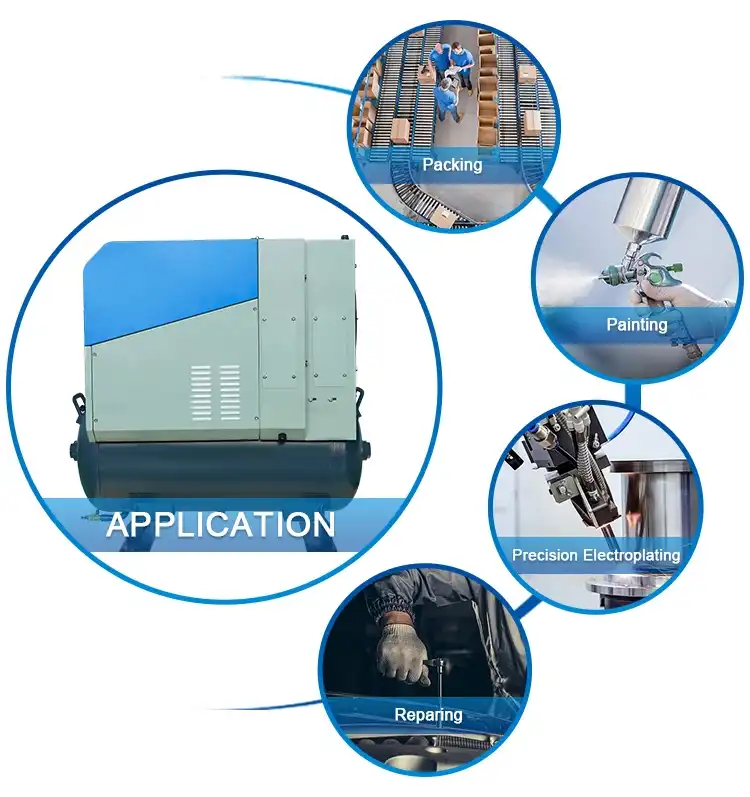
Single-stage air compressors
A single-stage air compressor is an excellent choice for most general-purpose purposes. They provide enough power to operate pneumatic tools, and they produce less heat. Single-stage air compressors, however, are not suitable for heavy-duty industrial uses. However, they can be used in various applications, including auto shops, gas stations, and various manufacturing facilities. They are also suitable for borewells and other high-pressure places.
These air compressors are a great choice for home use and are suitable for small-scale businesses, contractors, and small shops. These compressors have continuous duty cycles, cast iron compressor pumps, and a minimum 5,000-hour pump life. They also feature advanced features, including ODP motors, Auto Start & Controls, Receiver tanks, and power cords. They have low maintenance and can save you a great deal of money.
Single-stage air compressors are generally less expensive and lighter than their two-stage counterparts. Single-stage air compressors are also more portable, which is a plus for small projects. While two-stage compressors offer higher CFM, they are more powerful and bulky, making them unsuitable for small or home use. So it is essential to determine what you will use the air compressor for and decide on a model based on your needs.
A single-stage air compressor is made of a piston and a tank. The piston moves rapidly inside the cylinder and exerts pressure on the cylinder. This means that the piston can’t move any faster than the air pressure outside the cylinder. The piston is designed to operate in the same way for each stage. This is a great choice for home shops and one-man automotive shops, as it allows you to control the pressure without sacrificing the pump’s life.
Single-stage air compressors are often cheaper than two-stage versions, but they are not the best choice for every application. If you are only using your air compressor occasionally, you’ll find a one-stage model to be much more reliable than a two-stage model. The main difference between the two types of compressors is in the amount of air that each stage compresses. A two-stage air compressor will have more air storage capacity, but it will still produce more pressure.
Rotary vane compressors
Rotary vane compressors use a centrifugal pump to compress air. The rotor is set eccentrically in the housing, which almost touches the vane. As the rotor turns, the air that enters the pump is trapped between the vanes. This compressed air undergoes compression as the rotor rotates. Vanes are small pieces of carbon fiber or graphite composite. Vanes may be made of different materials depending on the application.
While rotary vane pumps are not commonly used to produce compressed air, they are widely used in automotive and hydraulic applications. Chances are, you have used a rotary vane pump at some point in your life. These pumps are also common in the vacuum and compressed air industries. As a result, many people don’t realize that they’re still around. They feature slots that allow the vanes to slide in and out of the rotor.
A rotary vane compressor has a drum and rotor inside. The rotor is eccentrically positioned and has slots and grooves on its surface. Its inlet and outlet ports are situated off-center, allowing the vanes to be pushed out by centrifugal force. Because the rotor rotates so quickly, air is trapped between the vanes. This air then becomes pressurized by the rotating rotor.
Rotating vane compressors can be easily serviced and repaired. A simple replacement of carbon vanes requires just 15 minutes and common tools. The carbon vanes typically last nine to eighteen months, depending on system operating pressure. Before purchasing a rotary vane compressor, make sure to check whether it has been properly performance-tested and has a warranty. Generally, warranties cover the rotor/stator chambers but do not cover the vanes or air filters. You should also check if the unit is covered by a lightning or water damage warranty.
Rotary vane compressors are an integral part of manufacturing industries. Many pharmaceutical manufacturing facilities depend on rotary vane compressors to control their equipment. Other industries that use rotary vane compressors include the plastics, woodworking, natural gas, and medical & dental fields. Their benefits are numerous and far outweigh any disadvantages of rotary screw compressors. For example, a rotary vane compressor can double the life of a conventional compressor.
Rotary vane compressors with low-noise models
If you are looking for a rotary vane air compressor, you have come to the right place. CZPT’s LV Series rotary vane compressors offer low-noise models, compact size, and robust integration. In addition to their low-noise features, they feature large filter systems to deliver high-quality compressed air. The LV Series models also feature CZPT’s reputation for reliability and quality.
This type of compressor uses centrifugal force to operate and is limited in its top and minimum operating speeds. They are only a third as powerful as screw compressors, and their top speed limits are much lower. Furthermore, the vanes wear out easily at high speeds because there is not enough centrifugal force to seal them against the cylinder’s edges. Even at half their full capacity, they consume as much as 80% of their total energy rating.
Because piston compressors produce a lot of noise, factory owners and shop owners have begun to install noise-dampening cabinets and other solutions. But, rotary vane compressors produce far less noise than a traditional vacuum, and the maintenance costs are also low. Rotary vane compressors are also extremely helpful in several industries. They are used in the automotive and auto finishing industries, as well as in dairy industries and milking machines.
If you have a deep pond, a rotary vane air compressor kit can pump up to 20 feet of water. This is more than enough airflow for two to five diffusers. A 1/4 HP rotary vane kit pumps around 4.2 CFM. It also helps to increase circulation and oxygen levels in the pond. Finally, a 1/4 HP kit offers the necessary power to clean up the bottom of a pond.
The rotary vane and rotary screw are the most popular air compressors today. While they are similar in many ways, they are more versatile and durable than their counterparts. They use fewer angular contact ball bearings and require less frequent maintenance than piston air compressors. Compared to piston air compressors, rotary vane and rotary screw compressors are quieter and are less expensive.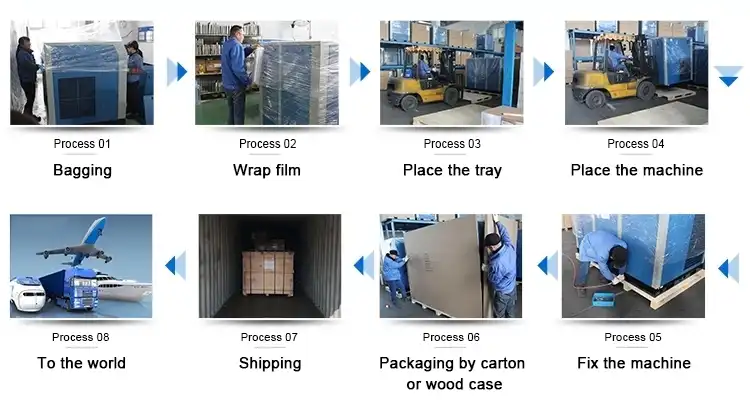
Rotary vane compressors with two pistons
The rotary vane and rotary screw compressors are similar in application, but both have different advantages and disadvantages. This article will compare the benefits of each and highlight the differences between them. While both are commonly used in industrial applications, rotary vane compressors are preferred by many industries. These compressors also have a wide range of uses, ranging from automotive air tool operation to milking machines. These compressors also have the advantage of being quieter than piston-powered ones.
The current common rail position may not be suitable for pressure swirl injectors, but new positions have been tested and show improvements in specific energy values. Moreover, the current position is not required for external oil pumps. However, mass induction and expulsion have to be performed with utmost care. This article focuses on the design and efficiency of rotary vane compressors. You can find more information about this new design in the references mentioned below.
The advantages of this type of compressor are its low cost, compact size, and easy maintenance. Hence, they are preferred in low capacity applications. Moreover, they feature integrated vanes. The rotating vanes close the air gap and compress air towards the outlet. Compared to piston-powered compressors, these units are cheaper and more reliable. Therefore, you should choose one with the lowest price tag. You can also opt for rotary vane compressors that are oil-free.
Sliding vane compressors are another popular variant. They have a single cylinder connected to the compressor and are capable of operating at low speeds. This design also reduces the amount of friction and maintains volumetric efficiency. However, the sliding vane compressors suffer from high frictional losses. If you are looking for a more efficient rotary compressor, this is the best option. While sliding vane compressors have been in the spotlight for over a century, they are still quite young.
These compressors are easy to install and maintain. They are also quieter than piston compressors. They are also cheaper than piston-driven compressors. The energy efficiency and low price make them the perfect choice for any commercial or industrial application. If you’re looking for a small, compact compressor, the rotary vane has been proven to be the best choice for your needs. You should know that it has a long service life.
editor by czh 2023-01-30